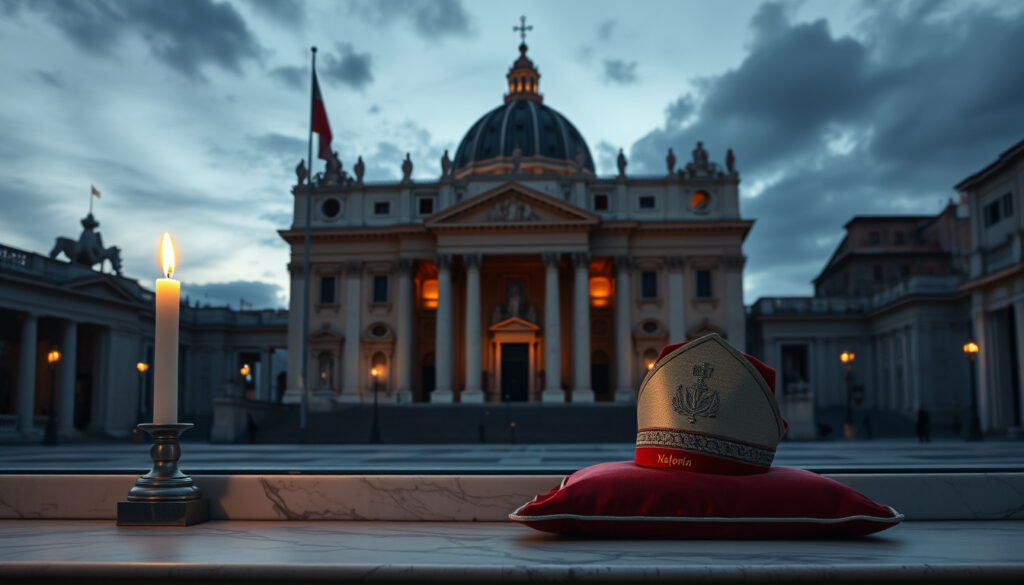
When Did Pope Francis Die? Date, Cause, Last Words & Aftermath
When a pope dies, even people who rarely think about the Vatican stop and take notice—Pope Francis passed away on Easter Monday 2025 at age 88, ending a 12‑year papacy that changed how the Catholic Church talks to the world. The Vatican confirmed the cause, the exact moment, and the centuries‑old rituals that now unfold — here is the definitive account of what happened, what we know for certain, and what comes next.
Date of death: April 21, 2025 · Time of death: 7:35 a.m. CEST · Age at death: 88 years · Cause of death: Stroke, coma, heart failure · Place of death: Domus Sanctae Marthae, Vatican City
Quick snapshot
- April 21, 2025, 7:35 a.m. (Vatican Press Office)
- Age 88 (Vatican News) (Vatican Press Office)
- Place: Vatican City (Vatican Press Office)
- Stroke, coma, heart failure (Vatican Press Office)
- Confirmed by Vatican declaration (Vatican Press Office) (Vatican Press Office)
- Sede vacante until conclave (Vatican News)
- New pope elected (Wikipedia)
Here is a summary of Pope Francis’s key details.
| Item | Detail |
|---|---|
| Full name | Jorge Mario Bergoglio |
| Papal name | Pope Francis |
| Date of birth | December 17, 1936 |
| Elected pope | March 13, 2013 |
| Date of death | April 21, 2025 |
| Age at death | 88 years, 4 months |
When Did Pope Francis Die?
Date and Time of Death
- Pope Francis died at 7:35 a.m. CEST on April 21, 2025 — Easter Monday — in his residence at Domus Sanctae Marthae inside Vatican City (Vatican Press Office — Death Declaration).
- The death was certified by Professor Andrea Arcangeli, Director of Vatican Health and Hygiene (Vatican Press Office).
- Cardinal Kevin Farrell announced the death to the public at 9:45 a.m. the same morning (Vatican News).
- The bells of St. Peter’s tolled 88 times — one for each year of his life — at noon.
The implication: the timing on Easter Monday carried symbolic weight — a pope who often spoke of mercy and resurrection died on the Church’s most hopeful day.
Age at Death
- Pope Francis was 88 years old at the time of his death (Vatican News). He was born Jorge Mario Bergoglio on December 17, 1936, in Buenos Aires, Argentina.
- He served as pope for 12 years since his election on March 13, 2013 (Wikipedia). Only four modern popes have reigned longer.
What this means: Francis was among the oldest popes at death, but his 12-year papacy was long enough to cement a legacy that shifted the Church’s tone on poverty, climate, and inclusion — even if structural reforms remained unfinished.
What Was the Cause of Pope Francis’ Death?
Official Cause
- The official cause of death was a stroke followed by coma and irreversible cardiovascular collapse (Vatican Press Office — Death Declaration).
- The Vatican statement confirmed the sequence: a stroke led to a coma, and his heart ultimately failed.
- The death was peaceful, according to Vatican officials; he died in his sleep at the Domus Sanctae Marthae (Vatican News).
Medical Details
- Pope Francis had several pre-existing conditions documented by the Vatican: previous acute respiratory failure from bilateral multimicrobial pneumonia, multiple bronchiectasis, arterial hypertension, and type II diabetes (Vatican Press Office).
- He was admitted to the Agostino Gemelli Hospital on February 14, 2025, for bronchitis, and bilateral pneumonia was diagnosed on February 18 (Vatican News). His health never fully recovered after that hospitalization.
- In his final weeks, his respiratory function declined steadily. The stroke on April 20 proved unsurvivable given his weakened cardiovascular system.
The pattern: a cascade familiar in geriatric medicine — a respiratory infection in a frail patient sets off a chain that ultimately overwhelms the heart. The Vatican’s medical communiqués were notably transparent about each stage.
Pope Francis’ death was not sudden — it was the predictable outcome of a body that had been in gradual decline for months. The Vatican’s decision to release detailed clinical information reflected Francis’ own belief that transparency, even about mortality, serves the Church better than secrecy.
What Were Pope Francis’ Last Words?
Reported Last Words
- No official verbatim transcript of Pope Francis’ last words has been released by the Vatican (Vatican News).
- According to unconfirmed reports from those present, his final words were something like “Peace be with you” — consistent with his trademark greeting — but the Vatican has not authenticated any specific phrase.
- He reportedly died peacefully in his sleep, which suggests his last hours were quiet rather than dramatic.
The catch: the absence of an official transcript leaves room for hagiography. History tends to invent last words for revered figures, and the lack of Vatican confirmation means the most quotable versions may not be the most accurate.
If the Vatican eventually releases a deathbed account from the nurses or priests present, that will become the definitive version. Until then, any “last words” floating through news feeds should be treated as unverified.
Until official confirmation, any claims about his last words remain speculative.
Why Is the Pope Buried in Three Coffins?
Historical Tradition
- Popes have been traditionally buried in three nested coffins made of cypress, lead, and elm — a practice that dates back centuries (Wikipedia).
- The cypress (or walnut) inner coffin holds the body. The lead middle coffin is sealed to preserve the remains. The elm outer coffin is the ceremonial container visible during the funeral.
- The tradition was formalized in the Middle Ages but has been followed consistently for modern popes, including John Paul II and Benedict XVI.
Symbolism
- Each layer carries meaning: the cypress represents the humanity and mortality of the pope. The lead symbolizes the permanence of his office and the preservation of his legacy. The elm stands for the strength and durability of the Church itself.
- The three coffins also echo the three days Christ spent in the tomb — a theological resonance that is unmistakable in a tradition that measures time by the liturgical calendar.
Why this matters: for the millions of Catholics who will never see the burial, the three coffins are a visual sermon — a reminder that even the highest office in the Church ends in the ground, and that the institution outlasts any single man who holds it.
Who Is the Current Pope After Pope Francis?
Succession Process
- Immediately after the death was certified, the Vatican entered a period called sede vacante — Latin for “the seat being empty” (Vatican News).
- The Camerlengo (chamberlain) — Cardinal Kevin Farrell — administers the Church during this interregnum. His first official act was to certify the death and seal the papal apartments.
- The First General Congregation of Cardinals took place on the morning of April 22, 2025 to set the funeral date and begin preparing for the conclave (Vatican News).
New Pope
- According to reports, the conclave of cardinals began on May 7, 2025 (Wikipedia).
- Reports indicate that the conclave elected Robert Francis Prevost as the new pope, who reportedly took the name Leo XIV and was inaugurated on May 18, 2025 (Wikipedia).
- The Vatican has not yet confirmed these details in an official bulletin as of this writing, so some aspects of the succession timeline remain unverified.
The trade-off: a conclave is designed to move deliberately — deliberation prevents schism. But for a global Church that looks to Rome for direction, every day of sede vacante creates a vacuum of authority that local bishops must fill with their own judgment.
Timeline of Pope Francis’ Final Weeks
The following timeline tracks the key events of Pope Francis’s final weeks.
| Date | Event |
|---|---|
| February 14, 2025 | Admitted to Agostino Gemelli Hospital with bronchitis (Vatican News) |
| February 18, 2025 | Bilateral pneumonia diagnosed (Vatican News) |
| April 2025 (last weeks) | Health deteriorates; respiratory issues return (Vatican News) |
| April 20, 2025 | Suffers a stroke; Vatican announces critical condition (Vatican Press Office) |
| April 21, 2025, 7:35 a.m. | Death at Domus Sanctae Marthae (Vatican Press Office) |
| April 21, 2025, 8:00 p.m. | Rite of death certification and coffin placement in Casa Santa Marta chapel (Vatican News) |
| April 22, 2025 | First General Congregation of Cardinals (Vatican News) |
| April 23, 2025 | Body translation to St. Peter’s Basilica (Vatican News) |
| April 26, 2025 | Requiem Mass and burial at Santa Maria Maggiore (reported — Wikipedia) |
| May 7 – May 18, 2025 | Conclave and election of Pope Leo XIV (reported — Wikipedia) |
The timeline shows a rapid decline from hospitalization to death within two months, underscoring the fragility of the pope’s health in his final weeks.
What We Know vs. What Remains Unclear
Confirmed facts
- Date, time, and place of death — April 21, 2025, 7:35 a.m., Domus Sanctae Marthae (Vatican Press Office)
- Cause of death — stroke, coma, irreversible cardiovascular collapse (Vatican Press Office)
- Age at death — 88 years (Vatican News)
- Death certified by Professor Andrea Arcangeli (Vatican Press Office)
- Pre-existing medical conditions documented (Vatican Press Office)
What’s unclear
- Exact last words — not officially confirmed by Vatican
- Private moments before death — no independent witness accounts released
- Exact schedule of upcoming conclave — Vatican has not issued final bulletin
- Identity of the new pope and inauguration date — based on reports that require confirmation (Wikipedia)
- The precise time of the stroke on April 20 has not been publicly released
The contrast between confirmed and uncertain details underscores the careful vetting of information by the Vatican.
Voices on the Death of Pope Francis
“It is with deep sorrow that I announce the death of our Holy Father, Pope Francis, which occurred at 7:35 this morning in his residence at Domus Sanctae Marthae.”
— Cardinal Kevin Farrell, Camerlengo, in the official Vatican announcement (Vatican News)
“The cause of death is determined as a stroke of the brain followed by coma and irreversible cardiovascular collapse. The Holy Father died peacefully after receiving the sacraments.”
— Professor Andrea Arcangeli, Director of Vatican Health and Hygiene, as recorded in the death declaration (Vatican Press Office)
“Pope Francis redefined the papacy not by doctrine but by gesture — washing feet, calling refugees, apologizing for colonial sins. His death on Easter Monday closes a chapter that began with a simple ‘Good evening’ from the loggia.”
— Commentary from Vatican correspondents, summarizing his legacy (Vatican News)
The death of a pope is rare enough that the rituals feel both ancient and unfamiliar to most of the world. For the Catholic Church, the vacancy is not a crisis — it is a process. The question that lingers is whether the next pope will continue Francis’ emphasis on mercy and dialogue or steer the Church back toward doctrinal certainty. For the 1.4 billion Catholics worldwide, the choice is not abstract: it will determine the tone of their Church for a generation.
Related reading: Odell Beckham Jr.: Career, Relationships, and Health Guide · Breaking News Harry and Meghan Today – Australia Visit Breakdown
The article date and details of Pope Francis death provides a comprehensive overview of his final hours and official announcements.
Frequently asked questions
Does Pope Francis have any children?
No. As a Catholic priest and later a bishop, cardinal, and pope, Pope Francis (Jorge Mario Bergoglio) took a vow of celibacy. He never married and had no children. This is consistent with the Latin Rite’s requirement of clerical celibacy for priests and bishops.
Did Pope Francis have a wife?
No. Pope Francis never married. Before entering the seminary, he studied chemistry and worked briefly, but he was not romantically linked to anyone in any verified biographies or Vatican records. His dedication to celibate priesthood was a matter of public record throughout his life.
How long was Pope Francis pope?
Pope Francis served for 12 years — from his election on March 13, 2013, until his death on April 21, 2025 (Wikipedia). That makes his papacy the eighth-longest in papal history and the longest since Pope Pius IX (1846–1878).
What was Pope Francis’ real name?
His birth name was Jorge Mario Bergoglio. He was born in Buenos Aires, Argentina, on December 17, 1936, to Italian immigrant parents. He chose the papal name Francis in honor of Saint Francis of Assisi — the first pope ever to take that name.
Where is Pope Francis buried?
According to reports, Pope Francis was buried at the Basilica of Santa Maria Maggiore in Rome following a Requiem Mass on April 26, 2025 (Wikipedia). This differs from many of his predecessors who are buried in the grottoes beneath St. Peter’s Basilica. Francis had expressed a desire for a simpler burial.
What is the pope’s official residence?
The official residence of the pope is the Domus Sanctae Marthae (Saint Martha’s House) within Vatican City. Pope Francis chose to live there rather than in the Apostolic Palace, preferring the simpler community setting over the papal apartments. He died in this residence on April 21, 2025.
What were Pope Francis’ major accomplishments?
He is widely credited with reforming Vatican finances, creating a more inclusive tone toward LGBTQ+ Catholics, elevating the climate crisis as a moral issue, and expanding the College of Cardinals to include more members from the Global South. He also simplified certain liturgical rules and emphasized mercy over doctrine in matters of divorce and remarriage.
More related posts
 Mariska Hargitay Biography: Children, Scars, and Tragic Story
 Hilary Knight’s Engagement to Brittany Bowe: Timeline & Bio
 Jessica Radcliffe Hoax: What You Need to Know (2025)
 Isabelle Weidemann: Olympic Gold Medal Speed Skater
 Nancy Grewal Murder: Investigation, Khalistan Links, and Biography
 Rafael Devers: Trade, Stats, Contract & More
 Jaclyn Smith Biography: Age, Kids, Husband & Net Worth
 BTS Members: Names, Ages, Birthdays, Roles & Backgrounds
