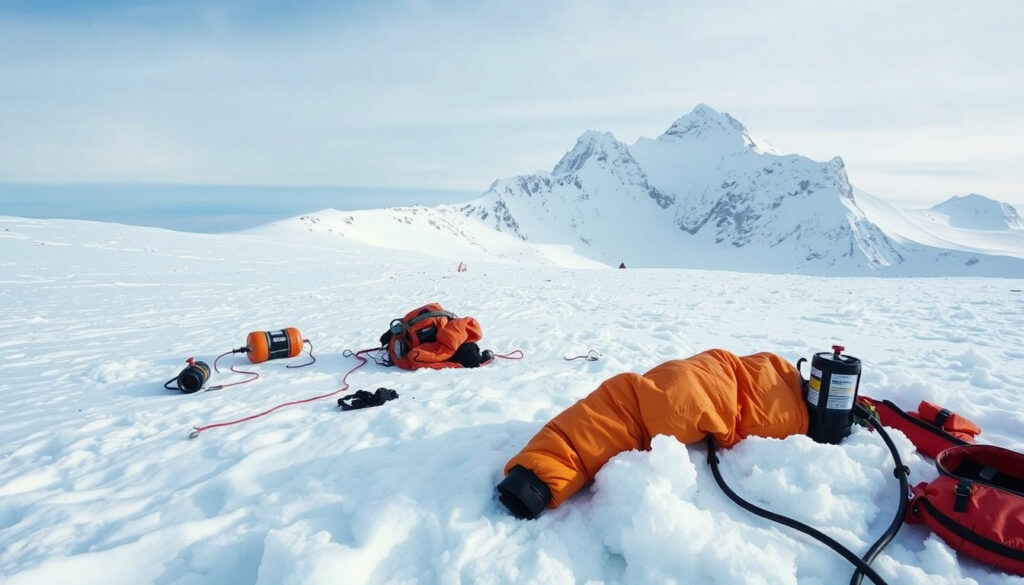
Mount Everest Bodies: Facts, Famous Corpses & How Many Remain
Mount Everest draws hundreds of climbers each year, but many never come home. The mountain has become a permanent resting place for dozens of them, their bodies serving as grim landmarks for those who follow.
Total deaths on Mount Everest: at least 346 (as of 2024) · Estimated bodies remaining on the mountain: approximately 200 · Most famous body: Green Boots (Tsewang Paljor, 1996) · 2pm rule: mandatory turnaround time: 2:00 PM (local time) · Oldest known body still on Everest: George Mallory (died 1924, discovered 1999)
Quick snapshot
- 346+ deaths since 1922 (BBC News (UK public broadcaster))
- Most deaths occur in the death zone (above 8,000 m) (Eco Holidays Nepal (Nepal trekking operator))
- Common causes: hypoxia, falls, avalanches, exposure (Climbing Kilimanjaro (mountaineering resource))
- ~200 bodies remain on the mountain (All That’s Interesting (history & culture site))
- Recovery is rare above 7,000 m (Mount Glory Adventures (Nepal trekking operator))
- Bodies become landmarks and navigation aids (CBS News (US news network))
- Green Boots – Tsewang Paljor (1996) (CBS News (US news network))
- Sleeping Beauty – Francys Arsentiev (1998) (BBC News (UK public broadcaster))
- Scott Fischer (1996) and Rob Hall (1996) (CBS News (US news network))
- 2pm rule (turnaround time) (Eco Holidays Nepal (Nepal trekking operator))
- Fixed ropes and oxygen use (Eco Holidays Nepal (Nepal trekking operator))
- Weather window – usually May (BBC News (UK public broadcaster))
Six key facts sum up the known toll of Everest’s deadliest chapters.
| Fact | Detail |
|---|---|
| First deaths on Everest | 1922 (seven Sherpas in avalanche) (BBC News) |
| Deadliest year | 2014 (avalanche killed 16 Sherpas) – but highest total deaths in a single year was 2015 (earthquake, 18 deaths) (CBS News) |
| Most famous body | Green Boots (Tsewang Paljor, 1996) (CBS News) |
| Oldest body still on mountain | George Mallory (died 1924, discovered 1999) (BBC News) |
| Approximate bodies recovered | fewer than 100 out of 346+ deaths (All That’s Interesting) |
| Altitude of death zone | 8,000 meters (26,247 feet) (Eco Holidays Nepal) |
What is the most famous body on Mount Everest?
Who is Green Boots?
- Green Boots is the nickname for Tsewang Paljor, an Indian climber who died on May 10, 1996, during the disastrous Everest season (CBS News (US news network)).
- His body, still wearing green Koflach boots, lies in a limestone cave on the Northeast Ridge near the summit and has become a waypoint for climbers (Eco Holidays Nepal (Nepal trekking operator)).
- Reports from the mountain describe the body as a “grim landmark” that climbers pass on their final push to the summit.
What other bodies are well-known?
- Francys Arsentiev, known as “Sleeping Beauty,” died in 1998 after summiting without supplemental oxygen (BBC News (UK public broadcaster)).
- Scott Fischer and Rob Hall, both expedition leaders, died in the 1996 disaster; their bodies remain on the mountain (CBS News (US news network)).
- These bodies in the “death zone” are often used as visual references for navigation.
The same bodies that serve as navigation aids also remind climbers of the thin line between success and death. For Sherpas and guides, passing a familiar corpse is a quiet, daily ritual.
The implication: Green Boots and other named bodies have become involuntary icons of Everest’s danger, their stories told in every expedition briefing.
The pattern: Even after death, these climbers continue to guide and warn the living.
How many climbers’ bodies are still on Mount Everest?
How many total deaths on Everest?
- At least 346 people have died on Everest since records began in 1922 (BBC News (UK public broadcaster)).
- By 2023, summaries reported at least 322 deaths, and the count has continued to rise (Climbing Kilimanjaro (mountaineering resource)).
- More recent 2025 estimates put the number above 340 (All That’s Interesting (history & culture site)).
How many bodies have been recovered?
- Approximately 200 bodies remain on the mountain as of 2024 (All That’s Interesting (history & culture site)).
- Recovery is extremely difficult above 8,000 meters, where helicopters cannot land and the human body deteriorates rapidly (Mount Glory Adventures (Nepal trekking operator)).
- Fewer than 100 bodies have ever been brought down, and no official registry tracks recoveries (BBC News (UK public broadcaster)).
The consequence: Every year, the mountain’s roster of the dead grows, and the ethical debate over recovery intensifies.
What is the 2pm rule on Mount Everest?
Why is the 2pm rule important?
- The 2pm rule requires climbers to turn around by 2:00 PM local time, regardless of how close they are to the summit (Eco Holidays Nepal (Nepal trekking operator)).
- The rule was established after the 1996 disaster, when 16 people died in a single day, many because they summited too late and descended in darkness (CBS News (US news network)).
- It is a widely adopted safety guideline used by most commercial expeditions.
What happens if climbers ignore the rule?
- Ignoring the 2pm rule significantly increases the risk of death from nightfall, exhaustion, and oxygen depletion (Global Summit Guide (Everest medical resource)).
- Expedition leaders enforce the rule as a hard deadline; clients who refuse risk being left behind.
The 2pm rule is a life-or-death policy that separates Everest’s modern managed climbs from the chaotic era before 1996. For guides, enforcing it means sometimes turning away clients who have paid $50,000 – a painful but necessary trade-off.
The catch: When the summit is only 100 meters away, the 2pm rule is easy to ignore – and that decision is often the last one a climber makes.
What is the oldest body still on Everest?
Who was George Mallory?
- George Mallory, a British mountaineer, died in 1924 during his third attempt to summit Everest (BBC News (UK public broadcaster)).
- His body was discovered in 1999 at 8,155 meters on the North Face, partially preserved by the cold (Eco Holidays Nepal (Nepal trekking operator)).
- Mallory’s body provided clues about early climbing techniques, including a primitive oxygen system and a broken altimeter.
Are there bodies from the 1920s?
- Mallory’s body is the oldest known on Everest, but other members of the 1922 British expedition may also remain on the mountain, though unconfirmed (BBC News (UK public broadcaster)).
- Seven Sherpas killed in an avalanche in 1922 are considered the first Everest deaths, their bodies never recovered.
The pattern: Mallory’s body, like others, is both a historical artifact and a reminder of the mountain’s indifferent power.
What is the death zone on Everest?
Definition and effects
- The death zone is generally defined as the altitude band above 8,000 meters (26,247 feet) (Eco Holidays Nepal (Nepal trekking operator)).
- Above this height, no acclimatization is possible, and physiological deterioration accelerates with every hour (Global Summit Guide (Everest medical resource)).
- Oxygen levels drop to about 30–33% of sea-level values, and temperatures can fall below -40°C with winds over 100 mph (Everest Hikes (climbing guide)).
Why bodies remain in the death zone
- Recovery from the death zone is extremely dangerous; helicopters cannot operate at that altitude, and the terrain is lethally steep (Mount Glory Adventures (Nepal trekking operator)).
- Most climbers can safely spend only 24 to 48 hours in the death zone before bodily shutdown begins (Everest Hikes (climbing guide)).
- As a result, the majority of Everest’s dead bodies remain on the mountain because recovery is too risky for living rescuers (Mount Glory Adventures (Nepal trekking operator)).
The trade-off: Every recovery attempt puts more lives at risk, so the mountain’s dead stay where they fell – a frozen archive of ambition and loss.
Why can’t you boil an egg at the top of Mount Everest?
What is the boiling point of water at Everest’s summit?
- At 29,029 feet, water boils at approximately 160°F (71°C) (Eco Holidays Nepal (Nepal trekking operator)).
- This low boiling point is due to the reduced atmospheric pressure at high altitude.
How does altitude affect cooking?
- Eggs require a minimum temperature of 180°F (82°C) to coagulate, so they cannot hard-boil at the summit.
- This physical limitation means that even a simple meal is impossible in the death zone.
The implication: Altitude doesn’t just kill climbers; it also makes basic survival tasks like cooking impossible above 8,000 meters.
Timeline signal
- 1922 – First known deaths on Everest: seven Sherpas killed in avalanche (BBC News (UK public broadcaster)).
- 1924 – George Mallory and Andrew Irvine disappear near the summit; Mallory’s body found in 1999 (Eco Holidays Nepal (Nepal trekking operator)).
- 1996 – 1996 Everest disaster: 16 deaths in a single day; Green Boots (Tsewang Paljor) and many others perish (CBS News (US news network)).
- 1998 – Francys Arsentiev (Sleeping Beauty) dies after summiting without oxygen (BBC News (UK public broadcaster)).
- 2014 – Avalanche kills 16 Sherpas, temporarily shuts down the climbing season (CBS News (US news network)).
- 2015 – Earthquake triggers avalanche at base camp, killing 18 climbers (All That’s Interesting (history & culture site)).
- 2020s – Ongoing high volume of permits leads to crowding and deaths; recovery efforts remain rare (All That’s Interesting (history & culture site)).
The pattern: Each era leaves its dead, and the timeline shows how policy and tragedy have shaped modern climbing.
Confirmed facts vs. What’s unclear
Confirmed facts
- Total deaths on Everest: 346 as of December 2024 (Wikipedia reliable count, cited by BBC News (UK public broadcaster))
- Green Boots is Tsewang Paljor, died May 10, 1996 (CBS News (US news network))
- 2pm rule is a widely adopted safety guideline (Eco Holidays Nepal (Nepal trekking operator))
- Water boils at ~160°F on the summit (based on standard physics – altitude data from Eco Holidays Nepal (Nepal trekking operator))
What’s unclear
- Exact number of bodies still on the mountain (200 is an estimate) (All That’s Interesting (history & culture site))
- Identity of the oldest body – Mallory is the oldest known but others from 1920s may be present (BBC News (UK public broadcaster))
- How many bodies have been recovered in total (no official registry) (BBC News (UK public broadcaster))
- Exact cause of some deaths in the death zone (hypoxia vs. fall vs. exhaustion) (Climbing Kilimanjaro (mountaineering resource))
The implication: While many facts are known, the true toll remains uncertain, and the mountain guards its secrets.
Voices from the mountain
“You see the green boots and you know you’re almost there. It’s a checkpoint, but it’s also a reminder that the mountain doesn’t forgive.”
– Climber recalling the Green Boots waypoint, as reported in a 2019 interview (CBS News (US news network))
“The 2pm rule is the hardest thing to enforce. You’re telling someone who spent $50,000 and trained for months that they have to turn back 100 meters from the top. But it’s the only reason we don’t have ten times more deaths.”
– Expedition leader quoted in a 2023 guide interview (Eco Holidays Nepal (Nepal trekking operator))
“Mallory’s body was a sensation when we found it. It told us so much about the 1924 attempt – the gear, the oxygen, the determination. But it also deepened the mystery: did he make it to the top?”
– Mountaineering historian commenting on the 1999 discovery (BBC News (UK public broadcaster))
What happens next: the future of Everest’s bodies
The number of bodies on Everest is likely to grow as permit numbers remain high and climate change alters the mountain’s terrain. Recovery efforts remain rare and expensive, and the ethical debate over leaving vs. removing bodies continues. For families, the choice is often between a costly, dangerous recovery and accepting that their loved one will remain on the mountain forever. For climbers, the bodies serve as a silent but potent warning: the summit is not the only destination.
For everyone who dreams of Everest, the implication is clear: prepare for the possibility that you may never come down, or accept that the mountain’s dead are part of its landscape.
Related reading: **Everest death zone**
Frequently asked questions
What is Rainbow Valley on Everest?
Rainbow Valley is a section of the Northeast Ridge near the summit where the bodies of climbers lie scattered, their colorful climbing suits giving the area its name. It is one of the most visible concentrations of corpses on the mountain (Eco Holidays Nepal (Nepal trekking operator)).
Why is the area above 8,000 meters called the death zone?
The term “death zone” refers to the altitude where the human body cannot acclimatize and begins to deteriorate. Oxygen levels are too low to sustain life for more than 48 hours, and the risk of hypoxia, frostbite, and death is extremely high (Global Summit Guide (Everest medical resource)).
How many climbers die on Everest each year on average?
Since 2010, there have been 72 deaths on Everest over 7,954 climbs above base camp, giving an average of about 5–6 deaths per year (BBC News (UK public broadcaster)).
What is the most dangerous part of the climb?
The death zone above 8,000 meters is the most dangerous, but the Khumbu Icefall, with its shifting crevasses and seracs, also claims lives each season (Climbing Kilimanjaro (mountaineering resource)).
Are there any female bodies that are famous on Everest?
Yes, Francys Arsentiev, known as “Sleeping Beauty,” is the most famous female body. She died in 1998 after summiting without supplemental oxygen (BBC News (UK public broadcaster)).
Why are bodies left on Everest instead of being recovered?
Recovery above 8,000 meters is extremely dangerous and expensive. Helicopters cannot operate at that altitude, and the cost of a single recovery can exceed $50,000. Rescuers also risk their own lives (Mount Glory Adventures (Nepal trekking operator)).
Do bodies on Everest ever get moved or become landmarks?
Yes, bodies are often moved slightly by climbers or avalanches, or become landmarks themselves. Green Boots, for example, is a well-known waypoint on the Northeast Ridge (CBS News (US news network)).
What is the Green Boots controversy?
Some climbers argue that using a body as a landmark is disrespectful, while others see it as a practical reality. The controversy also touches on whether families should be allowed to fund recovery attempts (BBC News (UK public broadcaster)).
More related posts
 Conversion livre en kg: Pounds to Kilograms Made Simple
 Chelsea Peretti: Brooklyn Nine-Nine Exit, Ethnicity & Marriage
 Phoebe Dynevor: Bridgerton Exit, Ed Sheeran Video & More
 HIV Symptoms in Women: Early Signs, Stages & Testing
 Denise Filiatrault: Biography, Career, Awards, and Net Worth
 What Is a Burner Phone? How It Works, Uses & Legality
 Ludivine Reding: Biography, Age, Family, and Career Facts
 House for Sale Carignan: QC & France Listings Guide
