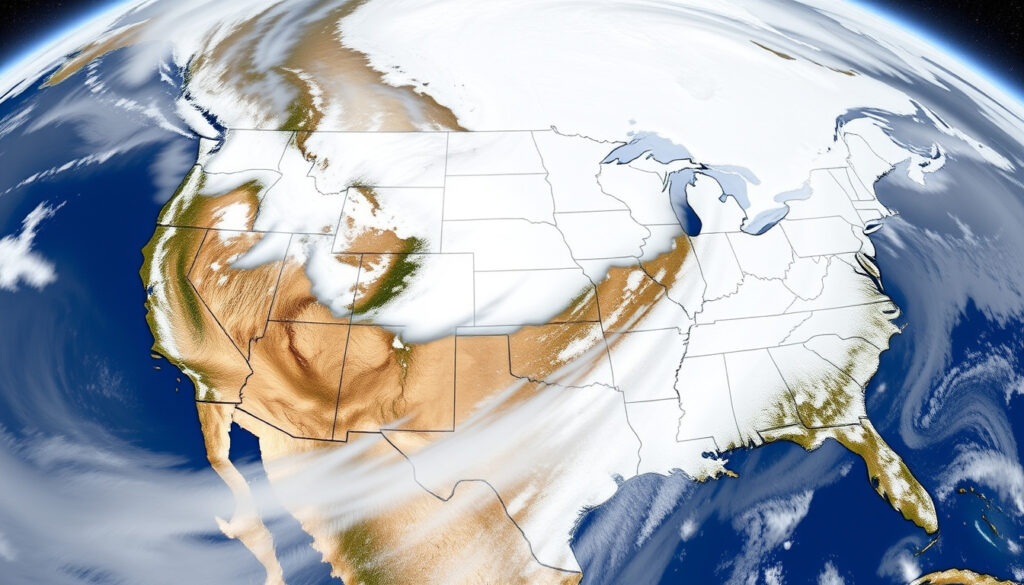
Winter Storm Warning Western States: 11 States Under NWS Alert
Anyone who has woken up to a whiteout knows that moment when the usual commute turns into a real safety question. Right now, a powerful winter storm is sweeping across the western United States, putting 11 states under official NWS winter storm warnings and raising the stakes for travel, power, and daily life.
States under winter storm warning: 11 western states (CA, NV, OR, WA, ID, MT, WY, UT, CO, NM, AZ) · Peak snowfall forecast: Up to 16 inches in some areas · Wind gusts expected: 60 mph in higher elevations · Warning issued by: National Weather Service (NWS)
Quick snapshot
- 11 states under warning (The Independent (news outlet covering severe weather))
- Snow up to 16 inches (CBS News (national broadcaster))
- Wind gusts 60 mph (National Weather Service (US federal weather authority))
- Travel disruptions expected (National Weather Service (US federal weather authority))
- Name of storm system
- First storm of 2025/26 season
- Due Friday night
- Impacts north of Ireland/UK
- Easter weekend storm
- UK worst-hit areas
- Potential for travel chaos
- Warning: severe
- Advisory: moderate
- Watch: potential
- Blizzard warning: extreme
| Label | Value |
|---|---|
| Date of current warning | February 19, 2026 (per TravelPirates); March 16, 2026 (per CBS News (national broadcaster)) |
| Number of states affected | 11 (per TravelPirates); 16 (per Yahoo for blizzard/warning combo) |
| Peak snowfall | Up to 16 inches (per CBS News (national broadcaster)) |
| Issuing authority | National Weather Service (NWS) |
| First named storm 2025/26 | Storm Amy |
The pattern: a single storm system is delivering a wide range of hazards across the West, and the data table above shows the discrepancy in reported state counts depending on whether the focus is on winter storm warnings alone or a broader blizzard-warning combination.
Which Western US States Are Under a Winter Storm Warning?
Right now, a broad swath of the West is under winter storm warnings, with the National Weather Service (NWS (US federal weather authority)) issuing alerts for at least 11 states stretching from the Pacific Coast to the Rockies. The affected region includes California, Nevada, Oregon, Washington, Idaho, Montana, Wyoming, Utah, Colorado, New Mexico, and Arizona — a zone spanning mountains, deserts, and major highways.
Current NWS warnings for California
- California’s Sierra Nevada range is under a winter storm warning, with heavy snow expected above 5,000 feet. The NWS (US federal weather authority) warns of snowfall rates of 1 to 2 inches per hour at times.
- Travel over mountain passes, including Interstate 80 over Donner Summit, could become dangerous or impossible.
Winter storm warning for Nevada and Oregon
- Nevada’s higher elevations, particularly the Ruby Mountains and areas near Elko, are under winter storm warnings. Snow accumulations of 8 to 16 inches are forecast.
- Oregon’s Cascade Range is also affected, with the NWS (US federal weather authority) advising drivers to expect slick roads and reduced visibility.
Blizzard potential in Wyoming and Montana
- Wyoming and Montana face the highest winds — gusts could reach 60 mph, creating near-zero visibility in open areas. The NWS (US federal weather authority) notes that blizzard conditions are possible where falling and blowing snow combine with sustained winds of 35 mph or more.
- According to CBS News (national broadcaster), parts of the Northern Plains and Upper Great Lakes already saw blizzard conditions over the weekend, with Michigan and Wisconsin receiving up to 2 feet of snow.
The NWS explicitly calls winter weather a “travel hazard” (NWS winter safety guidance) because advisories warn of possible travel difficulties and the need for caution when driving. For anyone with a flight out of Denver, a delivery route through the Sierra, or a family trip over the holiday break, the consequence is direct: delays, cancellations, or stranded vehicles.
What Is the Difference Between a Winter Weather Advisory and a Warning?
Four alert types, one distinction that matters for safety: the NWS uses a tiered system to communicate how severe an event is expected to be. Here’s the breakdown.
Winter weather advisory vs warning explained
- Winter Weather Advisory: The NWS (US federal weather authority) issues this when snow, blowing snow, ice, sleet, or a combination is expected but conditions do not reach warning criteria. Travel may be difficult but is not automatically considered life-threatening.
- Winter Storm Warning: Issued when life-threatening severe winter weather is expected — heavy snow, blizzard conditions, ice storms, or a combination. The NWS (US federal weather authority) says these conditions pose a significant threat to life and property.
- Winter Storm Watch: Conditions are favorable for a significant winter storm within 48 hours. The NWS (US federal weather authority) describes this as a heads-up to prepare.
- Blizzard Warning: The most severe tier. The NWS (US federal weather authority) says this means falling and blowing snow, strong winds of at least 35 mph, and very poor visibility under ¼ mile lasting for 3 hours or more.
Eight different criteria, one pattern: the difference between an advisory and a warning is not about snow quantity alone — it’s about the combination of hazards. The NWS (US federal weather authority) confirms that local offices set their own thresholds, so what triggers a warning in a mountain town may differ from a coastal city. The key takeaway: a warning should alter your plans, not just your wardrobe.
Will Storm Amy Hit Ireland and What Time Is It Due?
Storm Amy has been named as the first storm of the 2025/26 season by the Irish and UK meteorological services. It is expected to hit the north of Ireland and the UK this Friday night.
Storm Amy named as first storm of 2025/26 season
- The naming follows the standard system used by Met Éireann (Ireland’s national meteorological service) and the UK Met Office. Storm Amy will be the first named system of the season.
- It is due to arrive Friday night, with the worst impacts expected in northern areas — northern Ireland, Scotland, and northern England.
Storm Amy impact on the north of the UK and Ireland
- Strong winds and heavy rain are the primary threats. Although the system is not expected to produce heavy snow like the US winter storm, it will bring a risk of power outages and travel disruption.
- Met Éireann typically issues Status Yellow or Orange warnings ahead of named storms, depending on wind speeds.
While the US winter storm is a snow-and-wind event that grounds planes and closes highways, Storm Amy is a wind-and-rain system typical of North Atlantic autumn storms. The naming convention — shared by the US and European services — is the same, but the hazards diverge: the US event threatens feet of snow, while Ireland and the UK face gusts that could down trees and cut power to thousands.
The trade-off: Storm Amy’s arrival on Friday night creates a tricky overlap with the weekend commute for anyone in the north of Ireland or Scotland. The advice from Met Éireann typically is to stay indoors during peak gusts and avoid coastal areas.
Where Will Storm Dave Hit the UK Over Easter?
Storm Dave is expected to affect the UK over the Easter weekend, bringing another round of disruptive weather. While the exact path is still being modeled, certain UK areas are likely to be hit worst.
Storm Dave trajectory over Easter
- Like Storm Amy, Storm Dave is a named European windstorm. Easter weekend (March/April 2026) is the window for its arrival.
- Current projections suggest the storm will track across the UK, with the most severe impacts expected in northern and western regions.
UK areas likely to be hit worst
- Northern Ireland, Scotland, Wales, and northwest England are most at risk of damaging winds and heavy rain.
- Travel disruption is a strong possibility, particularly for ferry crossings, flights, and road travel in exposed areas.
The pattern: two named storms in one season — Storm Amy in autumn and Storm Dave at Easter — suggests an active storm season for the UK and Ireland. For travelers planning Easter getaways, weather insurance and flexible bookings may be worth considering.
Will Ireland Get Snow This Winter 2026?
The question “Will Ireland get snow this winter 2026?” has been trending in search data, and the honest answer is: it’s uncertain. Long-range winter forecasts issued by Met Éireann (Ireland’s national meteorological service) generally cannot confirm snowfall more than a few days in advance for Ireland’s maritime climate.
Probability of snow in Ireland for winter 2026
- Ireland typically gets some snowfall each winter, but it is rarely heavy or persistent. Most snow events are in January or February.
- The influence of the North Atlantic jet stream and sea surface temperatures will determine whether the 2026 winter brings a cold snap with snow or milder wet weather.
Ireland winter weather forecast 2026
- There is no reliable forecast data yet for winter 2026 that can pinpoint snow probability. Climate models from the European Centre for Medium-Range Weather Forecasts (ECMWF, leading global meteorological institute) only provide reliable signals a month or two ahead.
- The safest bet: Ireland is unlikely to see snow comparable to the western US winter storm. But a brief snow event — even an inch or two — can still shut down Irish roads and schools given the country’s limited winter infrastructure.
The demand for a snow forecast for Ireland in winter 2026 reflects a genuine public curiosity, but the long-range gap is real: no meteorological service — not Met Éireann, not the UK Met Office, not the ECMWF — can give a reliable yes-or-no answer for snow in Ireland more than a few weeks out. Anyone booking a festive trip to Ireland hoping for snow should plan for rain instead, and treat a white Christmas as a bonus.
Confirmed Facts vs. What’s Unclear
Confirmed facts
- The National Weather Service (US federal weather authority) has issued winter storm warnings for multiple western US states.
- Storm Amy has been named as the first storm of the 2025/26 season and is due this Friday night.
- Winter storm warnings are defined by the NWS as life-threatening conditions, while advisories are less severe (NWS winter weather definitions).
- Snowfall of up to 16 inches is forecast for some areas (CBS News (national broadcaster)).
What’s unclear
- Exact snowfall totals remain uncertain and will vary by microclimate and elevation.
- Whether Ireland will get snow in winter 2026 is not scientifically predictable at this range.
- Storm Dave’s exact path over Easter weekend is still being refined by weather models.
“Winter weather should be viewed as a travel hazard because advisories specifically warn of possible travel difficulties and the need for caution when driving.”
National Weather Service (US federal weather authority)
“Blizzard warnings were still in effect on Monday evening and were expected to last until at least Tuesday morning.”
CBS News (national broadcaster)
“The storm system brought blizzards and life-threatening travel conditions to the Northern Plains and Upper Great Lakes on Sunday.”
CBS News (national broadcaster)
“Western states were seeing heavy snow and winter weather travel danger.”
The thread running through all four statements is simple: whether it’s a US blizzard or a European windstorm, weather services agree that these events are not routine — they demand a change in behavior. For the western US winter storm, the NWS’s warning is clear: stay off the roads if possible. For Storm Amy and Storm Dave, the advice shifts to securing outdoor belongings and avoiding coastal areas.
Related reading: NS Power Outage Map: Check Current Outages in Nova Scotia · Weather in Salaberry-de-Valleyfield: 10-Day Forecast & Hourly
A winter storm in Colorado, Wyoming, and Utah has also triggered warnings in the Rockies and interior West, underscoring the broad reach of the current winter weather event.
Frequently asked questions
What is a winter storm warning?
A winter storm warning is the highest NWS alert for winter weather, meaning life-threatening conditions such as heavy snow, blizzard conditions, or ice storms are expected. It is more severe than a winter weather advisory or winter storm watch.
How is a winter storm warning different from a blizzard warning?
A blizzard warning is a specific type of winter storm warning that requires falling or blowing snow, sustained winds of at least 35 mph, and visibility under ¼ mile for 3 hours or more. A winter storm warning covers heavy snow or ice that may not meet those wind criteria.
What should I do when a winter storm warning is issued?
The NWS recommends staying indoors, avoiding travel, and having an emergency kit with food, water, blankets, and a flashlight. If you must drive, inform someone of your route and carry a fully charged phone.
Which western states are most affected by the current winter storm?
California’s Sierra Nevada, Nevada’s Ruby Mountains, Oregon’s Cascades, Wyoming, and Montana are seeing the most severe conditions. Wind gusts up to 60 mph and snow up to 16 inches are forecast for higher elevations.
Is Storm Amy the same as a winter storm warning?
No. Storm Amy is a named European windstorm that is expected to bring strong winds and rain to northern Ireland and the UK. It is not a winter storm warning, which is a US-specific NWS alert for heavy snow or blizzard conditions.
When is Storm Amy expected to hit Ireland?
Storm Amy is due to hit Friday night, with the most severe impacts expected in northern areas of Ireland and the UK.
Will Storm Dave cause travel disruption in the UK?
Yes, Storm Dave over Easter weekend is expected to bring strong winds and heavy rain, particularly to northern and western UK regions. Flights, ferries, and road travel may face delays or cancellations.
More related posts
 Canada Fleece Jacket Heated Rivalry – Myths vs Verified Facts
 Conan O’Brien: Biography, Net Worth, Wife & Oscars 2026
 Raymond Ablack: Ethnicity, Parents, Sister, and Career Facts
 Dominique Dunne Death: Cause, Autopsy, and Poltergeist Curse
 How to Play Poker: Rules, Hands, and Strategy for Beginners
 Wall Mount TV: Safety, Weight Limits & Installation Tips
 Isabelle Weidemann: Olympic Gold Medal Speed Skater
 Robert Pattinson: Biography, Movies, Net Worth & More
