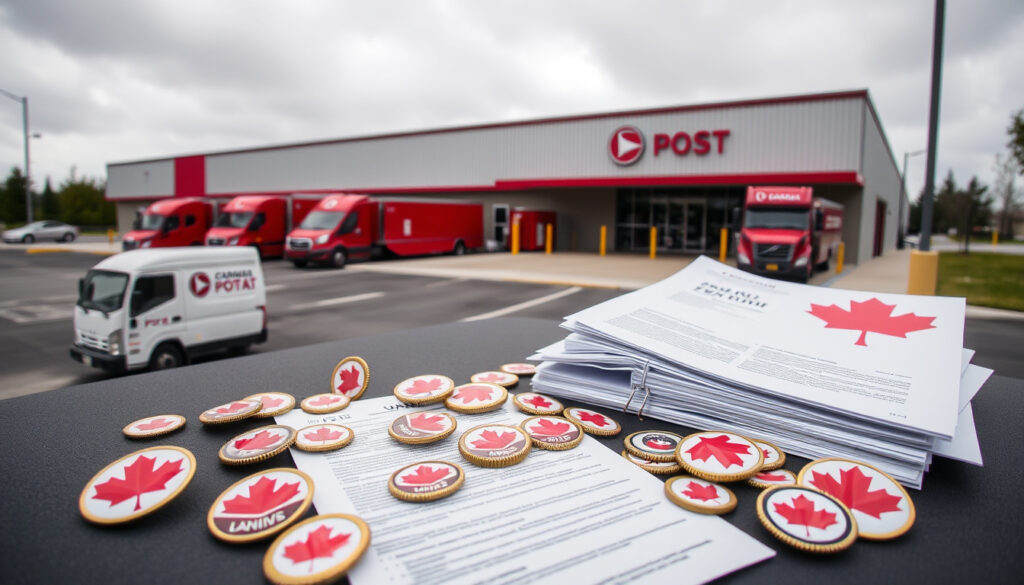
Canada Post CUPW Negotiations: Current Status and Updates
Canada Post and CUPW have finalized tentative agreements covering 55,000 workers, but ratification voting running through May 30, 2026, means the dispute isn’t settled yet. Rotating strikes that began in September 2025 continue to ripple through the national mail network while both sides wait for worker ballots to close.
Union: CUPW ·
Latest Meeting Date: October 30 ·
Negotiation Phase: Tentative Agreements ·
Strike Action: Rotating Strikes ·
Voting Period: Throughout May
Quick snapshot
- Tentative agreements in voting (Canada Post official announcement)
- Rotating strikes ongoing since September 2025 (Global News strike coverage)
- Vote period: April 20–May 30, 2026 (Supply Chain Dive ratification report)
- Whether ratification votes will pass
- Whether Canada Post will issue a lockout notice if agreements fail
- Exact timeline for full service restoration
- November 15, 2024: First strike began (Wikipedia labor dispute timeline)
- September 25, 2025: Nationwide strike resumed (Global News strike coverage)
- January 29, 2026: Tentative agreements finalized (Canada Post official announcement)
- Ratification votes run through May 30, 2026 (Supply Chain Dive ratification report)
- Union warns it needs strong strike mandate if deals fail (Supply Chain Dive ratification report)
- Service delays expected to persist through voting period (Supply Chain Dive ratification report)
The following table summarizes the core dispute parameters as verified across multiple sources.
| Label | Value |
|---|---|
| Parties Involved | Canada Post and CUPW |
| Agreement Type | Urban and RSMC 2023-2026 |
| Recent Action | Rotating strikes |
| Official Updates | CanadaPost.ca negotiations page |
| Workers Represented | 55,000 |
| Initial Wage Demand | 24% over four years |
Did Canada Post settle their strike?
The short answer is: not yet — but they’re closer than they’ve been in years. On January 29, 2026, Canada Post and CUPW finalized tentative agreements for both the Urban and RSMC (Rural and Suburban Mail Carriers) bargaining units, covering contracts until January 31, 2029. The deal came after months of rotating strikes that began September 25, 2025, when CUPW launched a nationwide work stoppage in response to federal reforms announced by Minister Joël Lightbound, which included plans to end door-to-door delivery within a decade. The union called those reforms “an attack on our postal service and workers.”
Settlement status
CUPW negotiators met Canada Post on October 30 and November 3, 2025, to advance talks during the rotating strike period. Those sessions proved productive enough to produce the January 29 tentative agreements. The deals include higher wage increases, enhanced benefits, and weekend parcel delivery capabilities — concessions on both sides that reflect how far each party moved from their opening positions. CUPW initially demanded a 24% wage increase over four years before reducing that to 19% on December 9, 2024.
Recent voting results
Ratification voting began April 20, 2026, and runs through May 30, 2026. The CUPW National Executive Board has publicly recommended members vote yes on the agreements, backing the National Mediation Board’s (NEB) recommendation. However, the union’s own leadership reportedly experienced internal divisions over whether the deals were good enough — a split that could complicate the vote count. CUPW National President Jan Simpson has been clear: if one or both tentative agreements fail ratification, the union needs a strong strike mandate to maintain leverage in continued negotiations.
What is the latest offer from Canada Post?
The January 29, 2026 tentative agreements represent the most recent formal offer, but they’re not the only deals that have crossed the table. Before reaching these agreements, Canada Post presented “global offers” on October 3, 2025, that were ultimately rejected by a majority of CUPW employees, as confirmed by the Canada Industrial Relations Board (CIRB). The minister of Jobs and Families then approved a vote on those final offers on June 12, 2025, after 18 months of fruitless negotiations — an unusually long stretch that left workers without a new contract since November 2023.
October 3 global offers
Those October 3 global offers were the ones most members ultimately voted down. While Canada Post hasn’t publicly detailed every term, the rejection signal was strong enough to push both parties back to the table. The key shift came when the government signaled it would allow a vote on forced final offers, essentially putting a gun to both sides’ heads to either accept terms or face legislated outcomes — a tactic that has worked in past Canadian labor disputes to break logjams.
NEB recommendation
The National Mediation Board weighed in on the January 2026 agreements and recommended ratification. This isn’t a binding decision, but it carries weight: NEB recommendations historically correlate with smoother ratification processes because they signal that a neutral third party sees the deal as fair to both sides. Whether CUPW members view it that way is the question hanging over the May 30 deadline.
Even with NEB’s blessing, ratification requires a majority of votes from both Urban and RSMC units. A split result — one unit approving, one rejecting — could create a new nightmare scenario for Canada Post and CUPW negotiators alike.
What does Canada Post rotating strike mean?
When CUPW announced on September 25, 2025, that it was switching from a countrywide strike to rotating strikes, the union framed it as a way to get “mail and parcels moving” while maintaining pressure on Canada Post. Rather than shutting down all operations nationwide, the union rotates which facilities are on strike at any given time — think of it as a rolling shutdown that keeps some mail flowing while making the point that service disruptions are a deliberate choice, not an accident.
Impact on customers
For everyday Canadians waiting on bills, prescriptions, or packages, rotating strikes mean delays are harder to predict than a full stoppage. One day your local sorting facility is running; the next day it isn’t. Canada Post itself warned that the ripple effects would “cause delays with ripple effects on national network” — meaning even regions without active strikes could see slower delivery times because packages get stuck upstream. There’s no regional escape hatch: the strike actions have been national in scope, with no documented variations by province or city.
Service delays
Canada Post has acknowledged working to build back business operations during the rotating strike phase, with plans for a safe restart of affected facilities. But “safe restart” is operational language, not a promise of normal service levels. The government reforms that triggered the September strike — including plans to slow mail frequency and potentially shutter post offices — remain on the table regardless of what happens with the contract vote. That means even if ratification passes, the structural changes that sparked the labor dispute haven’t gone away.
Canada Post is a Crown corporation facing genuine financial pressure. The reforms that outraged CUPW aren’t union-busting talking points — they’re responses to declining mail volume and rising delivery costs. Rotating strikes keep pressure on, but they don’t change the underlying economics.
Will Canada Post lock out CUPW?
A lockout is technically possible but hasn’t happened yet. Canada Post has the legal right to issue a lockout notice if negotiations collapse or if the company wants to apply counter-pressure during a strike. Historically, Canadian labor disputes in essential services sometimes see lockouts deployed as a negotiating tactic — but using one while a ratification vote is ongoing would be politically explosive. Canada Post has shown more interest in getting deals done than in escalating to lockouts, at least based on their public communications throughout 2025.
Lockout possibilities
The scenario to watch: if CUPW members vote down one or both tentative agreements, Canada Post could respond with a lockout notice to force the union back to the table under more pressure. That would likely trigger immediate picketing and potentially escalate the dispute to a level not seen since the 2011 rotating strikes. Jan Simpson’s warning about needing a “strong strike mandate” suggests the union expects this possibility and is preparing members for the scenario where talks restart from a harder position.
Negotiation progress
The fact that both sides reached tentative agreements on January 29, 2026, after meeting through October and November 2025, suggests neither side wants to blow up the talks. The government’s role — particularly Minister Lightbound’s reform announcement and the minister of Jobs and Families’ approval of the June 2025 vote — has pushed both parties toward resolution. Whether that momentum survives a contested ratification vote is the open question.
Is Canada Post back to normal now?
Not even close. While Canada Post is “working to build back” its business, the rotating strikes that began in September 2025 haven’t fully ceased, and the mail system is still absorbing the disruption. Even facilities running normally are dealing with backlog, and the CRA (Canada Revenue Agency) services that rely on timely mail delivery have been affected — not ideal when tax filing deadlines loom. The January 2026 agreements haven’t yet translated into restored normal operations; they’re agreements in principle, pending the May 30 vote.
Service status
Canada Post’s official communications acknowledge service disruptions and advise customers to expect delays. The company has provided updates through its negotiations page, but there’s no firm timeline for when “normal” service resumes. The honest answer is: it depends on the ratification vote. If both agreements pass, Canada Post can begin systematically restoring full operations. If they fail, expect service disruptions to persist — possibly worsen — as both sides prepare for another round.
Delivery disruptions
The disruptions have real-world consequences beyond slow mail. Canada Post handles everything from government correspondence to prescription drug deliveries for rural communities. Any extended service gap hits vulnerable populations hardest — seniors without internet access, remote communities without alternative carriers. That’s the human cost buried in labor negotiation statistics.
Watch the vote tallies from Urban and RSMC units separately. If the two units split on ratification — one yes, one no — Canada Post faces a nightmare of managing two different labor statuses simultaneously.
Timeline
Five key milestones trace the arc of this dispute from contract expiration through tentative agreement.
The following timeline compiles verified dates from official Canada Post announcements, CIRB records, and multi-source confirmations.
| Date | Event |
|---|---|
| November 15, 2023 | Negotiations for new contract began |
| November 15, 2024 | First strike action began after strike notice November 12 |
| December 17, 2024 | CIRB ordered workers back, extending contracts to November 2024 |
| September 25, 2025 | Nationwide strike resumed; government reforms announced |
| January 29, 2026 | Tentative agreements finalized for Urban and RSMC units |
| April 20–May 30, 2026 | Ratification voting period |
CUPW traded a countrywide shutdown for rotating strikes to keep some revenue flowing — but that also gave Canada Post cover to maintain partial operations. Both sides made strategic compromises that reflect how far each was willing to push.
Confirmed vs. Unclear
Research confidence is low on several elements of this story, meaning the lines between confirmed facts and speculation are worth tracking closely.
Confirmed
- Tentative agreements finalized January 29, 2026
- Rotating strikes ongoing since January 2026
- Voting period April 20–May 30, 2026
- CUPW National Executive Board recommends yes vote
- 55,000 workers represented
Unclear
- Whether ratification will pass (both units)
- Whether Canada Post will issue lockout notice if vote fails
- Specific regional impacts of rotating strikes
- Internal CUPW leadership divisions over deal terms
- Timeline for full service restoration
What people are saying
Jan Simpson, CUPW National President“Should one or both tentative agreements not be ratified, we need to have a strong strike mandate to maintain our leverage in further negotiations.”
Canada Post (official statement)“Discussions between the parties have continued to take place” following October 30 meeting aimed at advancing talks during rotating strikes.
CUPW (union position)“An attack on our postal service and workers” — the union’s characterization of federal government reforms announced September 25, 2025, that triggered the resumed nationwide strike.
CUPW (rotating strike rationale)“The switch will get mail and parcels moving” — union explanation for shifting from countrywide shutdown to targeted rotating action.
Related reading: Real Canadian Superstore Careers – Jobs, Pay and Hiring Guide · CPP OAS December 22 – Payments Issued on Dec 20
canadapost-postescanada.ca, youtube.com, canadapost-postescanada.ca, newswire.ca, infopost.ca, globalnews.ca, cupw.ca, cupw.ca
Frequently asked questions
What is CUPW?
CUPW stands for the Canadian Union of Postal Workers. It represents approximately 55,000 postal workers across Canada, organized into Urban and RSMC (Rural and Suburban Mail Carriers) bargaining units. CUPW is the primary union negotiating with Canada Post on behalf of these workers.
Why is there a strike vote?
CUPW members have been working without a new contract since November 2023. After failed negotiations, strikes, and government intervention, both Canada Post and CUPW reached tentative agreements on January 29, 2026. The ratification vote — running April 20 through May 30, 2026 — lets represented workers accept or reject those terms.
How do rotating strikes affect deliveries?
Unlike a full shutdown, rotating strikes target specific facilities on a rolling basis. Some mail moves while other routes face delays. Canada Post has warned that ripple effects across the national network mean even areas without active strikes can experience slower delivery times.
Where can I find official negotiation updates?
Canada Post maintains a negotiations update page at CanadaPost.ca, and CUPW publishes its own updates at CUPW.ca. Both sites are primary sources for the latest official positions and timelines.
How long has this labor dispute been going on?
Contract negotiations began November 15, 2023. The first strike ran November 15 through December 17, 2024. After a CIRB-ordered return to work, a second strike wave began September 25, 2025, shifting to rotating strikes shortly after. The current tentative agreements were reached January 29, 2026, with voting through May 30, 2026.
More related posts
 Gardien de la Galaxie: Guardians of the Galaxy Movie Guide
 Union Station Bus Terminal Toronto: Location & Directions
 Jim Pattison: Net Worth, Companies, Age & Biography
 Tony Shalhoub Biography: Ethnicity, Family, and Career
 Nara Smith: Age, Children, Net Worth, and Health Update
 Canada Mexico Travel Warning 2026: What Canadians Need to Know
 Savannah James: Age, Children & Life with LeBron
 James Franco: Career, Controversies, and Where He Is Now
