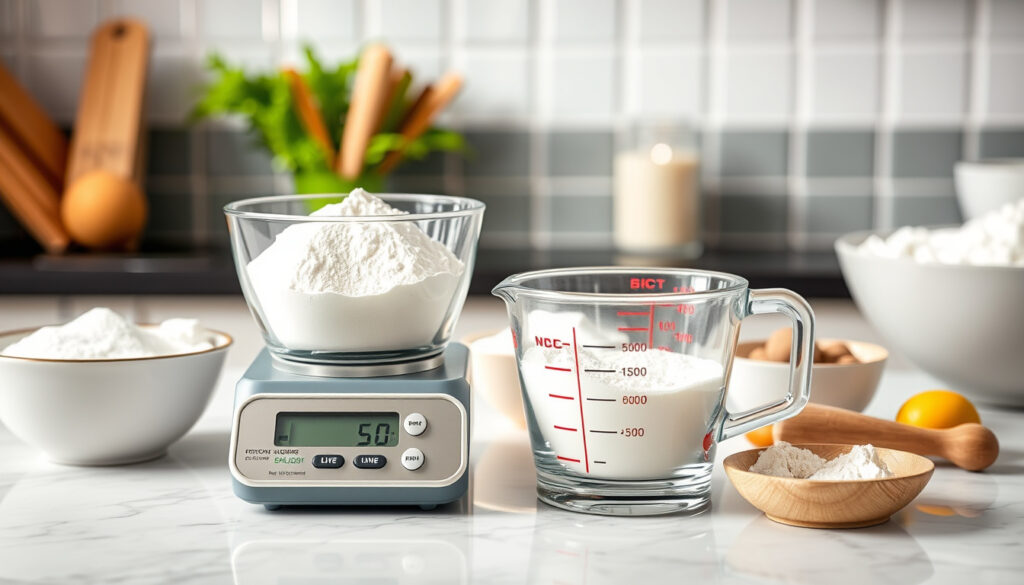
50 Grams to Cups – Accurate Conversions for Flour, Sugar & More
Converting 50 grams to cups requires understanding one fundamental principle: the answer changes depending on what you’re measuring. A gram measures weight, while a cup measures volume, and different ingredients have different densities. This guide provides accurate conversions for the most common baking and cooking ingredients, backed by established measurement standards.
Whether you’re following a recipe from outside the United States or working with a kitchen scale, knowing how to translate between these units helps ensure consistent results. The conversions below draw from authoritative baking sources, primarily the King Arthur Baking ingredient weight chart, with cross-references to other trusted references.
For those who need broader conversion context, see our comprehensive 50 Grams to Cups – Accurate Conversions for Flour, Sugar & More resource.
How Many Cups Is 50 Grams?
The short answer is that 50 grams converts to different cup amounts depending on the ingredient. A standard US cup equals approximately 236.6 mL, but the weight of ingredients packed into that volume varies dramatically based on their density.
Key Conversion Insights
- Conversion varies by ingredient density—lighter ingredients yield more cups per gram
- Using a digital kitchen scale provides the most precise measurements
- A standard US cup equals 236.6 mL or approximately 8 fluid ounces
- How flour is packed can affect volume by 20-30%
- Liquids are consistent: 50g always equals 50mL
- King Arthur’s 120g/cup flour standard aligns with USDA guidelines
- Source variations exist—some lists use 150g/cup for flour, which affects the conversion
50 Grams to Cups Reference Table
| Ingredient | Weight per US Cup | 50g ≈ Cups |
|---|---|---|
| All-Purpose Flour | 120g | ~0.42 cups |
| Granulated Sugar | ~200g | ~0.25 cups |
| Powdered Sugar | ~113g | ~0.44 cups |
| Butter | ~227g | ~0.22 cups |
| Water | 236.6g | ~0.21 cups |
| White Rice (uncooked) | ~160-185g | ~0.31 cups |
| Powdered Milk | ~114g | ~0.44 cups |
50 Grams Flour to Cups
Flour is one of the most commonly converted ingredients, and it also shows some of the widest variation between sources. Understanding the difference helps explain why your measurements might vary from recipe to recipe.
All-Purpose Flour
Based on the King Arthur Baking ingredient weight chart, one cup of spooned-and-leveled all-purpose flour weighs approximately 120 grams. This means 50 grams equals roughly 0.42 cups—about one-third cup plus two additional tablespoons.
Other sources list higher weights. Anna Olson’s baking conversion guide indicates 150g per cup, which would yield approximately 0.33 cups for 50 grams. Charlotte’s Lively Kitchen estimates around 0.44 cups, noting their measurement falls between US and UK standards. These variations stem from how the flour is scooped and packed.
Bread Flour Variations
Bread flour typically has a slightly higher protein content than all-purpose flour, which can affect its density and weight per cup. For precise bread-making, professional bakers recommend weighing ingredients rather than relying on volume measurements. The Charlotte’s Lively Kitchen conversion guide notes that bread flour measurements can vary by brand and region.
For consistent results, spoon flour into your measuring cup and level with a knife. Avoid scooping directly from the bag, which compacts the flour and can add 20-30% more weight per cup.
50 Grams Sugar to Cups
Sugar conversions differ significantly between types because the crystal size and how tightly the sugar packs into a cup vary considerably.
Granulated Sugar
Granulated white sugar weighs approximately 200-213 grams per US cup, based on King Arthur’s data. This puts 50 grams at roughly 0.25 cups, or approximately one-quarter cup. The measurement is relatively consistent because granulated sugar crystals flow evenly and pack predictably.
Powdered Sugar
Powdered or confectioners’ sugar is much lighter due to its finely milled texture. At approximately 113 grams per cup, 50 grams of powdered sugar equals about 0.44 cups—nearly double the volume of granulated sugar for the same weight. This difference matters significantly when substituting one form for another.
50 Grams Water or Liquids to Cups
Liquid conversions are the most straightforward because water serves as the baseline for density. One gram of water equals one milliliter, making the math predictable.
Water Density
Fifty grams of water equals 50 milliliters, which converts to approximately 0.21 US cups—just slightly more than one-quarter cup, falling short by about one tablespoon. This conversion is universal for any liquid with similar density to water, including milk, juice, and most thin sauces.
Other Liquids
Heavier liquids such as honey, molasses, or condensed milk will yield slightly less volume per gram due to their higher density. For these ingredients, a kitchen scale provides the most reliable measurement. The Anna Olson baking conversions offer specific guidance for various liquid ingredients.
When a recipe calls for 50g of a liquid ingredient, using 50mL works perfectly for water-based liquids. For thicker liquids, allow for slight variance based on viscosity.
50 Grams Butter or Other Ingredients to Cups
Butter and fats present unique conversion challenges because their density changes with temperature. Softened butter packs differently than cold butter straight from the refrigerator.
Butter
Butter weighs approximately 227 grams per US cup when measured as softened, according to Charlotte’s Lively Kitchen. This density translates to about 0.22 cups for 50 grams—roughly three tablespoons plus one teaspoon. The measurement assumes butter is at room temperature and loosely packed into the measuring cup.
Rice and Dry Goods
White rice falls in the middle range for dry goods, with estimated weights between 160-185 grams per cup. This places 50 grams at approximately 0.31 cups, or about one-third cup. The King Arthur Baking chart notes that uncooked rice density varies by grain type and length.
How to Convert Grams to Cups Accurately
The most accurate method for converting grams to cups involves using the ingredient’s density. The general formula is: Cups = Grams ÷ (grams per cup). For liquids where density equals 1g/mL, the calculation simplifies to direct volume conversion.
Step-by-Step Method
- Determine the weight per cup for your specific ingredient from a reliable source
- Divide the gram amount (50) by the grams-per-cup value
- For liquids with 1g/mL density: 50g = 50mL ÷ 236.6mL per cup
- Round to the nearest practical measurement
Common Pitfalls
- Scooping flour directly from the bag can add 20-30% more than spooned measurements
- Humidity affects flour volume by up to 10%
- Altitude changes how ingredients settle and pack
- Different brands may have slightly different densities
- Sifting flour before measuring adds air and reduces weight per cup
Volume-to-weight conversions inherently carry some margin of error. Professional bakers recommend using a digital scale for precision, particularly for flour, where the difference between 120g and 150g per cup can significantly affect baking results.
Conversion Accuracy and Variations
Understanding where conversion uncertainties lie helps set realistic expectations and improve consistency in the kitchen.
| Established Information | Information with Variation |
|---|---|
| Water: 50g = 50mL exactly | Flour: 0.33-0.44 cups depending on source |
| US cup = 236.6mL | Rice: 0.27-0.31 cups depending on grain type |
| Formula: Cups = 50 ÷ (g/cup) | Powdered milk: 0.44 cups estimated |
| Scooping method affects flour by 20-30% | Butter: 0.22 cups based on softened measurement |
Why Grams to Cups Isn’t Exact
Weight and volume measure different properties. Weight reflects mass, while volume measures the space an ingredient occupies. The density of each ingredient—how much mass packs into a given volume—determines the conversion ratio.
This relationship means that a cup of feathers weighs far less than a cup of lead, even though both occupy the same volume. In baking and cooking, where chemical reactions depend on precise ratios, this distinction matters significantly. For the home baker, understanding density helps explain why weight measurements generally produce more consistent results than volume measurements.
Key Sources
“Weighing ingredients provides the most accurate results. By weight, one cup of all-purpose flour equals 120 grams. This measurement uses the spoon-and-level method.”
“When converting between weight and volume measurements, remember that the density of the ingredient matters. A cup is not a cup when you’re measuring different ingredients.”
Related Conversions
Understanding 50-gram conversions provides a foundation for working with other common measurements. Whether you need to scale a recipe up or down, or work with different ingredient weights, the principles remain consistent. For additional measurement guides, see our 48 Inches in Feet – Exact 4 Feet Conversion Guide for more conversion reference material.
Frequently Asked Questions
Does grams to cups vary by ingredient?
Yes, significantly. Grams measure weight while cups measure volume. The conversion depends entirely on ingredient density. Fifty grams of flour equals approximately 0.42 cups, while 50 grams of water equals only 0.21 cups because water is denser than flour.
How accurate is converting 50 grams to cups?
Accuracy varies by ingredient and measurement method. For liquids like water, the conversion is exact: 50g equals 50mL or about 0.21 cups. For dry goods, expect a margin of error around 5-10% due to variations in how ingredients pack and differences between sources.
How many cups is 50g of milk?
Milk has a density very close to water, approximately 1.03g/mL. This means 50g of milk equals roughly 48.5mL, or about 0.20-0.21 US cups—nearly the same as water.
How many cups is 50 grams of rice?
White rice weighs approximately 160-185 grams per cup depending on the variety and how it’s measured. Fifty grams of uncooked white rice converts to roughly 0.27-0.31 cups, or about one-third cup.
Why do different sources give different conversions for flour?
Variations stem from different measurement methods. Some sources use 120g per cup (spooned and leveled), while others use 150g per cup (possibly scooped directly). The difference of 30 grams per cup represents about a 25% variation in the conversion rate.
Is it better to weigh ingredients instead of using cups?
For precision baking, weighing is generally more accurate and consistent. Volume measurements can vary by 20-30% depending on how ingredients are packed, sifted, or scooped. A digital kitchen scale provides the most reliable results.
More related posts
 Penny Marshall: Life, Death, and Legacy of the ‘Big’ Director
 What Is a Burner Phone? How It Works, Uses & Legality
 Brock Purdy: $265M Contract, Wife, Salary & Injury News
 Mariska Hargitay Biography: Children, Scars, and Tragic Story
 Dylan Wang: Biography, Relationship Status, Height, and More
 When Did Pope Francis Die? Date, Cause, Last Words & Aftermath
 Taylor Dearden: Biography, Family, Career, and Name Choice
