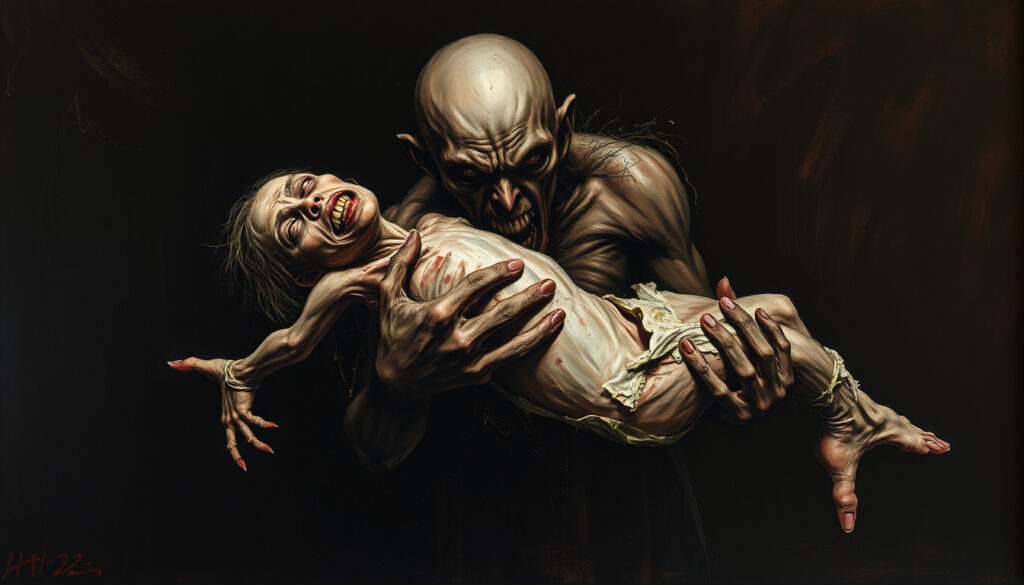
Saturn Devouring His Son: Goya’s Dark Masterpiece
There are some paintings that, once seen, you never really unsee. Francisco Goya’s Saturn Devouring His Son is exactly that: a raw, monstrous figure hunched over the body of a child, eyes wild with a mix of hunger and horror. But this isn’t just a horror show; it’s a personal and political confession from the last years of the artist’s life, when he lived alone in a house covered in what we now call the Black Paintings. By looking at the myth, the history, and what we know about Goya’s own mind, we can get closer to understanding why this image still holds such a powerful grip on us.
Artist: Francisco Goya ·
Year: 1819–1823 ·
Medium: Oil on canvas ·
Dimensions: 143.5 cm × 81.4 cm ·
Location: Museo Nacional del Prado, Madrid ·
Series: Black Paintings
Quick snapshot
- Part of the Black Paintings series (Britannica)
- Created 1819–1823 on the walls of Quinta del Sordo (Museo del Prado)
- Transferred to canvas in 1874 (Britannica)
- Roman god Saturn devouring his children to prevent prophecy (Britannica video)
- Goya’s version is unusually violent and raw (Britannica video)
- Contrasts with Rubens’ more restrained depiction (Britannica video)
- Born 1746, became court painter (Britannica)
- Illness in 1792 left him deaf and isolated (Britannica video)
- Painted the Black Paintings in his later years (Britannica)
- Iconic masterpiece of Romanticism (Britannica)
- Inspired countless artists and pop culture (Artnet News)
- Held at Museo del Prado, rarely loaned (Museo del Prado)
Here is a summary of the essential specifications for Goya’s brutal masterpiece.
| Attribute | Details |
|---|---|
| Artist | Francisco Goya |
| Date | 1819–1823 |
| Medium | Oil on canvas (transferred from wall) |
| Dimensions | 143.5 × 81.4 cm |
| Location | Museo Nacional del Prado, Madrid |
| Series | Black Paintings |
What does Goya’s Saturn symbolize?
The painting grabs you by the throat and demands an interpretation. On the surface, it’s the Roman god Saturn (identified with the Greek Cronus) who, fearing a prophecy that his child would overthrow him, devours them. But Goya strips away any classical decorum. There is no throne, no recognizable setting — just a wild-eyed, skeletal giant ripping a human body apart.
The Museo del Prado identifies the figure as a mythological god that may personify the human fear of losing power (Museo del Prado collection page). That reading opens the door to seeing the painting not as a distant myth, but as a very human confession about authority, paranoia, and decay.
Interpretations of the myth
- Common readings include God’s wrath, the conflict between old age and youth, and Saturn as Time devouring all things (Britannica).
- Goya’s version differs from the classical myth by showing a violent tearing apart rather than a child swallowed whole (Britannica video).
The political allegory
- The painting is widely read as an allegory of violence and tyranny rather than only as a classical myth illustration (Artnet News).
- Some interpretations connect Saturn to Spain’s political convulsions, reading the image as a fatherland devouring its children (Artmajeur).
Psychological reading
- Goya painted the Black Paintings after a severe illness in 1792 left him deaf and increasingly isolated (Britannica video).
- Several modern readings connect the work directly to Goya’s deafness, illness, and disillusionment late in life (Britannica video).
- A common iconographic reading is that Saturn becomes a symbol of paranoid authority that destroys its own future to preserve itself (Painting Meanings).
Is Saturn Devouring His Son by Goya?
Yes, and art historians have never seriously doubted it. The work is part of the Black Paintings series, 14 images Goya painted directly on the plaster walls of his country house, the Quinta del Sordo, between 1819 and 1823 (Britannica).
Because Goya never wrote about the Black Paintings, we have no definitive statement from him about what they mean or even what they’re called. The names we use today were given by later critics and curators (Museo del Prado).
Historical evidence
- The Prado confirms that the painting occupied the wall across from Leocadia Zorrilla on the ground floor of the Quinta del Sordo (Museo del Prado).
- The building was demolished in the late 19th century, but photographs and records confirm the layout (Britannica).
The Black Paintings series
- Britannica states that the Black Paintings are a series of 14 psychologically brooding images painted on the walls of the Quinta between 1819 and 1823 (Britannica).
- The series was painted directly on plaster walls rather than on canvas (Britannica).
Artistic style analysis
- The work is discussed in art history as one of the most disturbing and psychologically intense of the Black Paintings (Britannica).
- The image has no classical decorative frame or obvious mythological setting, emphasizing raw emotional force (Britannica video).
The pattern: Goya’s authorship is settled. What is less settled is whether we can ever fully separate the painting from the mythology that has grown around both the artist and his terrifying final series.
Where is Goya’s Saturn displayed?
You can see Saturn Devouring His Son in Room 67 of the Museo Nacional del Prado in Madrid. It has been part of the museum’s collection since 1874, when the Black Paintings were transferred from the walls of the Quinta del Sordo to canvas (Museo del Prado).
Museo Nacional del Prado
- The Prado’s collection page places Saturn within the context of the Quinta del Sordo, confirming the work’s original domestic architectural setting (Museo del Prado).
- The painting measures 143.5 cm × 81.4 cm, making it one of the larger works in the Black Paintings series (Museo del Prado).
Exhibition history
- The Black Paintings were first exhibited publicly in 1876 (Britannica).
- The painting has been a permanent fixture at the Prado since it entered the collection in 1874 (Museo del Prado).
Travel restrictions
- The painting is rarely loaned due to its fragility and the complex conservation needs of the canvas transfer (Museo del Prado).
- Visitors should check ahead for room closures, but the work is almost always on display in Room 67 (Museo del Prado).
Why this matters: For a painting so fragile that it barely survived its own transfer from wall to canvas, the fact that it remains on permanent public display is something of a small miracle — and a reminder of how much we value a work that few viewers can easily forget.
What was Goya’s mental illness?
Goya’s life changed dramatically in 1792. At age 46, he contracted a severe illness that left him permanently deaf and profoundly isolated (Britannica video). The exact nature of that illness remains a subject of debate among medical historians, but its effect on his art is undeniable.
The mysterious illness of 1792
- Some theories suggest lead poisoning from working with pigments, others suggest dementia or a neurological condition (Britannica).
- The illness left him deaf for the remaining 36 years of his life (Britannica video).
Later years and isolation
- The Black Paintings are generally described as having been painted in Goya’s final years after illness and political disappointment (Catholic Answers).
- He moved to the Quinta del Sordo in 1819, a house on the outskirts of Madrid, and painted directly on its walls (Britannica).
- The Prado notes that the Quinta del Sordo translated as “the house of the deaf man” (Museo del Prado).
Debate among medical historians
- There is no consensus on a specific diagnosis, but the combination of deafness, potential lead exposure, and the psychological depth of his late work has fueled speculation for over a century (Britannica).
- What is clear is that the Black Paintings emerged from a man who lived in silence, isolated from the court where he once thrived (Britannica video).
The trade-off: We may never know exactly what Goya suffered from. But the art he created in that state — raw, uncompromising, and haunted — gives us a window into a mind that experienced the world differently than most.
Why is Saturn Devouring His Son famous?
Some paintings become famous because they are beautiful. Saturn Devouring His Son is famous because it is unforgettable. An artnet News article describes it as “the disturbing masterpiece we were never meant to see” (Artnet News).
Disturbing imagery
- The image shows a wild-eyed, skeletal giant with disheveled hair, his hands covered in blood, tearing apart a human body (Britannica).
- The Prado notes the figure’s bulging eyes and open mouth suggest madness rather than merely hunger (Museo del Prado).
Influence on modern art
- The painting has been cited as an influence on Surrealism and Expressionism, with artists from Picasso to Francis Bacon drawing on its raw intensity (Artnet News).
- Its influence extends to filmmakers and writers who reference the image as shorthand for destructive power (Britannica).
Cultural references
- The image has appeared in movies, TV shows, and internet memes, often divorced from its original context (Artmajeur).
- A common iconographic reading is that Saturn becomes a symbol of paranoid authority that destroys its own future to preserve itself (Painting Meanings).
The pattern: The painting’s fame rests on its ability to shock. But its staying power comes from the way it keeps offering new readings — political, psychological, biographical — every time you look at it.
Confirmed facts
- Painting is by Francisco Goya (Britannica)
- Part of the Black Paintings series (Museo del Prado)
- Currently displayed at the Museo del Prado (Museo del Prado)
- Painted between 1819 and 1823 (Britannica)
What’s unclear
- Exact date of painting within 1819–1823 (Britannica)
- Whether Goya intended the series to be viewed together (Britannica)
- Specific meaning of the painting – myth, politics, or personal demons (Artnet News)
“One of the most expressive images from the Black Paintings.”
— Museo del Prado curator, official museum description (Museo del Prado)
“The disturbing masterpiece we were never meant to see.”
— Artnet News, describing the painting’s private origins and public impact (Artnet News)
en.wikipedia.org, youtube.com, youtube.com, youtube.com, simplykalaa.com
Frequently asked questions
What medium is Saturn Devouring His Son painted on?
The work was originally painted in oil directly on the plaster wall of the Quinta del Sordo. It was transferred to canvas in 1874, and today it is displayed as an oil-on-canvas painting at the Museo del Prado (Museo del Prado).
How large is the painting?
The work measures 143.5 cm × 81.4 cm (about 56.5 × 32 inches), making it one of the larger paintings in the Black Paintings series (Museo del Prado).
What is the story of Saturn in Roman mythology?
Saturn is the Roman god identified with the Greek Cronus. According to myth, he received a prophecy that one of his children would overthrow him. To prevent this, he devoured each child at birth (Britannica video). Goya’s version shows the god in a fit of violent insanity, tearing a body apart rather than swallowing it whole.
Why did Goya paint directly on the walls of his house?
Goya lived alone at the Quinta del Sordo after years of political disappointment and illness. Painting directly on the walls may have been a personal project — a way to fill the empty rooms of his house with images that reflected his inner world (Britannica).
What other paintings are in the Black Paintings series?
The Black Paintings consist of 14 images, including Witches’ Sabbath, The Dog, and Two Old Men Eating Soup. The series was painted on the walls of two rooms at the Quinta del Sordo (Britannica).
How was the painting transferred from wall to canvas?
In 1874, the Spanish government commissioned a transfer process: the plaster was carefully removed from the wall, mounted onto a canvas backing, and then the paint layer was consolidated. The work entered the Prado collection that same year (Museo del Prado).
Has Saturn Devouring His Son ever been vandalized?
There are no recorded incidents of vandalism against the painting at the Prado. Its fragile condition and the museum’s strict conservation protocols have kept it safe from harm (Museo del Prado).
Can I see the painting at the Prado today?
Yes. The painting is on permanent display in Room 67 of the Museo del Prado in Madrid. It is almost always available for viewing, though visitors should check the museum’s website for any temporary closures (Museo del Prado).
Related reading
- Jean-Michel Basquiat: Fame, Death, Net Worth & Personal Life – A look at another artist whose personal struggles shaped a powerful visual legacy.
- Louis XIV: The Sun King – Reign, Family, and Legacy – For context on the kind of absolute power that Goya’s Saturn might be critiquing.
More related posts
 Dominic Fike: Biography, Euphoria Exit, Fatherhood, and More
 Brian Mulroney: Biography, Death, Scandal, and Legacy
 Phoebe Tonkin: Marriage, Split, and Latest News
 Maxx Crosby: Failed Physical, Trade Rumors & Career Update
 Jamal Shead: Raptors Rookie Stats, Salary & Defense
 Poison Ivy: Global Distribution, Rash, and Differences from Irish Ivy
 Girona vs Real Madrid: H2H Record, 2023 Upset & Latest News
 Bob Odenkirk: Heart Attack, Career, Net Worth, and Biography
