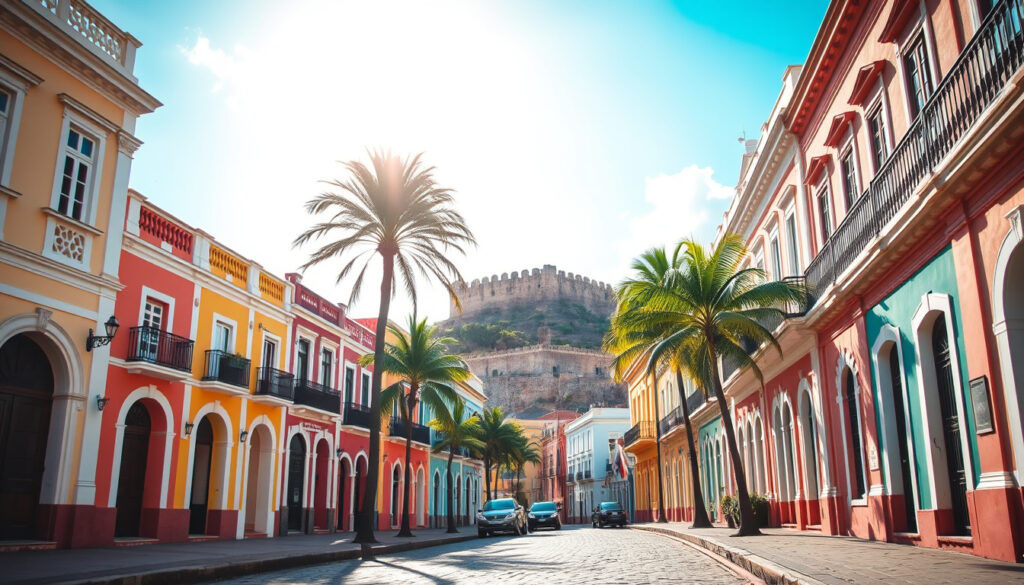
San Juan Puerto Rico Travel Guide: Safety, Cost & Best Time
Few cities blend old-world charm with Caribbean warmth quite like San Juan, the capital of Puerto Rico, offering cobblestone streets, centuries-old fortresses, and a lively culinary scene—all without needing a passport for US travelers. Whether you’re planning a weekend escape or a longer stay, this guide breaks down the practical details: safety, cost, best timing, and what to expect.
Population (2020): 395,000 ·
Founded: 1521 ·
Area: 199 km² (77 sq mi) ·
Elevation: 0–20 ft (0–6 m) ·
Currency: US Dollar (USD) ·
Main Airport: Luis Muñoz Marín International (SJU)
Quick snapshot
- The official Atlantic hurricane season runs June 1–November 30 (Canadian government travel advice)
- April and May are commonly cited as the best months to visit (WorldTrips)
- Government-run museums and tourist sights in Puerto Rico are typically free (Rough Guides)
- Current crime rates in specific neighborhoods may be outdated
- Exact impact of hurricane season on tourism in 2026 remains uncertain
- Availability of specific luxury services can vary seasonally
- Hurricane season: June–November (Canadian government travel advice) (Wayward Blog)
- High season: December–April (Wayward Blog)
- Shoulder months: April–May (WorldTrips) (Wayward Blog)
- Travelers should monitor weather forecasts and follow local advisories (Canadian government travel advice)
- Consider trip insurance during hurricane season
- Check for updated travel advisories before booking
Six key facts that define San Juan as a travel destination:
| Label | Value | Source |
|---|---|---|
| Country | United States (unincorporated territory) | Canadian government travel advice |
| Official Languages | Spanish, English | Rough Guides |
| Currency | US Dollar (USD) | Rough Guides |
| Time Zone | Atlantic Standard Time (AST, UTC-4) | WorldTrips |
| Main Airport | Luis Muñoz Marín International Airport (SJU) | Rough Guides |
| Drives on the | Right | Canadian government travel advice |
Is San Juan, Puerto Rico a nice place to visit?
What makes San Juan unique?
- Old San Juan is the second-oldest European settlement in the Americas, founded in 1521 (Rough Guides)
- Its cobblestone streets, colorful colonial buildings, and El Morro fortress create a setting unlike any other Caribbean capital
- Puerto Rico is a US territory, so US citizens need no passport, making travel seamless (Canadian government travel advice)
Top attractions in San Juan
- El Morro and Castillo San Cristóbal (Spanish colonial fortresses)
- Condado Beach and Isla Verde for sunbathing and water sports
- Mercado Agrícola Natural (open Saturdays 8 a.m.–noon) for local produce (Wayward Blog)
- La Placita de Santurce for nightlife and live salsa music
Is San Juan worth visiting?
Ten million visitors a year say yes. The city offers a rare combination of history, beaches, and modern urban energy—all in a safe, English-friendly environment. WorldTrips calls it a top Caribbean destination with year-round appeal.
The implication: San Juan’s appeal remains strong despite seasonal trade-offs, offering a genuine Caribbean experience with fewer bureaucratic hassles.
What’s the best time to go to San Juan, Puerto Rico?
Peak season vs. off-peak
- High season (December–April): Milder temperatures, lower rain, but higher prices (Wayward Blog)
- Shoulder season (April–May): Fewer crowds, good weather, lower rates (WorldTrips)
- Low season (June–November): Hurricane threat, higher humidity, rock-bottom prices (WorldTrips)
Weather by month
Average temperatures in San Juan range from 75°F to 85°F year-round (Wayward Blog). Rain is lightest from January to April; heavier showers arrive from May onward.
Major festivals and events
- San Sebastián Street Festival (January)
- Puerto Rico Comic Con (spring)
- Birthday of San Juan (June 24)
The pattern: Timing your trip around shoulder season balances cost and comfort, while low season demands extra caution.
How expensive is San Juan?
Average daily budget for travelers
- Budget traveler: $100–$150 per day (Rough Guides)
- Mid-range traveler: $150–$200 per day
- Upscale traveler: $200+ per day
Cost of accommodation, food, and activities
- Mid-range hotel rooms: $80–$250 per night (Rough Guides)
- Quick-service meal: about $10 (Wayward Blog)
- Government museums: free; private attractions: rarely over $10 (Rough Guides)
- Diving: about $80–$100 per day (Rough Guides)
Currency and exchange rate
Puerto Rico uses the US Dollar. No currency exchange needed for American visitors. Rough Guides notes that cash dominates smaller shops and street food, so carry enough.
The catch: budget flexibility exists, but splurging on accommodation and dining can erase the cost advantage.
Is San Juan safe for tourists right now?
Areas to avoid in San Juan
- Canadian government travel advice warns that petty crime like pickpocketing and purse snatching is prevalent across Puerto Rico
- Violent crime also occurs, though it is less common in tourist zones (Canadian government travel advice)
- Avoid isolated areas at night, especially in La Perla and parts of Santurce
Common scams and precautions
- Overcharged taxi fares: agree on a price before riding
- Distraction theft in crowded markets: keep valuables secured
- Drivers may be aggressive and road conditions vary (Canadian government travel advice)
What to be cautious of in Puerto Rico
- Heavy rains can cause flooding and landslides (Canadian government travel advice)
- Use approved insect repellent to reduce mosquito/tick exposure (Canadian government travel advice)
- Dial 911 for emergencies (Rough Guides; Canadian government travel advice)
What this means: Safety in San Juan depends on awareness rather than inherent danger, with official advisories reinforcing common sense.
What country is San Juan, Puerto Rico in?
Political status of Puerto Rico
San Juan is the capital of Puerto Rico, an unincorporated territory of the United States. This means Puerto Rico is not a country but a US territory with limited self-government. Canadian government travel advice lists Puerto Rico as a distinct destination under US administration.
Language and travel requirements
- Official languages: Spanish and English (Rough Guides)
- US citizens: no passport required; other nationalities: standard US entry documents needed
Geography and location
San Juan is on the northeastern coast of Puerto Rico, in the Atlantic Ocean. It lies roughly 1,600 km southeast of Miami. Its elevation is sea level to 6 meters (WorldTrips).
The implication: The territory’s status simplifies logistics for US travelers but requires standard international documentation for others.
Upsides
- No passport for US citizens
- US dollar eliminates exchange risk
- Year-round warm weather
- Rich history and culture (Old San Juan, El Morro)
- Excellent beaches within city limits
Downsides
- Hurricane season June–November
- Petty crime exists in tourist areas
- Aggressive driving and poor road conditions
- High season prices can be steep
- Some areas less safe at night
What we know vs. what’s uncertain
Confirmed facts
- Hurricane season runs June–November (Canadian government travel advice)
- Best months are April–May (WorldTrips)
- Government museums are free (Rough Guides)
- Emergency number: 911 (Rough Guides; Canadian government travel advice)
- Puerto Rico uses US dollar and is a US territory
What’s unclear
- Current crime rates per neighborhood (data likely outdated)
- Exact impact of 2026 hurricane season on tourism
- Seasonal availability of luxury services
- Long-term effects of recent storms on infrastructure
- Opening hours of seasonal attractions can vary without notice
“Puerto Rico welcomes visitors with its unique blend of Spanish, African, and Taíno heritage, offering vibrant culture, delicious cuisine, and warm hospitality.”
— Discover Puerto Rico (Official tourism site)
“Travelers should exercise normal precautions and be aware of their surroundings, particularly in urban areas where petty crime is common.”
— U.S. Department of State (Travel advisory)
For the traveler weighing a Caribbean trip against a mainland US beach destination, the strategic takeaway is clear: San Juan gives you a no-passport, no-currency-exchange shortcut to a genuine Caribbean experience. The catch is that you trade some infrastructural predictability for that convenience. Pack smart, respect the hurricane season, and keep your street smarts on.
What is the weather like in San Juan?
Average temperatures range from 75°F to 85°F year-round. Rain is highest from May through November. Wayward Blog notes that winter is the mildest and driest season.
Do I need a passport to visit Puerto Rico?
US citizens do not need a passport. Non-US citizens need the same documents as for entry to the United States. Canadian government travel advice confirms standard US entry requirements.
Is English widely spoken in San Juan?
Yes. Both Spanish and English are official languages. Rough Guides states that English is widely used in tourist areas, hotels, and restaurants.
What is the best area to stay in San Juan?
Condado and Isla Verde are popular for beaches and hotels. Old San Juan is best for history and nightlife. Wayward Blog recommends Condado for first-timers.
How many days should I spend in San Juan?
Most guides suggest 3 to 5 days to cover Old San Juan, beaches, and local food. Add 2 days for day trips to El Yunque or the bioluminescent bays.
Can I use credit cards everywhere in San Juan?
Credit cards are widely accepted in hotels, restaurants, and larger shops. Small street vendors and the Mercado Agrícola Natural prefer cash.
What are the top attractions in San Juan besides Old San Juan?
Condado Beach, Isla Verde, El Morro, Castillo San Cristóbal, La Placita de Santurce, and the Bacardí rum distillery. Rough Guides also recommends a day trip to El Yunque National Forest.
Travelers should also check the current safety situation in Puerto Rico before finalizing their plans.
More related posts
 Colts vs Kansas City Chiefs Match Player Stats: 2025 OT Win
 Daniel Radcliffe: from Harry Potter to fatherhood and feud
 Tony Shalhoub Biography: Ethnicity, Family, and Career
 Arch Manning: NFL Draft, Family Tree, Stats, Net Worth & More
 Iliza Shlesinger: Biography, Husband, Kids, Net Worth & More
 Marwah Rizqy: Expulsion, Biography and Controversy
 Odell Beckham Jr.: Career, Relationships, and Health Guide
 Carlie Irsay-Gordon: Colts CEO, Net Worth & Family
