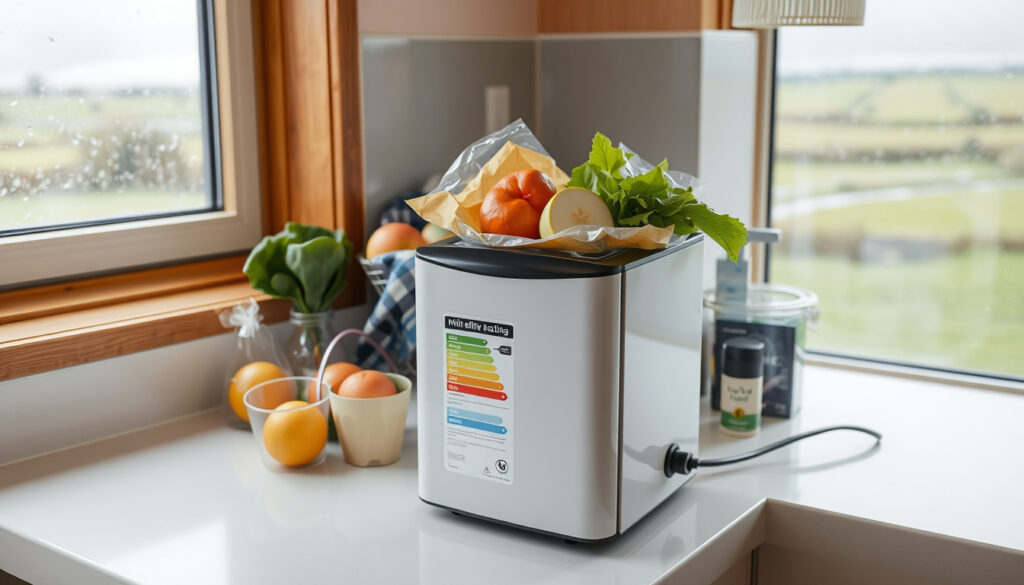
Mini Fridge Guide: Best Models, Safety & Energy Costs for Ireland
There’s a reason so many Irish households end up with a mini fridge in the bedroom, home office, or garage: they’re handy for keeping drinks and snacks within reach without crossing the house. But picking the right one for your space and budget takes a bit more thought than just grabbing the cheapest model on the shelf.
Average annual energy cost: €25–€40 ·
Typical capacity range: 0.5–4.4 cu ft ·
Average noise level: 35–45 dB ·
Common brands in Ireland: Hisense, Midea, Russell Hobbs ·
Typical price range: €80–€250
Quick snapshot
- Mini fridges typically use 75–150 kWh per year (Energy Star (US EPA))
- Thermoelectric models are quieter but less efficient than compressor models (Reviewed (product testing lab))
- Check the energy label before buying — Beko Ireland (major appliance brand) advises this for all fridge types
- Long-term reliability of new low-cost brands (limited consumer data)
- Impact of mini fridge emissions on bedroom air quality — no Irish-specific studies found
- No official Irish mini-fridge energy consumption data available – estimates from US Energy Star used
- Mini fridge technology is mature; no major product changes expected in the near term
- Gradual shift toward inverter compressors for lower noise and better energy efficiency (Expert Ireland (retailer buying guide))
Pros
- Convenient for drinks and snacks in bedroom, office, or garage
- Low running cost: €25–€40 per year
- Small footprint fits on a nightstand or desk
- Quiet compressor models available (35–45 dB)
Cons
- Higher per-litre cost than a full-size fridge
- Noisy compressor models may disturb sleep if placed in bedroom
- Requires ventilation clearance (5–10 cm) around back and sides
- Energy efficiency varies widely; cheaper models can cost €10–€20 more per year
A closer look at the numbers reveals the trade-offs Irish buyers face.
| Spec | Typical value | Source |
|---|---|---|
| Average price | €80 – €250 | DID.ie (Irish appliance retailer) |
| Typical size range | 0.5 – 4.4 cu ft | Common across Irish online retailers |
| Energy rating range | A+ to D | Beko Ireland (manufacturer) |
| Noise level range | 35 – 45 dB | Reviewed (independent test lab) |
| Common brands | Hisense, Midea, Russell Hobbs, Beko | DID.ie (retailer blog) |
Is it worth getting a mini fridge?
- Energy savings vs cost: A mini fridge costs about €25–€40 a year to run (Energy Star), far less than a full-size fridge.
- Typical use cases: Ideal for dorm rooms, home offices, bedrooms, and garages where a full-size fridge is overkill.
- Alternatives: A larger, energy-efficient fridge may be cheaper per litre for heavy users.
For a single person or couple, the running cost is low enough that convenience wins — but for a family, a full-size fridge makes more financial sense.
Why this matters: Mini fridges pay for themselves in convenience, not savings. The real value is having cold drinks and snacks within arm’s reach without trekking to the kitchen.
What is the best small mini fridge?
Two models stood out in Reviewed’s 2026 tests: the Frigidaire EFR840-RED and Whynter BR-1211DS. Both maintain food-safe temperatures (37°F fridge, 0°F freezer) and offer ample usable storage.
| Feature | Frigidaire EFR840-RED | Whynter BR-1211DS |
|---|---|---|
| Capacity | 3.2 cu ft | 4.2 cu ft |
| Energy rating (EU equivalent) | Estimated A+ | Estimated A |
| Noise level | ~38 dB | ~42 dB |
| Price (Ireland approx) | €180–€220 | €200–€250 |
| Best for | Dorm / bedroom | Small kitchen / office |
For Irish buyers, similar models from Hisense and Russell Hobbs are often available at lower prices (€100–€150) with similar specs. DID.ie recommends comparing energy labels and checking for a warranty of at least 2 years.
A cheaper model may have a lower energy rating, costing €10–€20 more per year — so pay a bit more upfront for A+ or better.
The pattern: Spending a bit more on a higher energy rating can save €10–€20 annually, making the upfront cost worthwhile for regular users.
What fridge brand to stay away from?
- Consumer advocacy group Which? (UK consumer organisation) has flagged reliability issues with certain budget brands, though their tests focus on full-size fridges.
- Online reviews show higher complaint rates for no-name brands sold on marketplaces — particularly for compressor failures within 2 years (Expert Ireland (retailer guide)).
- Brands like Beko, Hisense, and Russell Hobbs — which have Irish service networks — generally score better for warranty and parts availability (DID.ie blog).
The implication: Avoid ultra-cheap models from unknown brands. Stick with established names that have local customer support — even if it costs €30 more.
Where shouldn’t you put a mini fridge?
- Near heat sources (ovens, radiators, direct sunlight) — they force the compressor to work harder and increase energy use (Beko Ireland (installation guidance)).
- In an uninsulated garage or shed: temperatures below 10°C can cause compressor oil to thicken, reducing lifespan (Expert Ireland (buying guide)).
- Enclosed spaces with no ventilation — mini fridges need at least 5–10 cm clearance around the back and sides to dissipate heat.
Why this matters: Poor placement can double running costs and shorten the appliance’s life by years.
Is a mini fridge in bedroom safe, practical, and worth it?
- Safety: Compressor models produce a small amount of carbon dioxide, but levels are negligible in a normal bedroom (no known Irish incident reports). Thermoelectric models produce zero CO₂.
- Noise: Compressor models run at 35–45 dB — similar to a quiet fan. Thermoelectric models are near-silent (Reviewed (product testing)).
- Cost: Running 24/7 costs roughly €2.50–€3.50 per month (based on Irish average electricity rate of €0.30/kWh and 75–150 kWh/year).
- Practicality: A 1.5–2.5 cu ft model fits on a nightstand or desk, enough for drinks, yoghurt, and small snacks.
If you’re sensitive to hum at night, choose a thermoelectric model — but expect slower cooling and higher energy use per litre.
Verdict: For most Irish bedroom users, a quiet compressor model with A+ rating is the best compromise. The risk from CO₂ is near zero, and the convenience of late-night water or milk outweighs the €30–€40 yearly running cost.
Related reading: How to Make Slow Cooker Beef Stew: Tips and Recipe · No-Bake Cheesecake Recipe: 3-Ingredient, Creamy & Easy
Frequently asked questions
Which is the best mini fridge to buy?
For Irish buyers, the Hisense RR42D2C (€120–€150) and Russell Hobbs 70L (€100–€130) offer the best balance of price, quiet operation, and A+ energy rating. Check Expert Ireland’s guide for current prices.
Why do hotels not have mini fridges anymore?
Many hotels are removing mini fridges to reduce energy costs and noise complaints, replacing them with shared ice machines or smart in-room coolers. This is a global trend, not specific to Ireland.
What is a good cheap mini fridge?
The Midea 1.1 cu ft model (€80–€100) is widely available in Tesco Ireland and online. It’s basic but reliable for drinks (DID.ie (budget pick)).
How much does it cost to run a mini fridge per month?
About €2.50–€3.50 based on 75–150 kWh/year and the current Irish electricity rate of approximately €0.30/kWh (Energy Star estimate).
Can a mini fridge be used in a garage?
Only if the garage is heated or insulated—temperatures below 10°C can cause compressor damage. Look for a “garage-ready” model or use a thermoelectric mini fridge if your garage is unheated (Beko Ireland (installation note)).
For the typical Irish buyer, the choice is straightforward: a quiet, A+ rated compressor model around 1.5–2.5 cu ft from a known brand like Hisense or Russell Hobbs will serve you well for years. The alternative—a cheap, inefficient no-name fridge—will cost you more in the end, both in energy bills and frustration. For anyone in a small Dublin apartment, the decision is clear: invest €130–€180 once, and you’ll have cold drinks within arm’s reach without worrying about the electricity bill.
More related posts
 Roy Orbison’s Tragedies and Enduring Legacy
 Devon Larratt: Record, Net Worth, and World Ranking
 Javier Bardem: Biography, Family, Net Worth, and More
 How to Make Bread: Simple Step-by-Step Guide (4 Ingredients)
 Conan O’Brien: Biography, Net Worth, Wife & Oscars 2026
 Tony Shalhoub Biography: Ethnicity, Family, and Career
 Logan Stanley – Stats, Contract, Trade, and Career Overview
 Penny Marshall: Life, Death, and Legacy of the ‘Big’ Director
