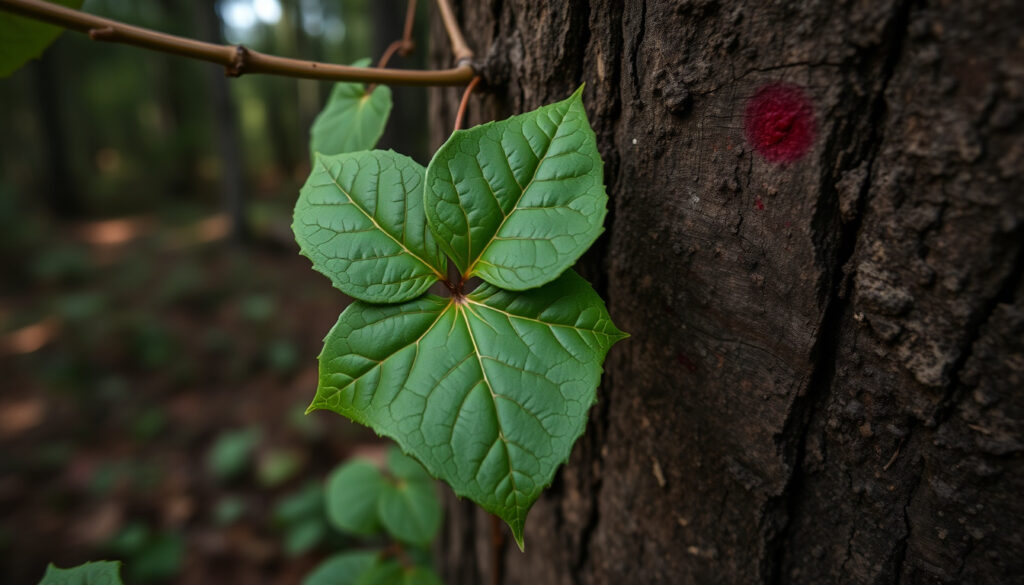
Poison Ivy: Global Distribution, Rash, and Differences from Irish Ivy
If you’ve ever brushed against a three-leafed plant in the North American woods and ended up with an angry, blistering rash, you already know the power of poison ivy. But what if you’re hiking in Ireland or the UK — could the same plant be lurking? The short answer is no, and the longer answer reveals a fascinating global story of where poison ivy really grows and why European ivies pose no such threat.
Native range: East Asia, North America · Toxic compound: urushiol · Present in all U.S. states except: California, Alaska, Hawaii
Quick snapshot
- Poison ivy (Toxicodendron radicans) is not native to Ireland or the UK (USDA Forest Service FEIS (U.S. government research)).
- Urushiol is the chemical that causes the allergic rash (USDA Forest Service (wildflower program)).
- Irish ivy (Hedera hibernica) does not contain urushiol (Wikipedia (encyclopedic reference)).
- The exact distribution of any escaped ornamental poison ivy in Europe is poorly documented (USDA Forest Service FEIS (U.S. government research)).
- Prevalence of urushiol sensitivity varies by population and genetics (Mayo Clinic (leading medical institution)).
- Climate change is expected to make poison ivy more widespread in parts of North America (Cornell Cooperative Extension (university extension service)).
- Introduction records in Europe are rare, but no established wild populations have been documented (USDA Forest Service FEIS (U.S. government research)).
- Awareness campaigns in Europe should focus on distinguishing non-toxic native ivies from imported lookalikes (National Poisons Information Centre of Ireland (national health authority)).
- Travelers to North America or East Asia need to know how to identify and avoid poison ivy. (National Poisons Information Centre of Ireland (national health authority))
| Attribute | Detail |
|---|---|
| Scientific name | Toxicodendron radicans (formerly Rhus toxicodendron) |
| Irritant | urushiol oil |
| Reaction type | Type IV hypersensitivity |
| Native range | East Asia, North America |
| Presence in Ireland | Not native; rare non-established introductions |
| Look-alike in Europe | Hedera helix (English ivy) – non toxic |
Is There Poison Ivy in Ireland or the UK?
The short answer is no — poison ivy (Toxicodendron radicans) is not native to Europe. According to the USDA Forest Service FEIS database (U.S. government ecological research), the species is native only to East Asia and North America. It has been introduced in parts of Africa, Europe, New Zealand, and Australia, but never as established wild populations.
Does poison ivy grow in Ireland?
No. The plant commonly called “Irish ivy” (Hedera hibernica) is not poison ivy and does not contain urushiol, as noted in Wikipedia (encyclopedic reference). Any poison ivy found in Ireland would be a rare ornamental introduction, not a self-sustaining population.
Can you get poison ivy in the UK?
The same holds for the United Kingdom. The USDA Forest Service (wildflower program) confirms that the native range does not extend to Europe. A few botanical gardens may host specimens, but no wild poison ivy exists in the British countryside.
Does poison ivy exist in Germany?
No. Germany, like the rest of continental Europe, has no native Toxicodendron species. The USDA FEIS (U.S. government research) lists no established European populations. The ivy that climbs German walls is safe Hedera helix.
For anyone hiking in Ireland, the UK, or Germany, the plants you see are harmless lookalikes. The real risk only exists in East Asia and North America.
What Does Poison Ivy Do to Humans?
Poison ivy’s active villain is urushiol, an oily resin found in all parts of the plant. When it touches skin, it triggers a type IV hypersensitivity reaction in most people, leading to an itchy, blistering rash.
How does urushiol cause a rash?
Urushiol binds to skin proteins within minutes, activating an immune response that releases inflammatory chemicals. The Mayo Clinic (leading medical institution) explains that this delayed allergic reaction usually appears 12 to 48 hours after contact.
Symptoms of poison ivy exposure
- Redness and swelling at the contact site
- Intense itching, often worsening over 24–48 hours
- Small or large blisters that may ooze clear fluid
- In severe cases, widespread rash if urushiol spreads
How long after contact does rash appear?
Most people notice the first signs within 12 to 48 hours, but in highly sensitive individuals it can appear as soon as 4 hours, according to USDA Forest Service (wildflower program). The rash typically lasts 1 to 3 weeks.
How to Treat Poison Ivy Rash
Acting fast after exposure makes a huge difference. Here are the evidence-backed steps to minimize the reaction.
Steps to take immediately after contact
- Wash skin with soap and water within 30 minutes. The USDA Forest Service (wildflower program) stresses that thorough but gentle washing removes the urushiol before it binds.
- Use lukewarm water, not hot. Hot water can spread the oil and worsen the rash.
- Wash clothes, tools, and pets that may have contacted the plant. Urushiol can stay active on surfaces for months.
- Avoid scratching — scratching can cause secondary infection but will not spread the rash (the fluid in blisters does not contain urushiol).
Calamine lotion and hydrocortisone
Over-the-counter treatments can soothe itching. Calamine lotion dries oozing blisters, while 1% hydrocortisone cream reduces inflammation. The Mayo Clinic (leading medical institution) also recommends oral antihistamines like diphenhydramine for sleep-disrupting itch.
When to see a doctor
Seek medical help if the rash covers a large area (especially the face or genitals), if you have difficulty breathing, if blisters become infected (pus, increasing pain), or if you have had a severe reaction before. Prescription steroids such as prednisone are often needed for severe cases.
Home remedies like bleach, alcohol, or “urushiol-erasing” wipes can damage skin and worsen the reaction. Stick to soap and water.
Which Countries Have Poison Ivy?
Poison ivy is a New World and East Asian plant. Its distribution is well mapped by government agencies.
Poison ivy in North America
The USDA Forest Service FEIS (U.S. government research) states that poison ivies are native to every U.S. state except California, Alaska, and Hawaii, and to every Canadian province except Nunavut, the Northwest Territories, and Newfoundland and Labrador. Eastern poison ivy (T. radicans) dominates the east, while western poison ivy (T. rydbergii) covers the west.
Poison ivy in Asia
Eastern poison ivy also occurs in Japan, China, Taiwan, Russia, and mountainous parts of Mexico up to about 1,500 m, per the same USDA FEIS source.
Poison ivy in Europe: rare or absent
Europe has no native poison ivy. The USDA FEIS notes that introduced populations exist in Africa, Europe, New Zealand, and Australia, but these are isolated and not self-sustaining. No established wild populations have been confirmed in Ireland, the UK, Germany, or elsewhere in continental Europe.
Is Irish Ivy Toxic? Differences Between Ivy Types
Many people confuse the common climbing ivies of Europe with poison ivy. They are not even in the same plant family.
English ivy vs poison ivy
English ivy (Hedera helix) belongs to the Araliaceae family, while poison ivy (Toxicodendron radicans) is in Anacardiaceae (the cashew family). English ivy does not produce urushiol and is not considered toxic, though its sap can cause mild skin irritation in sensitive individuals. Wikipedia (encyclopedic reference) notes that English ivy berries are mildly toxic if eaten but do not cause contact dermatitis.
Irish ivy (Hedera hibernica) toxicity
Irish ivy is a close relative of English ivy and shares the same lack of urushiol. It is commonly sold as an ornamental in Ireland and the UK. Handling it may cause minor irritation in some individuals, but it will not produce the angry blistering rash of poison ivy.
One pattern: three plants, two continents, one clear difference.
| Feature | Poison Ivy (Toxicodendron radicans) | English Ivy (Hedera helix) | Irish Ivy (Hedera hibernica) |
|---|---|---|---|
| Family | Anacardiaceae | Araliaceae | Araliaceae |
| Contains urushiol | Yes | No | No |
| Native range | East Asia, North America | Europe, Western Asia | Western Europe (including Ireland) |
| Effect on skin | Allergic contact dermatitis (severe) | Mild irritation possible | Mild irritation possible |
| Toxicity to humans | High (urushiol) | Low (mild if ingested) | Low |
Most poisonous plants in Ireland
Ireland does have genuinely dangerous plants — just not poison ivy. The National Poisons Information Centre of Ireland (national health authority) highlights hemlock (Conium maculatum), deadly nightshade (Atropa belladonna), and foxglove (Digitalis purpurea) as the most toxic species. Hemlock contains neurotoxic alkaloids, deadly nightshade tropane alkaloids, and foxglove cardiac glycosides — all can be fatal if ingested.
Irish walkers can relax about poison ivy, but they should learn to identify hemlock and foxglove — those are the real botanical threats in local hills and gardens.
More related posts
 Anti Shield Item LoL: Serpent’s Fang Guide & Counters
 Penny Marshall: Life, Death, and Legacy of the ‘Big’ Director
 Nova Scotia Community College: Tuition, Programs & Intl Guide
 Zach Hyman: $38.5M Contract, Injury, Wife & Career Stats
 Gardien de la Galaxie: Guardians of the Galaxy Movie Guide
 Sadia Khan: Is She a Real Psychologist or Dating Coach
 Zach Galifianakis: Sobriety, Ethnicity, and Island Home
 Jessica Radcliffe Hoax: What You Need to Know (2025)
