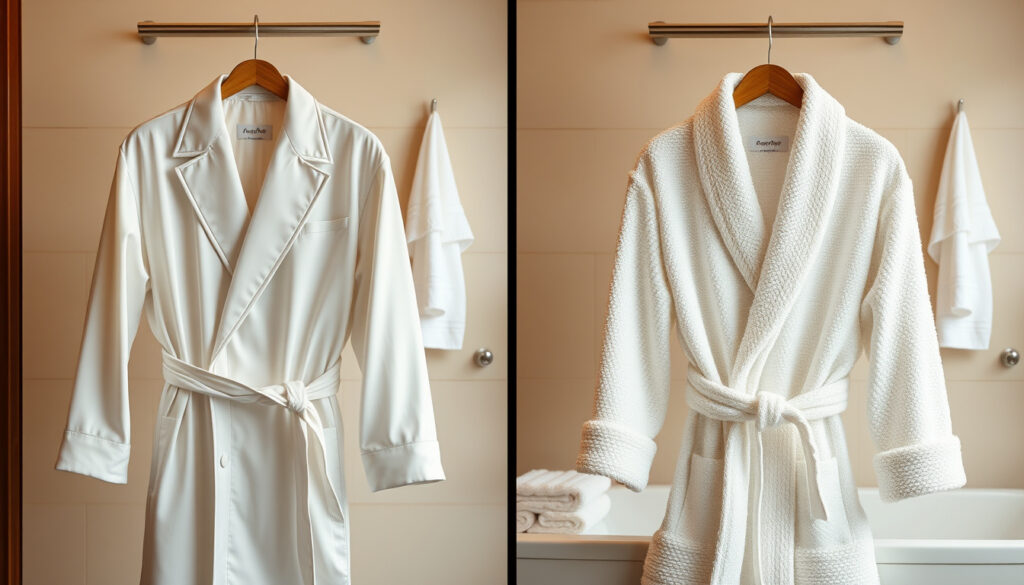
Robe de Chambre Homme vs Peignoir: Differences
You’ve probably stood in front of your closet wondering whether that hanging garment counts as a robe de chambre or a peignoir—and whether it matters. In French-speaking markets, the distinction shapes everything from material choice to expected function.
Common materials: polaire, microfibre, coton, velours · Top features: capuche, poches, ceinture · Certification example: OEKO-TEX STANDARD 100 · Popular styles: luxe, style anglais, polaire
Quick snapshot
- Peignoir uses cotton terry cloth for drying (La Compagnie du Blanc)
- Robe de chambre uses fleece for warmth, not drying (Rue des Peignoirs)
- Peignoir: mid-thigh to mid-calf length (La Compagnie du Blanc)
- Exact best brand varies by individual preference
- Limited data on regional European market preferences
- No specific market share comparisons available
- Both categories expanding beyond traditional bathroom use
- Loungewear robes emerging as distinct market segment
- Continued growth in luxury and personalization options
- Hybrid designs combining drying efficiency with loungewear comfort
| Label | Value |
|---|---|
| Definition | Indoor garment for men, often long with belt |
| Vs Peignoir | Dressing gown for lounging, peignoir for drying |
| Materials | Polaire microfibre, coton, velours |
| Primary material (peignoir) | Cotton terry cloth (éponge) or cotton bouclettes |
| Primary material (robe de chambre) | Polyester, fleece, or velvet |
| Peignoir length range | Mid-thigh to mid-calf |
| Robe de chambre length range | Mid-calf to ankles |
| Typical use (peignoir) | Post-shower water absorption |
| Typical use (robe de chambre) | Home wear for warmth, not post-shower |
| Hood prevalence | Peignoir: possible; robe de chambre: hood rare |
What is the difference between a peignoir and a dressing gown?
The distinction between these two French terms for men’s indoor garments runs deeper than marketing labels. Peignoir and robe de chambre serve fundamentally different purposes, and confusing them leads to buying the wrong product for your needs.
Key design differences
A peignoir is built for one job: absorbing water after you step out of the shower or bath. The Pyjama Panda Shop confirms that peignoirs rely on cotton terry cloth (éponge) or cotton bouclettes for their absorbency. This means a heavier, denser fabric that actually pulls moisture from your skin.
A robe de chambre takes the opposite approach. According to La Compagnie du Blanc, robes de chambre are made from polyester, fleece, or velvet—materials chosen for softness and insulation, not absorbency. Bouchara notes that fleece robes de chambre work best in cold temperatures, typically worn during winter mornings or evenings for warmth.
Length separates them visually. La Compagnie du Blanc documents that peignoirs span mid-thigh to mid-calf, while robe de chambre extends from mid-calf to the ankles. The hood question also splits them: peignoirs may include hoods, while hoods remain rare on robes de chambre.
Fleece robe de chambre is not appropriate for post-shower use because the material does not wick moisture effectively. Wearing one straight from the shower leaves you damp. Choose peignoir for drying, robe de chambre for cozy warmth after you’re already dry.
Usage contexts
The Rue des Peignoirs blog makes this explicit: unlike peignoir, robe de chambre is not used for drying after shower. It is designed to warm and provide comfort at home. This means you reach for the peignoir before you dry off, and you reach for the robe de chambre when you want to lounge comfortably in warmth.
The pattern becomes clear: three garment categories now exist in men’s loungewear, as documented by Lotus Linen. Traditional bathrobes (peignoir style) handle drying. Loungewear robes use lighter materials like modal blends or waffle weaves for comfort and style. Robe de chambre in fleece provides maximum warmth for cold weather.
Peignoir or dressing gown: which to choose?
The decision hinges on when you plan to wear the garment and what you need it to do. These two products optimize for opposite outcomes.
Factors to consider
Start with the drying question. Do you need a garment that pulls water off your skin immediately after bathing? Then peignoir is your only real option. Perle de Coton confirms that men’s fleece peignoirs exist but function differently—the fleece provides comfort and practicality without the drying power of terry cloth.
Consider seasonal use. Bouchara specifically recommends fleece robe de chambre for cold temperatures, especially for morning or evening winter wear. This thermal layer makes sense in unheated bedrooms or drafty older homes.
Weigh material feel against function. Christian Cane notes that fleece is appreciated for its lightness and warmth, while cotton and silk provide a sense of luxury and well-being. The trade-off is real: lighter materials feel more luxurious but provide less insulation.
Short fleece peignoirs for men appeal to those who prefer lightweight, less cumbersome garments for milder seasons. But these same qualities make them poor choices for actual post-shower drying or cold-weather warmth. Know what you’re buying before you buy it.
Pros and cons table
Upsides
- Peignoir: superior absorbency for post-shower drying
- Robe de chambre: maximum warmth and comfort
- Peignoir: hood options available for wet hair
- Robe de chambre: lighter weight for all-day wear
- Both: wide price range from budget to luxury
- Loungewear robes: stylish enough for guest appearances
Downsides
- Peignoir: heavy and cumbersome compared to robe de chambre
- Robe de chambre: no moisture-wicking capability
- Peignoir: limited to bathroom-adjacent use
- Robe de chambre: not suitable for post-shower situations
- Fleece: inappropriate for humid climates
- Loungewear robes: minimal insulation value
What is the definition of a dressing gown?
A dressing gown—robe de chambre in French—is a long indoor garment worn at home for comfort and warmth. The term has historical roots in European menswear, where wealthy gentlemen wore them over undergarments before dressing for the day.
Historical origins
The robe de chambre originated as a garment for the private sphere. Men wore them while shaving, having breakfast in their bedrooms, or relaxing before business appointments. The belted, full-length design allowed warmth without the formality of full dress.
What changed is where people wear them. The Honry Fleece guide notes that the primary function of a bathrobe remains absorbing moisture and keeping the wearer warm, but the role has diversified far beyond traditional bathroom use in modern life. Today, robe de chambre competes with loungewear robes for living room time.
Modern features
Contemporary robe de chambre designs include practical details: Perle de Coton lists classic, hooded, short, or long models as standard options. Pockets, belt ties, and varied sleeve lengths distinguish higher-end versions from budget options.
The Lotus Linen analysis shows that loungewear robes feature stylish cuts, adjustable ties, and varied sleeves, while traditional bathrobes have simple wraps, thick material, and basic belts. Robe de chambre sits between these poles—more substantial than loungewear, less functional than peignoir.
The pattern: robe de chambre has evolved from formal morning wear to relaxed home comfort garment, but retained its core identity as a belted, full-length robe for warmth rather than drying.
What is another name for a man’s dressing gown?
Several terms overlap with robe de chambre depending on context, region, and the speaker’s awareness of French fashion terminology.
Synonyms and regional terms
In English-speaking markets, “dressing gown” and “bathrobe” serve as common equivalents. However, as Lotus Linen clarifies, these terms carry different implications. Traditional bathrobes suggest terry cloth and post-shower use. Dressing gowns suggest warmth and lounging.
The French market adds complexity. Peignoir overlaps with robe de chambre in casual usage, but retailers like La Compagnie du Blanc maintain the distinction: peignoir absorbs, robe de chambre warms.
Peignoir overlap
Pyjama Panda Shop documents how peignoir has diversified into models including silk peignoir, satin peignoir, and kimono peignoir. These luxury variants sometimes get called “dressing gowns” in English translations, even though their primary function remains absorption rather than warmth.
What to watch: when shopping internationally, check the material composition, not just the label. A “luxury dressing gown” may actually be a peignoir if it’s made from terry cloth, or a robe de chambre if it’s fleece. The material tells you what it actually does.
What is the best brand of men’s peignoir?
No single brand dominates across all criteria. The “best” depends on your priorities: drying efficiency, warmth, luxury materials, or budget. The Pyjama Panda Shop analysis provides price ranges for three recognizable brands to anchor your comparison.
Top picks for 2025
| Brand | Peignoir price (€) | Robe de chambre price (€) | Positioning |
|---|---|---|---|
| Ralph Lauren | 120–250 | 180–350 | Luxury, style emphasis |
| Calvin Klein | 90–200 | 120–250 | Minimalist, comfort-focused |
| Lands’ End | 60–120 | 80–150 | Affordable, durable |
Ralph Lauren peignoirs range from €120 to €250, emphasizing style, durability, and comfort. The corresponding robe de chambre line reaches €180 to €350, reflecting the brand’s positioning around chic aesthetics and quality materials.
Calvin Klein targets the minimalist buyer. Peignoirs at €90 to €200 focus on clean lines and essential comfort. The robe de chambre options at €120 to €250 maintain that understated elegance.
Lands’ End serves the value-conscious segment. Peignoirs from €60 to €120 prioritize affordable comfort and long-term durability. The robe de chambre range at €80 to €150 offers warmth without luxury pricing.
Luxury and quality options
Merrily Loom emphasizes that luxury robes combine quality, comfort, and style, with key investment in high-quality fabric that feels great and lasts. This means prioritizing material composition over brand name alone.
The Kimono Passion description of vegetable-origin polyester satin material in robe de chambre illustrates the point: soft, lightweight, silky weave provides optimal comfort. High-end materials matter more than logos for actual wear quality.
The implication: brand loyalty matters less than material quality for either garment category. A well-made fleece robe de chambre from an unfamiliar brand outperforms a poorly made Ralph Lauren option for winter warmth.
Detailed comparison: material, length, and function
Three variables determine which garment serves you better: material composition, garment length, and intended use case.
| Specification | Peignoir | Robe de chambre |
|---|---|---|
| Primary material | Cotton terry cloth, cotton bouclettes | Polyester, fleece, velvet |
| Absorbency | High (designed for drying) | Low (not intended for drying) |
| Weight | Heavy and dense | Soft, lightweight |
| Length range | Mid-thigh to mid-calf | Mid-calf to ankles |
| Hood option | Possible, common | Rare |
| Primary use | Post-shower water absorption | Home warmth and comfort |
| Season suitability | Year-round | Cold weather, winter mornings/evenings |
| Pockets | Basic | Often included |
The clear pattern: peignoir optimizes for function (drying), robe de chambre optimizes for comfort (warmth). These remain fundamentally different products despite superficial similarity.
Specialized materials in men’s robe de chambre
Beyond standard fleece, several material options cater to specific preferences and use cases.
Modal blends represent the luxury loungewear category. Lotus Linen documents that loungewear robes are crafted from softer, lighter materials like lightweight cotton, modal blends, or waffle weaves prioritizing comfort and aesthetic appeal. These breathe better than fleece but provide less warmth.
Velvet and velour serve the cold-weather luxury segment. Merrily Loom notes that plush robes are made from fabrics like terry cloth or velour with a rich, velvety feel perfect for colder months. Plush robes are heavier and designed to keep the wearer warm and toasty.
The trade-off: luxury materials cost more and often require special care. Fleece tolerates machine washing; modal and silk variants may need dry cleaning or hand washing. Factor maintenance into your purchase decision.
OEKO-TEX STANDARD 100 certification indicates the fabric has been tested for harmful substances. For a garment worn directly against skin in warm conditions, this certification provides assurance of material safety. Look for it on any peignoir or robe de chambre, particularly those marketed as luxury or for sensitive skin.
Style variations and English style
The English style in men’s dressing gowns emphasizes classic tailoring with longer lengths and more structured cuts. These robes often feature classic shawl collars, deeper pockets, and heavier fabrics suited to drafty British homes.
Fleece robes de chambre constitute an interesting alternative for those seeking a more ample and relaxed cut, according to Perle de Coton. The relaxed cut differs from the tailored English style, prioritizing comfort over formality.
The implication: English style dressing gowns suit formal households or those who want a robe that doubles as guest-appropriate loungewear. Fleece and relaxed cuts prioritize personal comfort over presentation.
Confirmed facts and uncertainties
What we know
- Peignoir absorbent, dressing gown insulating
- Peignoir uses cotton terry cloth; robe de chambre uses fleece
- Length differs: peignoir shorter than robe de chambre
- Peignoir may include hood; robe de chambre hoods rare
- Ralph Lauren, Calvin Klein, Lands’ End offer both categories
What’s unclear
- Exact best brand varies by individual preference
- Limited data on regional European market preferences
- No specific market share comparisons between categories
- Limited consumer satisfaction rating comparisons
The pattern: functional distinctions between peignoir and robe de chambre are well-documented across multiple sources. Brand quality and regional preferences remain subjective areas without comprehensive comparison data.
Expert perspectives
Luxury robes combine quality, comfort, and style, with key investment in high-quality fabric that feels great and lasts.
— Merrily Loom (Luxury bathrobe specialist)
Fleece robe de chambre is best suited for cold temperatures and is typically worn in morning or evening during winter.
— Bouchara (French home textile retailer)
Related reading: fleece jackets for men · bath and loungewear retailers
Frequently asked questions
What materials are best for robe de chambre homme?
Fleece (polaire), microfibre, cotton, and velvet represent the main options. Fleece excels for cold-weather warmth. Microfibre offers a good balance of softness and durability. Cotton provides breathability but less insulation. Velvet delivers luxury aesthetics with solid warmth. OEKO-TEX certification indicates material safety across all options.
What is a polar robe de chambre homme?
A polar (fleece) robe de chambre homme uses synthetic fleece fabric for insulation rather than absorbency. Perle de Coton documents men’s fleece peignoir as an essential garment combining comfort and practicality, available in classic, hooded, short, or long models. Fleece robes are inappropriate for post-shower use but ideal for cold-weather lounging.
Where to find Celio robe de chambre homme?
Celio offers men’s dressing gowns through French and international retail channels. Check their official website for current inventory, or browse retailers like Zalando and La Redoute that stock Celio homewear lines. Availability varies by market and season.
Are there personalized options for men’s dressing gowns?
Personalized robe de chambre homme options exist through specialty retailers and custom tailoring services. Common personalization includes monogramming, custom sizing, and fabric selection from premium materials. Luxury brands like Ralph Lauren offer made-to-measure options at higher price points.
What features define English style dressing gowns?
English style in men’s dressing gowns typically features longer lengths (mid-calf to ankle), structured shawl collars, deeper pockets, and heavier fabrics. The cut is more tailored than relaxed alternatives, suitable for households wanting a presentable lounge garment that works for unexpected guest appearances.
How to care for a polaire dressing gown?
Fleece robe de chambre typically tolerates machine washing on a gentle cycle with cold or warm water. Avoid high heat drying—air drying or tumble dry on low preserves the fleece texture. Fabric softener can reduce static buildup. Check care labels for specific instructions, as blended materials may require different treatment.
What certification to look for in peignoirs?
OEKO-TEX STANDARD 100 certification confirms the fabric has been tested for harmful substances and is safe for skin contact. This matters particularly for peignoirs worn against bare skin while still damp after showering. Look for this label on any premium peignoir or robe de chambre purchase.
More related posts
 Silver Surfer: Hero or Villain? Powers & Marvel Ranking
 Detroit Red Wings: History, Best Players & Ticket Prices
 Stephen Fry: Bipolar Disorder, Conviction & Husband Age Gap
 BTS Members: Names, Ages, Birthdays, Roles & Backgrounds
 Is Luke Thompson Single? Relationship Status, LGBTQ & More
 Canada Fleece Jacket Heated Rivalry – Myths vs Verified Facts
 Bruce Willis Frontotemporal Dementia: 2025 Health Update
 Ricky Hatton Death Cause, CTE Diagnosis & Legacy
