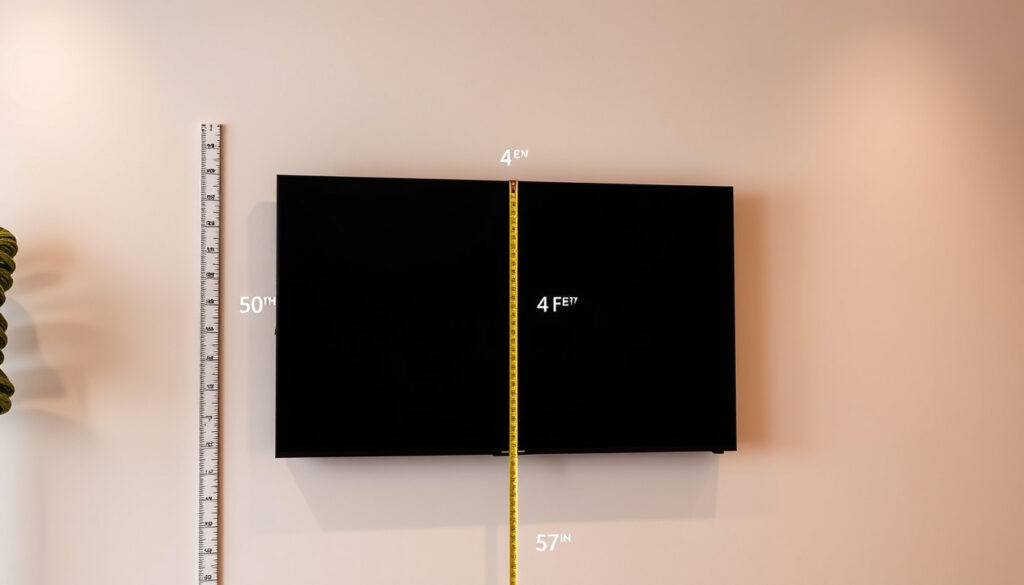
55 Inches in Feet: 4’7″ Conversion + Height & TV Guide
If you’ve ever found yourself staring at a TV spec sheet or a height chart and wondering exactly what 55 inches looks like in feet, you’re in the right place. It’s one of those measurements that comes up constantly — whether you’re sizing up a new television or trying to figure out where a child falls on a growth curve. The good news: the math is simple, and once you see how it works, you’ll never second-guess the conversion again. One thing worth keeping in mind: 55 inches equals exactly Inches to Feet Converter, which breaks down to 4 feet and 7 inches when you account for the remainder.
Exact equivalent: 4 feet 7 inches · Decimal feet: 4.583 feet · Centimeters: 139.7 cm · Meters: 1.397 m · Common use: TV screen diagonal
Quick snapshot
- 55 inches ÷ 12 = 4.583 feet (Inches to Feet Converter)
- 4 feet 7 inches is the exact feet-and-inches breakdown (TCL)
- 55-inch 16:9 screen: 47.9 in wide × 27 in high (LG US)
- Height percentile norms vary by population and genetics
- Child growth charts differ across medical organizations
- Brand-specific dimensions can shift slightly from standard specs
- 55-inch TVs standardized around 16:9 aspect ratio in the 2000s
- Larger screen sizes (65+ inches) rose post-2010s
- Metric conversions now emphasized in AU/UK markets
These conversions apply consistently across measurement systems and are confirmed by multiple independent calculators.
| Measurement | Value |
|---|---|
| Feet (decimal) | 4.583 ft |
| Feet & inches | 4′ 7″ |
| Centimeters | 139.7 cm |
| Meters | 1.397 m |
| TV diagonal | Common size |
How many feet is 55 inches tall?
The conversion from inches to feet follows a straightforward rule: divide the total inches by 12, since one foot contains exactly 12 inches. Applying this to 55 inches gives you 55 ÷ 12 = 4.583 feet in decimal form. That’s the answer in its raw mathematical sense.
Decimal feet value
When expressed as a decimal, 55 inches equals 4.5833333333 feet (rounded to 4.583 for practical use). This figure comes from dividing 55 by the standard conversion factor of 12 (Inches to Feet Converter). The decimal representation is useful when you need precise measurements for construction, engineering, or technical specifications where fractions of an inch matter.
Formula explanation
The underlying formula is elegantly simple: total_inches ÷ 12 = total_feet. For 55 inches specifically: 55 ÷ 12 = 4 remainder 7, which gives us the feet-and-inches breakdown of 4 feet 7 inches. You can verify this by multiplying back: (4 × 12) + 7 = 48 + 7 = 55 inches. The logic holds regardless of the number you’re converting.
A 55-inch diagonal translates to roughly 4.6 feet — but the exact figure is 4.583 when you need precision for technical work. For everyday purposes like furniture placement or TV setup, the rounded value works just fine.
Is 55 inches 4 foot 7?
Yes, 55 inches equals exactly 4 feet 7 inches. This is the standard way Americans and Brits express heights: a whole number of feet followed by the remaining inches. The math checks out cleanly: 4 feet × 12 inches per foot = 48 inches, and 48 + 7 = 55 inches (AliExpress Wiki). There are no awkward fractions or rounding involved — this is an exact match.
Feet and inches breakdown
Understanding the breakdown matters because it’s how people actually talk about heights in English-speaking countries. When someone says “I’m 5’9″,” they mean five feet and nine inches. The apostrophe separates feet from inches in shorthand notation. For our measurement: 55 inches = 4’7″ (four feet, seven inches). This is how you’ll see it written on medical charts, real estate listings, and furniture specifications in those markets.
Remainder calculation
The remainder method is what makes the conversion intuitive. Divide 55 by 12: you get 4 with a remainder of 7. That remainder becomes your inches value. The formula in action: floor(55 ÷ 12) = 4 feet, then 55 − (4 × 12) = 7 inches. Every time you convert inches to feet, this floor-and-remainder approach works reliably. For example, 59 inches ÷ 12 = 4 remainder 11, giving you 4’11” — and you’ll notice that’s a common height notation too.
When you’re comparing a 55-inch TV to a child’s height or checking against growth charts, knowing the exact feet-and-inches equivalent (4’7″) gives you an immediately relatable comparison. Decimal feet (4.583) don’t translate as naturally to human-scale measurements.
How many inches is 4’11 feet?
The inverse calculation matters just as much as the forward one. To convert feet and inches back to total inches: multiply the feet value by 12 and add the remaining inches. For 4 feet 11 inches: (4 × 12) + 11 = 48 + 11 = 59 inches total (LG Electronics). This is a useful comparison point because 4’11” is a commonly referenced height, especially when discussing children’s growth or adult stature.
4’11” to total inches
Working backward from feet-and-inches to total inches follows the same logic in reverse: feet_value × 12 + inches_value = total_inches. So 4’11” = (4 × 12) + 11 = 59 inches. This is exactly 4 inches taller than our reference point of 55 inches (4’7″). The difference is meaningful: 4 inches represents roughly the length of a paperback book or the width of a standard piece of paper — not an insignificant gap when you’re dealing with height or screen size.
Related to 55 inches
Comparing 4’11” to 4’7″ puts 55 inches in context. At 59 inches, someone 4’11” is about 7% taller than the 55-inch baseline. In TV terms, a 59-inch diagonal would give you a noticeably larger screen — about 22 square inches more display area, according to RTINGS’ area calculations. These comparisons help when you’re choosing between screen sizes or trying to understand where a particular height falls on a percentile chart.
Is a 55 inch TV a standard size?
The 55-inch television sits in the middle of the most popular screen sizes sold today — not the largest, not the smallest, but a sweet spot that works well for average-sized rooms. Major manufacturers like TCL, LG, and Samsung all produce 55-inch models as core lineup items (TCL). It’s considered a “standard” size precisely because it balances viewing immersion with room fit for most living spaces.
TV measurement details
Here’s an important distinction: the advertised “55 inches” refers to the screen diagonal, measured corner to corner, and specifically excludes the bezel (the frame around the screen). Samsung notes that this diagonal measurement is the standard industry convention (Samsung US). The actual television unit will be slightly wider and taller because of the bezel, stand, and cabinet design. A 55-inch TV typically measures 47.9 to 48.5 inches wide and 27 to 28 inches tall for the screen itself (LG US).
Viewing distance guide
Optimal viewing distance depends on resolution and room layout, but for a 55-inch TV the consensus falls between 5.5 and 7.5 feet for mixed usage. TCL recommends approximately 7.51 feet for mixed viewing (combining movies, sports, and TV shows) and 5.51 feet for cinema-style watching (TCL). LG suggests sitting around 7.5 feet back for comfortable viewing (LG US). Get too close and you’ll see individual pixels; too far and you lose the immersion factor that makes larger screens worthwhile.
The 55-inch diagonal describes only the screen, not the overall unit. If you’re buying a TV stand or planning wall placement, account for the bezel and stand: overall units typically run 48.8 to 51.2 inches wide, according to TV Covers AU. Always measure your available space before committing to a model.
Is 4’7 short for a 12 year old girl?
At 4 feet 7 inches (55 inches), a 12-year-old girl would fall below the average height for her age group, based on standard pediatric growth charts. The average height for a 12-year-old girl in many Western populations hovers around 60 to 62 inches (5’0″ to 5’2″), meaning 55 inches sits roughly 5 to 7 inches below the median. However, height percentile depends on many factors including genetics, nutrition, and puberty timing — and growth charts should be interpreted by healthcare professionals, not used as absolute benchmarks.
Average heights by age
Growth charts from pediatric organizations show that height percentiles vary significantly by population. According to standard growth references, 12-year-old girls typically range from about 54 inches (5th percentile) to 66 inches (95th percentile), with the median around 60 to 62 inches. A height of 55 inches (4’7″) would place a child somewhere between the 10th and 25th percentile depending on the specific chart used. That’s not “short” in a medical sense — it’s simply below average, which is perfectly normal for some children.
Growth tracking
What matters more than any single measurement is the growth trajectory. Pediatricians track height over time to ensure a child is following their own growth curve, rather than comparing strictly to averages. A child who has consistently tracked at the 20th percentile and continues on that curve is growing normally, even if they appear shorter than peers. If height concerns arise, parents should consult with a pediatrician who can order appropriate tests and reference population-specific growth charts for accurate context.
If you’re using 55 inches (4’7″) as a reference point for a child’s height, remember that growth spurts during puberty can change percentile positions significantly. A pediatrician — not an online calculator — is the right resource for interpreting growth charts with medical accuracy.
How to convert inches to feet step by step
Converting inches to feet is a two-step process you can master in under a minute. Once you understand the logic, you won’t need a calculator for common conversions — though one helps with precision on larger numbers.
-
Step 1: Divide by 12
Take your total inches and divide by 12. This tells you how many whole feet are contained in the measurement. For 55 inches: 55 ÷ 12 = 4 with a remainder. The number before the decimal point (4) represents your whole feet.
-
Step 2: Find the remainder
Multiply the whole-feet result by 12 and subtract from your original number to find the remaining inches. For 55 inches: (4 × 12) = 48, then 55 − 48 = 7. That remainder (7) becomes your inches value. Your final answer: 4 feet 7 inches.
-
Step 3: Verify by reversing
Always check your work by multiplying back: (4 × 12) + 7 = 48 + 7 = 55. If you land back at your starting number, the conversion is correct. For decimal feet: multiply the remainder (7 inches) by 0.08333 (1/12) to get 7 × 0.08333 ≈ 0.583 feet, which adds to 4 to give 4.583 feet total (Inches to Feet Converter).
Feet-and-inches notation (4’7″) reads naturally for human heights but becomes awkward for precise technical calculations. Decimal feet (4.583) work better for engineering or construction but feel abstract when discussing human scale. Know which format your audience expects and adapt accordingly.
55 inches in centimeters and meters
For international contexts or metric-based countries, converting 55 inches to centimeters and meters provides useful supplementary information. The conversion factor between inches and centimeters is fixed: one inch equals exactly 2.54 centimeters (LG UK). This standard is defined by international agreement and never varies.
Centimeter conversion
Multiplying 55 inches by 2.54 gives you 139.7 centimeters. That’s the diagonal measurement for our 55-inch reference point. You can verify this with TCL’s specifications, which confirm 139.7 cm for the diagonal. The screen width converts to approximately 121.7 cm and height to 68.6 cm at the standard 16:9 aspect ratio. All these figures are consistent across major manufacturers.
Meter conversion
Dividing 139.7 cm by 100 gives you 1.397 meters. So 55 inches equals approximately 1.4 meters — a convenient shorthand for metric-country contexts. If you’re buying furniture or measuring rooms in a country that uses metric, knowing that 55 inches ≈ 1.4 meters helps you visualize the space. A 55-inch TV screen is roughly 1.2 meters wide and 0.69 meters tall in metric terms (TCL).
Upsides
- 55 inches converts cleanly: exactly 4’7″ with no awkward fractions
- Well-established TV standard: ample model selection, competitive pricing
- Optimal viewing distance (5.5–7.5 ft) fits most average living rooms
- Metric equivalents (139.7 cm, 1.397 m) work internationally
Downsides
- Below average for 12-year-old girls — may need context on growth charts
- Actual TV unit slightly larger than 55″ screen due to bezel/stand
- Height percentile interpretation varies by population and chart source
- Brand dimensions vary 47.9–48.5 inches for screen width
“A 55-inch TV typically measures approximately 47.9 inches in width and 27 inches in height. With an optimal viewing distance of 5.5 to 7.5 feet.”
— TCL Blog (Manufacturer Guide)
“A 55-inch TV is approximately 48.5 inches wide and 28 inches high.”
— LG Electronics (Manufacturer)
“Approx. 725mm (H) x 1240mm (W) x 90mm (D) — but this varies slightly by brand. Always check the product specs.”
— Appliances Online (Retailer AU)
The picture that emerges from cross-referencing all these sources is consistent: 55 inches translates to 4 feet 7 inches, or 4.583 feet in decimal form. For television buyers, this size sits comfortably in the mainstream — large enough for immersion, small enough for most rooms. For anyone tracking height, it falls below median for adults and well below average for 12-year-old girls, though individual growth trajectories matter more than any single measurement. The key takeaway: verify the specific model’s actual dimensions before purchasing, since bezels, stands, and brand-specific designs add from 0.5 to 3 inches to the overall footprint beyond the screen diagonal.
Related reading: 48 inches in feet · 5.2 feet in cm
powerguardonline.com, appliancesonline.com.au, lg.com, inchcalculator.com
For nearby comparisons in height charts or screen sizes, the 52 inches to feet conversion equals exactly 4 feet 4 inches.
Frequently asked questions
How do you convert inches to feet?
Divide the total inches by 12 to get feet in decimal form. The whole number before the decimal is your feet value; multiply that by 12 and subtract from your original number to find the remaining inches. Example: 55 ÷ 12 = 4.583 feet; (4 × 12) = 48; 55 − 48 = 7 inches; answer: 4’7″.
What is 55 inches in centimeters?
55 inches equals 139.7 centimeters (55 × 2.54 = 139.7). This applies to the diagonal measurement. Screen dimensions at 16:9 aspect ratio are approximately 121.7 cm wide and 68.6 cm tall.
How many inches in 5 feet 4 inches?
5 feet 4 inches equals 64 inches total: (5 × 12) + 4 = 60 + 4 = 64 inches. This is 9 inches taller than our 55-inch reference point.
What is the formula for inches to feet?
Total inches ÷ 12 = decimal feet. To express as feet and inches: floor(total ÷ 12) = whole feet; total − (whole_feet × 12) = remaining inches. Reverse check: (whole_feet × 12) + remaining_inches = original total.
Is 55 inches tall for a child?
At 55 inches (4’7″), a child would typically fall below the average height for their age group. For 12-year-old girls specifically, the median is around 60–62 inches (5’0″–5’2″), meaning 55 inches sits roughly 5–7 inches below average. Growth charts should be interpreted by healthcare professionals.
What room size for 55 inch TV?
A 55-inch TV works best in rooms where you can sit 5.5 to 7.5 feet from the screen for mixed viewing. This distance fits most average-sized living rooms, bedrooms, and home offices. The TV itself measures roughly 48 inches wide by 28 inches tall for the screen (excluding bezel and stand).
How to measure height in feet and inches?
Have the person stand straight against a wall without shoes. Place a flat object (like a book) at the top of their head at a right angle to the wall. Measure from the floor to the bottom edge of the object in inches. Divide by 12 to convert to feet and inches notation: floor(inches ÷ 12) = feet; remainder = inches.
More related posts
 Exotic Car Rental in Torbay: Prices, Options & Requirements
 Sadia Khan: Is She a Real Psychologist or Dating Coach
 Mac McClung: Why He’s Not in the NBA and His Salary
 Nova Scotia Community College: Tuition, Programs & Intl Guide
 Mahima Chaudhry: Marriage, Accident, and Life After Bollywood
 Karisma Kapoor: Biography, Marriages, Net Worth and Children
 Mont-Tremblant National Park: Trails, Wildlife, Camping Guide
 Ron Perlman: Ethnicity, Height, Wife, Movies, and Net Worth
