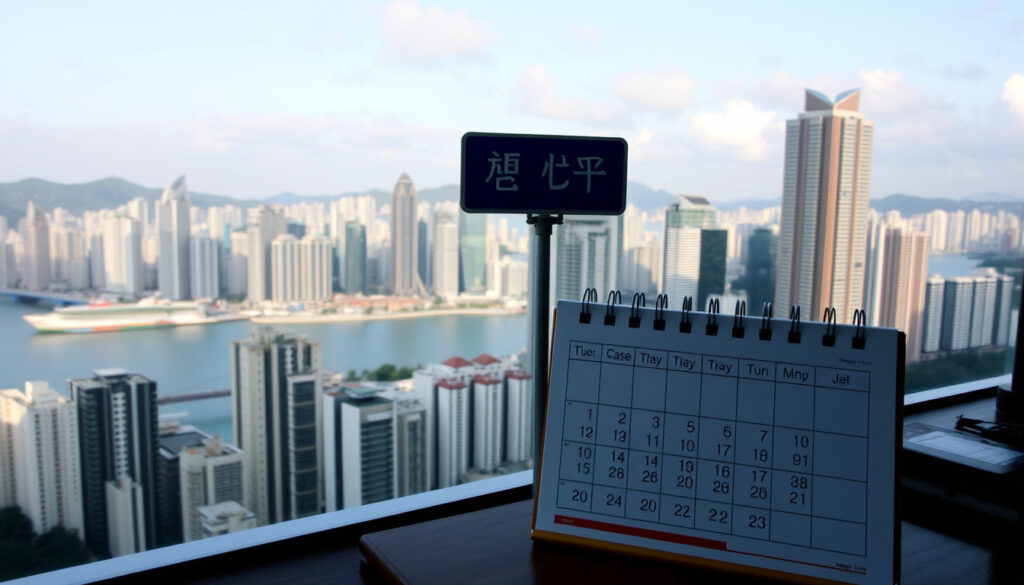
Hong Kong Explained: Status, Language, Budget & 2-Week Rule
Plenty of travelers, job seekers, and even news consumers find themselves wondering whether Hong Kong is a country, a city, or something in between. The answer shapes everything from how you plan a trip to how you understand its role in global finance. This guide breaks down Hong Kong’s political status, its official languages, what a one-week trip actually costs, and one rule that catches many foreign domestic helpers off guard.
Population: 7.5 million (2023 est.) ·
Area: 1,104 km² ·
Official Languages: Cantonese and English ·
Currency: Hong Kong Dollar (HKD) ·
GDP per capita (nominal): $49,000 (2023) ·
Time Zone: HKT (UTC+8)
Quick snapshot
- Hong Kong is a Special Administrative Region of China, not a country (GovHK – Hong Kong Facts)
- Cantonese and English are official languages (GovHK – Hong Kong Facts)
- The future political status after 2047 remains undefined
- The enforcement of the 2-week rule for foreign domestic helpers can vary by case
- Hong Kong handover from UK to China occurred on 1 July 1997 (GovHK – Hong Kong Facts)
- Basic Law took effect on the same day, establishing the “one country, two systems” framework (Basic Law – Home)
- The “one country, two systems” arrangement is guaranteed until 2047 (South China Morning Post Facebook post)
- Foreign domestic helpers continue to push back on the two-week departure rule (South China Morning Post Facebook post)
Nine key facts, one takeaway: Hong Kong’s constitutional status as a Special Administrative Region explains every other aspect of its governance, language policy, and travel rules.
| Label | Value |
|---|---|
| Official Name | Hong Kong Special Administrative Region of the People’s Republic of China |
| Capital | Hong Kong (Victoria City) |
| Population | 7.5 million (2023 est.) |
| Area | 1,104 km² |
| Official Languages | Cantonese, English |
| Currency | Hong Kong Dollar (HKD) |
| Time Zone | HKT (UTC+8) |
| Government | Special Administrative Region with limited democracy |
| Head of Government | Chief Executive (currently John Lee) |
Is Hong Kong a country or is it China?
Is Hong Kong part of China?
- Hong Kong is a Special Administrative Region of the People’s Republic of China — not a sovereign country. Article 1 of the Basic Law states that the Hong Kong Special Administrative Region is an inalienable part of the PRC (Constitutional and Mainland Affairs Bureau press release).
- Hong Kong is not a member of the United Nations. It does not have its own military, foreign policy, or postal authority — those are managed by the central government in Beijing.
What is the political status of Hong Kong?
- Under the “one country, two systems” principle, Hong Kong retains its own legal system, economic policies, and customs territory. Article 12 of the Basic Law clearly identifies the HKSAR as a local administrative region of the PRC (Constitutional and Mainland Affairs Bureau press release).
- The arrangement is guaranteed for 50 years from the 1997 handover, meaning 2047 is a key horizon for any potential change (GovHK – Hong Kong Facts).
A traveler booking a flight to Hong Kong is entering China, just through a special administrative checkpoint. The distinction affects visa rules, customs declarations, and even the currency you’ll use at the airport — but the sovereignty line is not in doubt.
The implication: Hong Kong functions as a semi-autonomous zone within China’s borders, not as a separate nation. That’s why it has its own flag, currency, and immigration controls, but no seat at the UN.
What is the 2 week rule in Hong Kong?
What does the 2 week rule entail?
- The “2 week rule” requires foreign domestic helpers (FDHs) to leave Hong Kong within two weeks of their employment contract ending or being terminated, unless they receive exceptional approval to stay (Immigration Department PDF: Conditions of Employment for Foreign Domestic Helpers).
- An FDH must leave Hong Kong upon completion of the employment contract or within two weeks from the date of contract termination, whichever is earlier (Hong Kong Government Information Services).
- The rule applies specifically to foreign domestic helpers — not to other foreign workers, tourists, or residents.
Who does the 2 week rule apply to?
- Foreign domestic helpers in Hong Kong are required to live in their employer’s residence as a standard condition of their employment (Labour Department – FAQ).
- If an employer terminates the contract, the helper must give written notice within seven days and leave Hong Kong accordingly (Immigration Department FAQ).
Foreign domestic helpers gain a minimum monthly wage of approximately HK$4,730 (2024 rate) plus free accommodation and food allowance, but they forfeit the right to live independently or switch employers freely once in Hong Kong. The 2-week departure rule makes it difficult to stay and find a new sponsor.
The catch: for an FDH working a two-year contract, the 2-week rule creates a tight window between jobs. Advocacy groups have challenged the rule, with some helpers pushing back to stay in Hong Kong and find new employers without leaving (South China Morning Post Facebook post).
What language do they speak in Hong Kong?
Is Cantonese the official language?
- Cantonese is the most common spoken language in daily life, used by the vast majority of Hong Kong’s 7.5 million residents (GovHK – Hong Kong Facts).
- Both Cantonese and English are designated as official languages under Hong Kong law.
Is English widely spoken?
- English is an official language and is widely used in business, government, and higher education (GovHK – Hong Kong Facts).
- Mandarin is also spoken but less prevalent than Cantonese — though its use has grown since 1997, especially in business contexts.
The pattern: a visitor who speaks only English will have no trouble getting around Central, Tsim Sha Tsui, or the airport. Street markets and local restaurants, however, operate primarily in Cantonese. For a travel budget, English proficiency means you can rely on official signage and MTR announcements without confusion.
How much money do you need for 1 week in Hong Kong?
What is the average daily budget?
- Budget travelers: $50–100 USD per day, covering a hostel or budget hotel, street food, public transport, and free attractions.
- Mid-range travelers: $150–250 USD per day, allowing for a 3-star hotel, sit-down restaurant meals, taxis, and paid attractions like the Peak Tram or Disneyland.
- Luxury travelers: $350+ USD per day, with 5-star hotels, fine dining, and private tours.
What are the main expenses?
- Accommodation is the largest cost — a mid-range hotel room in a central area averages $100–200 USD per night.
- Food ranges from $3 USD for a bowl of noodles to $50+ USD for a tasting menu.
- Transport on the MTR is efficient and affordable — a single ride costs about $1–2 USD, and an Octopus card makes it seamless.
- Attractions: the Peak Tram round trip is about $8 USD; Hong Kong Disneyland tickets start at $85 USD.
The comparison in context:
| Expense Category | Budget (USD/week) | Mid-range (USD/week) | Luxury (USD/week) |
|---|---|---|---|
| Accommodation | $140–280 | $420–700 | $1,400+ |
| Food | $70–140 | $280–420 | $560+ |
| Transport | $14–21 | $35–70 | $70+ |
| Attractions & activities | $21–42 | $105–210 | $350+ |
| Miscellaneous | $14–35 | $35–70 | $140+ |
| Total (approx.) | $350–700 | $1,050–1,750 | $2,500+ |
What this means: a one-week trip to Hong Kong isn’t cheap compared to Southeast Asian destinations, but it’s more affordable than a week in Tokyo or London. The biggest variable is accommodation — book early and consider staying slightly outside the central business district to save.
Why is Hong Kong separate from China?
What was Hong Kong’s history under British rule?
- Hong Kong was a British colony from 1842 — after the First Opium War and the Treaty of Nanking — until 1 July 1997 (GovHK – Hong Kong Facts).
- During that 155-year period, Hong Kong developed a common law legal system, an English-language education infrastructure, and a distinct cultural identity separate from mainland China.
How did the 1997 handover happen?
- The Sino-British Joint Declaration, signed in 1984, established the framework for the handover of Hong Kong from the United Kingdom to the People’s Republic of China (GovHK – Hong Kong Facts).
- On 1 July 1997, Hong Kong became the Hong Kong Special Administrative Region of the PRC. The Basic Law — Hong Kong’s constitutional document — took effect on the same day (Basic Law – Home).
The implication: Hong Kong’s separation is historical, not constitutional. The “one country, two systems” framework was a negotiated compromise — Britain gave up sovereignty, and China agreed to let Hong Kong keep its own legal and economic systems for 50 years. That 50-year clock is the reason the 2047 question exists at all.
The Hong Kong National Security Law, imposed in 2020, has shifted the balance between “one country” and “two systems.” For travelers and foreign workers, the practical effect is that political expression in Hong Kong now faces legal consequences that did not exist before — a change that matters for anyone living or working there long term.
cso.gov.hk, rightofassembly.info, facebook.com, en.wikipedia.org
Frequently asked questions
Is Hong Kong a democracy?
Hong Kong has a limited form of democracy. The Chief Executive is selected by a committee of 1,500 members, not by universal suffrage. The Legislative Council has both directly elected and functional constituency seats — a hybrid system that the central government has narrowed since 2020.
Do Hong Kong residents need a visa to enter China?
Yes, Hong Kong residents need a visa to enter mainland China. They use a special “Home Return Permit” (Hui Xiang Zheng) for travel to the mainland, not a regular passport.
What is the Hong Kong national security law?
Enacted in June 2020, the Hong Kong National Security Law criminalizes secession, subversion, terrorism, and collusion with foreign forces. It is enforced by a new police unit and prosecuted through a dedicated court, with Beijing retaining oversight.
Is Hong Kong safe for tourists?
Yes, Hong Kong is one of the safest major cities in the world for tourists. Violent crime rates are very low. Petty theft and pickpocketing exist, especially in crowded areas and markets, but are less common than in most Western capitals.
What is the minimum wage for foreign domestic helpers in Hong Kong?
As of 2024, the minimum allowable wage for foreign domestic helpers is HK$4,730 per month. Employers must also provide free accommodation and a food allowance (typically HK$1,200+ per month) or free meals.
How long can a tourist stay in Hong Kong without a visa?
Most nationalities receive visa-free entry for 7 to 90 days. US, UK, Canadian, Australian, and most European passport holders get 90 days. Always check with the Hong Kong Immigration Department before travel.
What is the best time to visit Hong Kong?
October to December offers the best weather — mild, dry, and relatively low humidity. Spring (March–April) can be foggy but pleasant. Summer (June–August) is hot, humid, and prone to typhoons.
For a traveler or a foreign domestic helper considering Hong Kong, the choice is clear: understand its constitutional status as a Special Administrative Region — not a country — and plan accordingly for language, budget, and the specific legal rules that will apply to you. Get the status wrong, and you could overstay a visa or misunderstand your rights. Get it right, and Hong Kong remains one of the most dynamic, safe, and culturally rich destinations in the world.
More related posts
 Richard Ayoade: Biography, Career, Family & Net Worth
 David Muir: Personal Life, Gender, and Career Facts
 Brother DCP-L2550DW – Driver Install and WiFi Setup Guide
 Canada Fleece Jacket Heated Rivalry – Myths vs Verified Facts
 Dylan Wang: Biography, Relationship Status, Height, and More
 Marc Maron: WTF Podcast, Jon Stewart Feud & Sobriety
 How Old Is Holly Wheeler in Stranger Things Season 5?
 Getafe vs Real Madrid: Head-to-Head History & Latest Results
