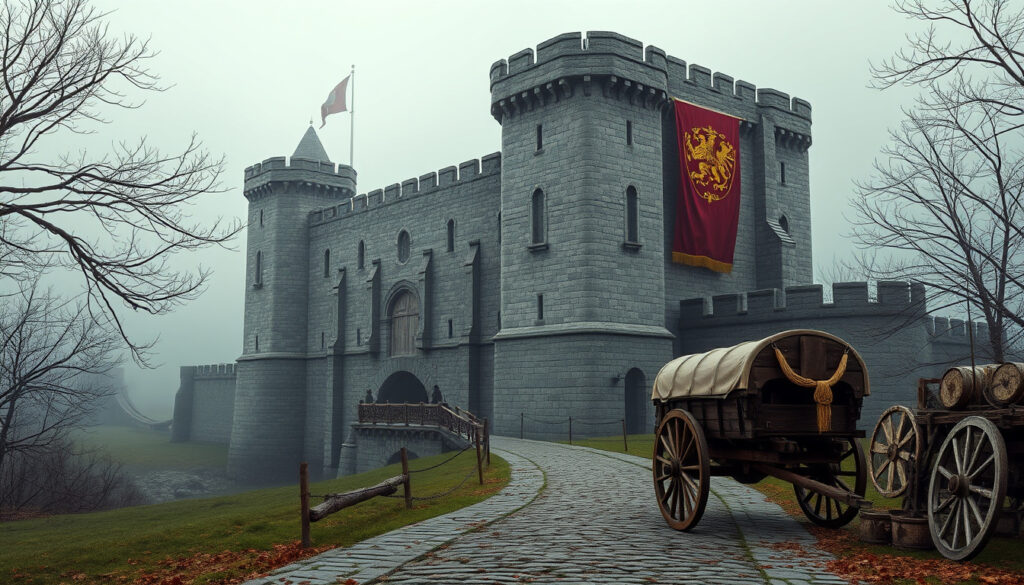
Middle Ages: Definition, Timeline, and Key Events
Few historical labels have stuck as stubbornly as the “Dark Ages” — but that nickname hides a far more complex reality. The Middle Ages, spanning roughly a thousand years from the 5th to the 15th century, was not a single era of stagnation but a dynamic period of transformation.
Start date: 5th century CE (approx. 476 CE) ·
End date: Late 15th century (approx. 1500) ·
Traditional end event: Fall of Constantinople in 1453 ·
Sub-periods: Early, High, Late Middle Ages ·
Duration: Roughly 1000 years
Quick snapshot
- The Middle Ages began after the Fall of the Western Roman Empire (476 CE) and ended with the Fall of Constantinople (1453 CE) or the discovery of the Americas (1492). (Britannica (encyclopedic reference))
- The period is divided into Early, High, and Late Middle Ages. (Wikipedia (user-edited encyclopedia))
- The Black Death killed an estimated 30-50% of Europe’s population. (Medievalists.net (academic history portal))
- Exact year boundaries vary among historians; some use 500–1500 CE broadly. (Britannica (encyclopedic reference))
- The term “Dark Ages” is debated; modern historians prefer “Early Middle Ages”. (Wikipedia (user-edited encyclopedia))
- Social customs like expressions of love and age of marriage are documented only through limited sources (religious texts, court records). (Britannica (encyclopedic reference))
- 1453 CE: Fall of Constantinople to the Ottoman Empire — often marks the end of the Middle Ages. (The British Library (national library))
- 1347–1351: Black Death kills a third of Europe. (Medievalists.net (academic history portal))
- The Renaissance and Early Modern period follow the Middle Ages, beginning around 1500. (Britannica (encyclopedic reference))
Six key facts, one pattern: the Middle Ages are defined by their bookends — the collapse of Rome and the rise of a new world order.
| Fact | Value |
|---|---|
| Start event | Fall of Western Roman Empire (476 CE) |
| End event | Fall of Constantinople (1453 CE) or Columbus’ voyage (1492) |
| Language of learning | Latin throughout most of Europe |
| Major religion | Roman Catholicism in Western Europe, Eastern Orthodoxy in Byzantine areas |
| Population estimate (c. 1300) | approx. 70-100 million in Europe |
| Key invention | Printing press (c. 1440) |
What is the Middle Ages period?
Definition and time span
In European historiography, the Middle Ages are commonly dated from about 500 to 1500 CE, though exact boundaries shift by region and author, according to Britannica (encyclopedic reference). The period sits between the fall of the Western Roman Empire (traditionally 476 CE) and the dawn of the Renaissance. Wikipedia (user-edited encyclopedia) notes that the Middle Ages lasted “approximately from the 5th to late 15th centuries.”
The implication: the dates are less important than understanding the transition from a Roman world to one structured around feudalism and faith.
Why “Middle” Ages?
The term “Middle Ages” was coined by Renaissance scholars who saw it as an intermediate period — a “middle age” between classical antiquity and their own time. The Latin phrase medium aevum literally means “middle age.” CLT Journal (classical education resource) frames the High and Late Middle Ages as roughly 1073 to 1517 for its own curricular purposes.
Modern students risk flattening a thousand years of change if they treat the Middle Ages as a single block. The label itself is a Renaissance invention — and it shows.
What are the three periods of the Middle Ages?
Early Middle Ages (c. 500–1000)
- Rise of feudalism: Britannica (encyclopedic reference) describes feudalism as characterizing western Europe in the early Middle Ages, broadly between the 5th and 12th centuries.
- Spread of Christianity across the former Roman provinces.
- Viking invasions reshape trade and settlement patterns.
High Middle Ages (c. 1000–1300)
- Population growth and the rise of towns and trade. CLT Journal (classical education resource) places the High Middle Ages roughly in the twelfth and thirteenth centuries.
- The Crusades (1096–1291) connect Europe with the Middle East.
- Gothic architecture flourishes (Notre Dame, Chartres).
Late Middle Ages (c. 1300–1500)
- The Black Death (1347–1351) kills an estimated 30-50% of Europe’s population, per Medievalists.net (academic history portal).
- The Hundred Years’ War (1337–1453) between England and France.
- The Fall of Constantinople (1453) to the Ottoman Empire.
The pattern: each sub-period carried distinct political and social structures. The Early Middle Ages were decentralized and rural; the High Middle Ages saw the birth of universities and a merchant class; the Late Middle Ages brought crisis and transition toward the modern era.
Why is 1453 considered the end of the Middle Ages?
The Fall of Constantinople
On 29 May 1453, the Ottoman Empire under Sultan Mehmed II captured Constantinople after a 55-day siege, according to The British Library (national library). Britannica (encyclopedic reference) confirms the siege began on 6 April and ended with the city’s fall. Constantinople had been weakening for centuries — The British Library (national library) explains it became a frontier city facing the rising Ottoman Empire from the 14th century onward.
The catch: a thousand-year empire fell in two months — a rapid end to a slow decline.
Impact on European history
- The fall ended the Byzantine Empire (Eastern Roman Empire).
- It disrupted trade routes, prompting European exploration westward.
- Britannica (encyclopedic reference) lists 1453 as one of several proposed end points for the Middle Ages, alongside 1492 (Columbus) and 1517 (Reformation).
Historians use 1453 as a convenient marker, but the real shift from medieval to early modern was gradual. For students, the year remains the most cited single event for closing the medieval book.
What is the Middle Ages timeline?
Key events by century
The dates below trace how a shattered Roman province became the early modern world.
| Date | Event | Source |
|---|---|---|
| c. 476 CE | Fall of Western Roman Empire; traditional start of Middle Ages | Britannica |
| c. 500–1000 CE | Early Middle Ages (Dark Ages for some historians) | Wikipedia |
| 800 CE | Charlemagne crowned Holy Roman Emperor | Medievalists.net |
| 1066 CE | Norman Conquest of England | Medievalists.net |
| 1096–1291 CE | The Crusades | CLT Journal |
| c. 1000–1300 CE | High Middle Ages (growth of towns, trade, universities) | Britannica |
| 1347–1351 CE | Black Death decimates Europe | Medievalists.net |
| c. 1300–1500 CE | Late Middle Ages (social upheaval, war) | The Latin Library |
| 1453 CE | Fall of Constantinople to the Ottoman Empire | The British Library |
| c. 1500 CE | Beginning of Early Modern period (Renaissance in full swing) | Britannica |
The pattern: key turning points cluster around invasions (Vikings, Normans), religious warfare (Crusades), and demographic catastrophe (Black Death). Each reshaped European society in lasting ways.
What are the 5 periods of history?
Common periodization scheme
Standard Western periodization divides history into five major blocks: Ancient, Classical, Middle Ages, Renaissance, and Modern. Wikipedia (user-edited encyclopedia) notes that alternative schemes include Early Civilizations, Classical Antiquity, Post-Classical, Early Modern, and Modern. The Middle Ages thus occupy the “post-classical” slot — a period that, in English-language historiography, is split into the Early/High/Late framework.
The trade-off: any five-period scheme simplifies a messy reality. The Renaissance, for instance, overlaps with the Late Middle Ages in many regions.
Middle Ages timeline (full chronological view)
- c. 476 CE: Fall of Western Roman Empire; traditional start of Middle Ages (Britannica)
- c. 500–1000 CE: Early Middle Ages (Wikipedia)
- 800 CE: Charlemagne crowned Holy Roman Emperor (Medievalists.net)
- 1066 CE: Norman Conquest of England (Medievalists.net)
- 1096–1291 CE: The Crusades (CLT Journal)
- c. 1000–1300 CE: High Middle Ages (Britannica)
- 1347–1351 CE: Black Death (Medievalists.net)
- c. 1300–1500 CE: Late Middle Ages (The Latin Library)
- 1453 CE: Fall of Constantinople (The British Library)
- c. 1500 CE: Early Modern period begins (Britannica)
What does ‘Middle Ages’ mean?
Etymology of the term
The phrase “Middle Ages” comes from the Latin medium aevum (“middle age”). Renaissance humanists first used it to describe the centuries between classical antiquity and their own rebirth of classical learning. Wikipedia (user-edited encyclopedia) notes that the term has been criticized for implying a merely transitional period rather than a distinct era.
The implication: the name itself carries a bias — one that modern historians work to correct.
Medieval vs. Middle Ages
“Medieval” (from Latin medium aevum) is the adjective form; “Middle Ages” is the noun. The two are used interchangeably in modern English. Some historians prefer “post-classical” to avoid the negative connotations of “middle.”
Calling the period “Middle Ages” subtly reinforces the Renaissance narrative that nothing much happened between Rome and the 14th century. That view has been thoroughly debunked, but the label sticks.
What’s confirmed and what’s unclear
Confirmed facts
- The Middle Ages began after the Fall of the Western Roman Empire (476 CE) and ended with the Fall of Constantinople (1453 CE) or the discovery of the Americas (1492).
- The period is divided into Early, High, and Late Middle Ages.
- The Black Death killed an estimated 30-50% of Europe’s population.
What’s unclear
- Exact year boundaries vary among historians; some use 500–1500 CE broadly.
- The term “Dark Ages” is debated; modern historians prefer “Early Middle Ages”.
- Social customs like expressions of love and age of marriage are documented only through limited sources (religious texts, court records).
What historians say
“The period in European history from the collapse of Roman civilization in the 5th century ce to the period of the Renaissance.”
Britannica (encyclopedic reference)
“Approximately from the 5th to late 15th centuries.”
Wikipedia (user-edited encyclopedia)
“Often placed between the years 500 and 1500.”
Medievalists.net (academic history portal)
“The last day of Constantinople came after a 1204 sack by Crusaders and a 1261 recovery by the Palaeologan dynasty.”
The British Library (national library)
For students of history, the Middle Ages are not a single “dark” era but three distinct periods, each with its own logic. The implication is clear: understanding the sub-periods is essential for anyone who wants to move past stereotypes and grasp how Europe became the continent it is today.
Related reading: Mary Magdalene: Bible Facts vs. Popular Myths · Punxsutawney Phil: Groundhog History & Elixir Myth
reddit.com, en.wikipedia.org, en.wikipedia.org, britannica.com, historymedieval.com, youtube.com
For readers seeking more depth, a detailed timeline of the Middle Ages offers a comprehensive look at the period’s key developments.
Frequently asked questions
What is the difference between the Middle Ages and the medieval period?
None — they are the same. “Medieval” is the adjective form; “Middle Ages” is the noun phrase. Both refer to the period from roughly the 5th to the 15th century.
How long did the Middle Ages last?
The period spans about 1000 years, from approximately 476 CE to 1500 CE. Exact boundaries vary by historian.
What caused the start of the Middle Ages?
The traditional trigger is the fall of the Western Roman Empire in 476 CE, which left a power vacuum that led to decentralized feudal kingdoms.
What were the major events of the Early Middle Ages?
Key events include the spread of Christianity, the rise of feudalism, the coronation of Charlemagne in 800 CE, and Viking invasions.
What is the significance of the year 1453?
The Ottoman capture of Constantinople ended the Byzantine Empire and is often cited as the end of the Middle Ages.
Who were some famous figures from the Middle Ages?
Notable figures include Charlemagne, William the Conqueror, Thomas Aquinas, Joan of Arc, and Marco Polo.
Did the Middle Ages really end in 1453?
It is a conventional marker. Some historians argue for 1492 (Columbus) or 1517 (Reformation). The transition was gradual.
How does the Middle Ages compare to the Renaissance?
The Renaissance emphasized classical learning, humanism, and art, while the Middle Ages were more focused on religion, feudalism, and local economies. The Renaissance emerged from the Late Middle Ages.
The Middle Ages shaped Europe’s languages, borders, and institutions — everything from the Catholic Church to the university system. For anyone studying European history, the sub-period framework (Early, High, Late) is the most useful tool for making sense of a thousand years of change. The alternative — treating it all as one lump of “darkness” — is a shortcut that obscures far more than it reveals.
More related posts
 Rainn Wilson: Biography, Net Worth, and The Office
 Alexandr Wang: Net Worth, Age, and How He Became a Billionaire
 Odessa A’zion: Biography, Height, Parents & Rumors
 Steve Earle: A Life of Music, Addiction, and Loss
 Graham Greene Death: Cause, Costner Tribute & Legacy
 Mexican Restaurant Near Me: Best Irish Spots & Ordering Tips
 Shefali Jariwala Death: Cause, Age, Husband & Cremation
 Ric Flair: Health, Net Worth, Spouse, and Career Facts
