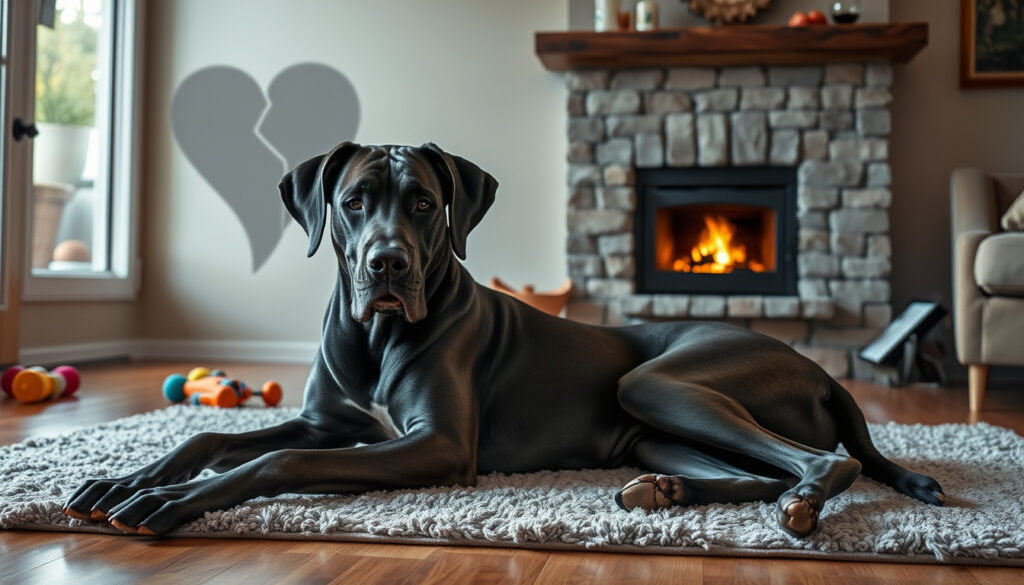
Great Dane Temperament: Family Dog or Heartbreak Breed
Few dog breeds draw as much admiration as the Great Dane. Standing up to 32 inches at the shoulder, they’re the gentle giants of the canine world — but also carry the bittersweet nickname “heartbreak breed” because of their short 7-to-10-year lifespan.
Average Height: 28-32 inches at the shoulder ·
Average Weight: 110-175 pounds ·
Typical Lifespan: 7-10 years ·
Temperament: Friendly, patient, dependable ·
Energy Level: Moderate (needs daily exercise)
Quick snapshot
- Official breed standard describes the Great Dane as “friendly, patient, and dependable” (Great Dane Club of America (breed standard))
- Average lifespan 7-10 years with high risk of bloat (American Kennel Club (Meet the Breeds))
- Exact national ranking of “most surrendered breed” varies by source and year
- Insurance “blacklists” differ by company and are not always publicly published
- IQ ranking relative to other breeds is subjective and often based on work/obedience tests
- Puppy prices range from $1,000 to $2,000, with rare pedigrees up to $5,000 — exact figures vary by region and breeder
- Lifespan has remained stable at 7-10 years over the past few decades (Great Dane Club of America (breed standard))
- Bloat (GDV) remains the leading cause of death, with mortality rates unchanged despite advances in emergency care (Great Dane Club of America (breed standard))
- More owners are seeking pet insurance that covers bloat surgery and chronic conditions
- Breed-specific legislation continues to target large breeds, but Great Danes are rarely included on the strictest lists
Six key spec points, one pattern: Great Danes are built for size, not speed — and that size comes with specific trade-offs.
| Attribute | Value | Source |
|---|---|---|
| Scientific Name | Canis lupus familiaris (Great Dane) | GDCA (breed standard) |
| Country of Origin | Germany | AKC (Meet the Breeds) |
| AKC Group | Working | AKC (Meet the Breeds) |
| Temperament | Friendly, patient, dependable | GDCA (breed standard) |
| Height (Male) | 30-32 inches | AKC (Meet the Breeds) |
| Weight (Male) | 140-175 pounds | AKC (Meet the Breeds) |
Is a Great Dane a Good Family Dog?
Temperament around children
The official breed standard from the Great Dane Club of America (breed standard) describes the dog as “spirited, courageous, always friendly, dependable, and never timid or aggressive.” The American Kennel Club (Meet the Breeds) echoes the same language. Multiple breed-focused editorial sources, such as ManyPets, call them “gentle giants” and note they are affectionate with their families — sometimes behaving like lap dogs despite their size.
The breed standard is unequivocal: Great Danes are bred to be friendly. But a friendly 140-pound dog still needs supervision around small children simply because of size — a playful tail wag can knock a toddler over.
Suitability for apartment living
- Great Danes are not high-energy, but they need daily walks and space to stretch. ManyPets notes they can adapt to apartments if exercised adequately.
- Their size makes travel difficult — a standard sedan cannot fit them comfortably. A large SUV or minivan is often necessary.
- A home with a yard is ideal, but not mandatory, as long as the owner commits to at least 30-60 minutes of walking per day.
The pattern: Great Danes are surprisingly low-energy indoors, but their sheer size means you need a home that can accommodate them physically — both in floor space and in vehicle size.
Exercise and space requirements
Despite their size, Great Danes are moderate-energy dogs. They enjoy a few moderate walks and play sessions, but they are not hyperactive like some working breeds. ManyPets states they need daily exercise to prevent obesity, but their growth plates take 18-24 months to close, so high-impact running should be limited during puppyhood.
The implication: Great Danes can thrive in family settings, but their size demands proactive management from day one.
Why is the Great Dane Called the Heartbreak Breed?
Understanding the short lifespan
The average lifespan of a Great Dane is 7-10 years, which is significantly shorter than many smaller breeds that live 12-15 years. The American Kennel Club (Meet the Breeds) confirms this range. The term “heartbreak breed” comes from the emotional toll of losing a beloved dog at a relatively young age, compounded by the intense bond owners form with these gentle giants.
Common health issues (bloat, cardiomyopathy)
- Gastric Dilatation-Volvulus (GDV), or bloat, is a life-threatening emergency where the stomach twists. The Great Dane Club of America (breed standard) warns that it is the leading cause of death in the breed.
- Dilated cardiomyopathy (DCM) is a common heart condition that can lead to congestive heart failure. Regular cardiac screening is recommended by many veterinary specialists.
- Joint issues such as hip dysplasia are also common due to the breed’s rapid growth and heavy weight.
The catch: Great Danes require proactive health management — including gastropexy surgery (stomach tacking) to prevent bloat, and annual cardiac checkups. Without these measures, the heartbreak is almost inevitable.
Emotional impact on owners
“The bond with a Great Dane is as huge as the dog itself. When they leave us at 7 or 8 years old, it’s a grief that words can’t capture.”
— Veterinary Nutritional Advocate (paraphrased from breed community discussions)
Owners often report that the short lifespan is the hardest part of Great Dane ownership. This emotional trade-off is a major reason why some rescue organizations see Great Danes surrendered by owners who cannot handle the grief of anticipating an early loss.
The implication: The nickname is not hyperbole — it reflects a genuine emotional cost of loving this breed.
Are Great Danes Friendly or Aggressive?
Temperament data from AKC and kennel standards
Both the Great Dane Club of America (breed standard) and the American Kennel Club (Meet the Breeds) describe the breed as “friendly, patient, and dependable.” Aggression is explicitly not part of the standard. However, ManyPets notes that they have a protective nature and a guarding instinct, originating from their history as hunting dogs. Without proper training, that protectiveness can be misinterpreted as aggression.
Misinterpretation of size as aggression
Many people confuse size with threat. A Great Dane that barks at the door may be acting normally, but because of its deep bark and large frame, neighbors or passersby may perceive it as aggressive. Most breed-specific legislation (BSL) targets breeds like Pit Bulls, Rottweilers, and Doberman Pinschers — Great Danes are rarely on the strictest banned lists, according to the Insurance Information Institute (breed-specific legislation report).
Insurance and breed blacklists
Some homeowner insurance policies do restrict giant breeds, but Great Danes are far less likely to be blacklisted than Pit Bulls. ManyPets states that the breed is not typically on banned lists, but individual companies may still exclude them due to size-related liability concerns. The Insurance Information Institute (breed-specific legislation report) confirms that the top three breeds banned by insurers are Pit Bull, Rottweiler, and Doberman Pinscher — Great Danes are less common on such lists.
“Great Danes are not considered aggressive by the AKC standard, but their size alone can trigger insurance restrictions. It’s not about temperament — it’s about risk calculations.”
— Representative from the Insurance Information Institute report
Even though Great Danes are not classified as aggressive, their size means any incident — even an accidental bump — can result in serious injury. Owners should carry liability coverage and train their dog to be calm around strangers.
The pattern: The breed’s temperament is reliably gentle, but its size creates a risk profile that owners must manage.
What Are the Major Downsides of Owning a Great Dane?
Cost of food, vet care, and supplies
- Great Danes eat 5-6 cups of high-quality dry food per day, costing roughly $100-$150 per month.
- Puppy purchase price: typically $1,000-$2,000 from a breeder, with show-quality lines up to $5,000 (ManyPets). Rescue adoption fees are lower: $400-$450 (Great Dane Rescue of the Commonwealth).
- Vet bills are higher than average due to medication dosages — a single dose of heartworm prevention can cost three times more than for a 40-pound dog.
- Emergency bloat surgery can cost $3,000-$7,000. Pet insurance is strongly recommended.
The pattern: Great Danes are expensive to own — not just to buy, but to feed, medicate, and insure. The upfront cost is only the beginning.
Short lifespan and related grief
As covered earlier, the 7-10 year lifespan means owners face the loss of their dog much earlier than owners of smaller breeds. This emotional toll is a major reason why some people surrender Great Danes. Great Dane Rescue of the Commonwealth notes that many of their dogs come from owners who were not prepared for the short lifespan or the high cost of care.
Training challenges due to size
A 100-pound puppy that jumps on you is not cute — it’s dangerous. ManyPets emphasizes that obedience training must start early and be consistent. A Great Dane that pulls on the leash can drag even a strong adult. Crate training is also essential to manage their size and prevent destructive behavior when left alone.
Great Danes are not high-maintenance in terms of exercise, but they are high-maintenance in terms of cost, training, and emotional commitment. For families who can afford the time and money, the reward is a loyal, affectionate companion. For others, the downsides can be overwhelming.
The implication: The downsides are not deal-breakers for everyone, but they demand honest self-assessment before purchase.
Upsides
- Gentle, affectionate, great with children when trained
- Low energy indoors — not a hyperactive breed
- Loyal and protective of family
- Distinctive appearance that turns heads
Downsides
- Short lifespan (7-10 years) with high risk of bloat
- Expensive: food, vet bills, insurance, supplies
- Size requires large living space and vehicle
- Training essential to prevent dangerous behaviors
- Emotional toll of early loss
Great Dane Breed Specs: Size, Lifespan, and Intelligence
Height, weight, and growth patterns
Great Danes are among the tallest dog breeds. Males stand 30-32 inches at the shoulder and weigh 140-175 pounds, according to the American Kennel Club (Meet the Breeds). They grow rapidly, reaching near-full height by 12 months, but fill out until 18-24 months. This rapid growth makes proper nutrition crucial to avoid skeletal issues.
Intelligence ranking and trainability
Great Danes are intelligent but can be stubborn. They rank 46th in Stanley Coren’s “The Intelligence of Dogs” (working/obedience ranking), which is considered average. However, their eagerness to please makes them trainable with positive reinforcement. ManyPets notes that they are quick learners but need a firm, consistent handler.
Lifespan and common health concerns
- Average lifespan: 7-10 years (AKC)
- Leading cause of death: GDV (bloat) and cardiomyopathy
- Other common issues: hip dysplasia, osteosarcoma, hypothyroidism
- Preventive surgery (gastropexy) is recommended to reduce bloat risk
The pattern: Great Danes are a giant breed with an unfortunately short lifespan and a high risk of life-threatening emergencies. Proactive health care is not optional — it’s essential.
The implication: Knowing the specs upfront helps owners avoid surprises and prepare for the breed’s specific needs.
Related reading: Kitchen Countertops Guide 2025: Best Materials, Trends & Prices · Wall Mount TV: Safety, Weight Limits & Installation Tips
dogbreedslist.info, manypets.com, petpawz.com.au, uk.funnyfuzzy.com, rmgreatdane.org, petlur.com, prezi.com, propawpicks.com, lancasterpuppies.com, localpetfinder.ca
Frequently asked questions
How much does a Great Dane puppy cost?
In the U.S., a Great Dane puppy from a breeder typically costs $1,000 to $2,000. Rare pedigrees can reach $3,000 to $5,000 (ManyPets). Rescue adoption fees are around $400-$450 (Great Dane Rescue of the Commonwealth).
Do Great Danes get along with cats?
Yes, if raised together or properly introduced. Their hunting instinct is low compared to terriers, but individual personalities vary. Supervised introductions are recommended.
What is the best diet for a Great Dane?
A high-quality large-breed puppy formula (for growth) and later large-breed adult formula. Avoid high-calcium diets that can accelerate bone growth. Many veterinarians recommend feeding multiple small meals per day to reduce bloat risk.
How much exercise does a Great Dane need?
About 30-60 minutes of moderate exercise per day, including walks and playtime. They are not high-energy, but they need mental stimulation. Avoid excessive running during puppyhood.
Are Great Danes easy to train?
They are intelligent but can be stubborn. Consistent, positive reinforcement training works best. Early socialization is critical to prevent shyness or reactivity.
Do Great Danes bark a lot?
They are not excessive barkers, but they will alert bark. Their deep bark can be intimidating. Training to curb unnecessary barking is recommended.
What is the most common cause of death for Great Danes?
Gastric Dilatation-Volvulus (bloat) is the leading cause of death, followed by dilated cardiomyopathy. Preventive gastropexy surgery and regular cardiac screenings are advised.
For anyone considering a Great Dane, the decision is clear: the breed offers unmatched loyalty and gentleness, but at a high cost in time, money, and emotional investment. Families who can afford the vet bills, the space, and the heartbreak will find a devoted friend. Those who cannot should look to smaller, longer-lived breeds.
More related posts
 George Bush: Biography, Presidency, and Last Words
 Alex Pretti: Verified Facts on the VA Nurse Shooting
 Jenn Sterger: What Happened, Net Worth & Life Today
 Rainn Wilson: Biography, Net Worth, and The Office
 Dave Navarro: Disability, Lawsuit & RHCP History
 Arch Manning: NFL Draft, Family Tree, Stats, Net Worth & More
 James Spader Movies and TV Shows – Complete Filmography and Best Roles
