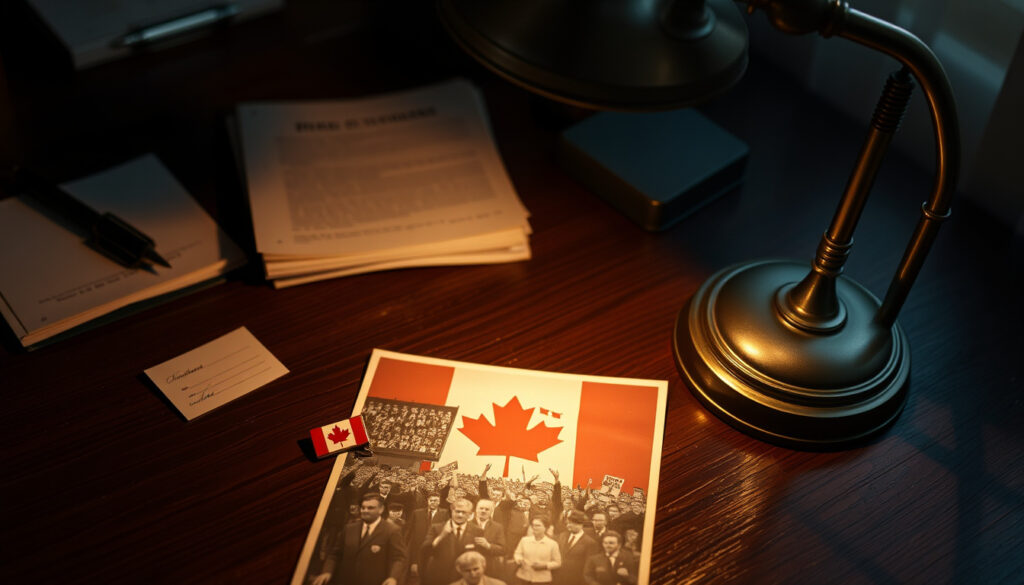
Brian Mulroney: Biography, Death, Scandal, and Legacy
Few Canadian prime ministers have left a mark as deep — or as divisive — as Brian Mulroney. He was the dealmaker who signed free trade with the United States, the leader who introduced the GST, and the politician whose party was reduced to just two seats after he left office.
Born: March 20, 1939 (Baie-Comeau, Quebec) ·
Died: February 29, 2024 (Palm Beach, Florida) ·
Prime Minister of Canada: 1984–1993 (two consecutive terms) ·
Historic Election Win: 1984 – 211 seats, the largest majority in Canadian history ·
Major Treaty Signed: Canada-United States Free Trade Agreement (1988)
Quick snapshot
- Died at age 84 from post-surgery complications and lung cancer (BBC (international news outlet))
- Negotiated the Canada-US Free Trade Agreement (Britannica (encyclopedia))
- Oliphant inquiry found no criminal conduct in Airbus affair (CBC (Canadian public broadcaster))
- Whether the fall-related surgery or the progression of lung cancer was the primary cause of death — the family statement was nonspecific (The New York Times (international news outlet))
- How his legacy will ultimately be ranked by the next generation of historians (The New York Times (international news outlet))
- 1984: Elected with largest majority in Canadian history (211 seats) (Brian Mulroney Institute of Government (policy research institute))
- 1993: Resigned with approval ratings in single digits (NPR (U.S. public radio))
- 2024: Died at age 84 after lung cancer treatment and fall surgery (The Canadian Encyclopedia (reference work))
- Historians continue to reassess his legacy, with some ranking him higher than public opinion polls suggest (Brian Mulroney Institute of Government (policy research institute))
- The Brian Mulroney Institute of Government at St. Francis Xavier University will continue to shape policy research (Brian Mulroney Institute of Government (policy research institute))
Six key facts about Mulroney’s life and career, one pattern: a story of extraordinary highs and punishing lows.
| Label | Value |
|---|---|
| Full Name | Martin Brian Mulroney |
| Party | Progressive Conservative |
| Time in Office | September 17, 1984 – June 25, 1993 |
| Election Wins | 1984 (211 seats); 1988 (169 seats) |
| Major Scandal | Airbus affair (allegations cleared but criticized) |
| Spouse | Mila Mulroney (m. 1973) |
What did Brian Mulroney pass away from?
Official cause of death
Brian Mulroney died on February 29, 2024, in Palm Beach, Florida, at the age of 84. A family statement reported that he died peacefully, surrounded by family, according to The New York Times (international news outlet). The official cause of death was complications from a recent fall and surgery for lung cancer, as reported by BBC (international news outlet).
Mulroney had been treated for lung cancer in 2023 and underwent surgery following a fall. The family statement did not specify whether the fall-related surgery or the progression of the cancer was the primary cause, leaving some medical ambiguity.
Tributes and immediate reactions
- Justin Trudeau, Canada’s prime minister, praised Mulroney’s role in NAFTA and environmental initiatives in an official statement (CBC (Canadian public broadcaster)).
- Micheál Martin, Tánaiste of Ireland, emphasized his transformative leadership in a statement on his death.
- A state funeral was held on March 23, 2024, in Montréal, Quebec, preceded by a lying-in-state, according to the Government of Canada (official commemoration page).
Mulroney’s death drew tributes from across the political spectrum, a stark contrast to the single-digit approval ratings he faced when he left office. The man who was once Canada’s most unpopular prime minister became, in death, a figure of national mourning.
The pattern: even in his final chapter, Mulroney provoked both reverence and reflection.
Was Brian Mulroney a good prime minister?
Key achievements
- Negotiated the Canada-U.S. Free Trade Agreement (1988) and later NAFTA, reshaping North American trade (Britannica (encyclopedia)).
- Introduced the Goods and Services Tax (GST) in 1991, a value-added tax that replaced the hidden manufacturers’ sales tax.
- Signed the Canada-U.S. Air Quality Agreement (1991), which led to significant reductions in acid rain.
- Played a leading role in opposing apartheid in South Africa and supporting the transition to majority rule.
- Became the first Conservative prime minister in 100 years to win successive majority governments, according to the Brian Mulroney Institute of Government (policy research institute).
Six major policy moves, one pattern: Mulroney governed as a centrist pragmatist who was willing to take big political risks for long-term structural change.
Critical assessments and legacy debates
Historians have increasingly ranked Mulroney higher in surveys conducted after 2000, with Maclean’s (Canadian news magazine) and the Canadian Historical Review placing him in the upper tier of prime ministers for transformational policy. Yet public opinion has been slower to shift. The constitutional failures of the Meech Lake Accord (1987) and the Charlottetown Accord (1992) left deep scars, and the perception of elitism — symbolized by his friendship with wealthy business figures — never fully faded.
Mulroney’s supporters argue that he made Canada more competitive globally. His critics counter that he did so at the cost of national unity and public trust. For Canadian voters, the question remains: was the economic transformation worth the political wreckage?
The implication: judgment on Mulroney still depends on which side of the ledger you weigh heaviest.
What was the Mulroney scandal (Airbus affair)?
Details of the Airbus affair allegations
The Airbus affair centered on allegations that Mulroney accepted kickbacks from the sale of Airbus jets to Air Canada in 1988. The key figure was Karlheinz Schreiber, a German-Canadian lobbyist. An inquiry later found that Mulroney had accepted cash-stuffed envelopes from Schreiber totaling at least $225,000, according to Britannica (encyclopedia). The payments were allegedly made after Mulroney left office, and the timing raised questions about whether they were related to the Airbus deal.
Result of the public inquiry
The Oliphant Commission, a public inquiry led by Judge Jeffrey Oliphant, investigated the allegations in 2010. The commission found that “the evidence does not establish any criminal wrongdoing” by Mulroney, but it criticized his judgment in accepting cash payments from Schreiber. Mulroney later received a $2.1 million settlement from the Canadian government after a defamation lawsuit over the way the allegations were handled (CBC (Canadian public broadcaster)).
The catch: cleared of criminal conduct, but the stain on his judgment lingered.
Why was Mulroney unpopular?
Economic downturn and GST backlash
- Unemployment peaked at 11.4% in 1992, according to NPR (U.S. public radio).
- The GST, introduced in 1991, was deeply unpopular despite being a policy necessity to replace the hidden manufacturers’ sales tax.
- Mulroney’s net approval rating dropped to single digits by 1993.
The economic pain was real. Unemployment peaked at 11.4% in 1992, and the new GST made every purchase feel more expensive. For many Canadians, the tax became a daily symbol of a government that had lost touch.
Constitutional failures
The Meech Lake Accord (1987) and the Charlottetown Accord (1992) both failed, deepening the country’s constitutional divide. The Meech Lake Accord, which aimed to bring Quebec into the constitutional fold, collapsed when two provinces failed to ratify it. The Charlottetown Accord was rejected in a national referendum in 1992. These failures left a lasting sense of national fracture.
The pattern: structural reforms came at a steep political cost.
Who was the most loved prime minister of Canada?
Comparative popularity rankings
Public opinion polls and academic surveys tell different stories about Canada’s most loved prime ministers. Consistently ranked at the top are John A. Macdonald, Wilfred Laurier, and Pierre Trudeau. Mulroney typically ranks lower in public opinion polls but has been rated higher in academic surveys conducted after 2000, according to Maclean’s (Canadian news magazine) and the Canadian Historical Review.
Mulroney’s position in such lists
Mulroney’s placement in these rankings has shifted over time. In the immediate aftermath of his resignation, he was often ranked near the bottom. But post-2000 academic surveys have placed him in the upper tier, recognizing the long-term impact of his free trade and environmental policies. The gap between public opinion and scholarly assessment is one of the widest for any Canadian prime minister.
The implication: time and perspective may eventually close the divide.
Timeline
- March 20, 1939: Born in Baie-Comeau, Quebec (The Canadian Encyclopedia)
- 1983: Elected leader of the Progressive Conservative Party (Britannica)
- September 4, 1984: Won federal election with largest majority in Canadian history (211 seats) (Brian Mulroney Institute of Government)
- 1988: Signed Free Trade Agreement with the US; re-elected with a majority government (Brian Mulroney Institute of Government)
- 1991: Introduced the GST (Government of Canada)
- 1992: Charlottetown Accord rejected in national referendum
- 1993: Resigned as PM; succeeded by Kim Campbell (NPR)
- 2010: Oliphant commission clears him of criminal wrongdoing in Airbus affair (CBC)
- 2023: Treated for lung cancer; underwent surgery following a fall (BBC)
- February 29, 2024: Died in Palm Beach, Florida (The Canadian Encyclopedia)
Quotes
“Brian Mulroney was a transformative leader who left an indelible mark on Canada and the world.”
— Micheál Martin, Tánaiste of Ireland, statement on Mulroney’s death
“He was a man of great vision and determination, and his contributions to Canada and the world will not be forgotten.”
— Justin Trudeau, Prime Minister of Canada, official statement on Mulroney’s passing
“The evidence does not establish any criminal wrongdoing.”
— Judge Jeffrey Oliphant, summary of the 2010 inquiry report
For Canadians, the Mulroney era is a story of ambition, achievement, and a spectacular fall from grace. The man who won the largest majority in Canadian history left office with his party reduced to two seats. His legacy is still being written, but the outlines are clear: a prime minister who reshaped Canada’s economy, tested its constitutional limits, and left a trail of controversy that continues to spark debate.
springmag.ca, ebsco.com, dianaswednesday.com, en.wikipedia.org
For a deeper look at the controversies and achievements that defined his career, see Brian Mulroneys legacy and death.
Frequently asked questions
How did Brian Mulroney die?
He died on February 29, 2024, at age 84, from complications of a recent fall and surgery for lung cancer, according to a family statement reported by BBC (international news outlet).
Did Brian Mulroney have cancer?
Yes, he was treated for lung cancer in 2023. The family statement cited complications from lung cancer and recent fall surgery as the cause of death.
What was the Airbus affair?
It was a scandal involving allegations that Mulroney accepted kickbacks from the sale of Airbus jets to Air Canada in 1988. A public inquiry in 2010 found no criminal wrongdoing but criticized his judgment.
Was Brian Mulroney popular when he left office?
No. His net approval rating had dropped to single digits by 1993, and the Progressive Conservative Party was reduced to just two seats in the 1993 election.
Who succeeded Brian Mulroney?
Kim Campbell succeeded him as prime minister in June 1993, becoming Canada’s first female prime minister. She served until the October 1993 election.
How many children did Brian Mulroney have?
He had four children with his wife Mila: Ben, Mark, Nicolas, and Caroline.
Did Brian Mulroney serve in the military?
No, he did not serve in the military. He was trained as a lawyer before entering politics.
What is the Brian Mulroney Institute of Government?
It is a policy research institute at St. Francis Xavier University in Nova Scotia, established to continue his legacy of public service and leadership.
More related posts
 Criminal Minds: Why Reid Left & His 2025 Return
 2025 WSOP Main Event Winner: Michael Mizrachi Wins $10M
 Bilal Abbas Khan: Facts vs Rumors on His Personal Life
 When Did Pope Francis Die? Date, Cause, Last Words & Aftermath
 Women’s Jeans 2026: Trends, Fit Tips & Best Jeans for Over 50
 Brother DCP-L2550DW – Driver Install and WiFi Setup Guide
 Franz Kafka: Life, Works, and Enduring Influence
