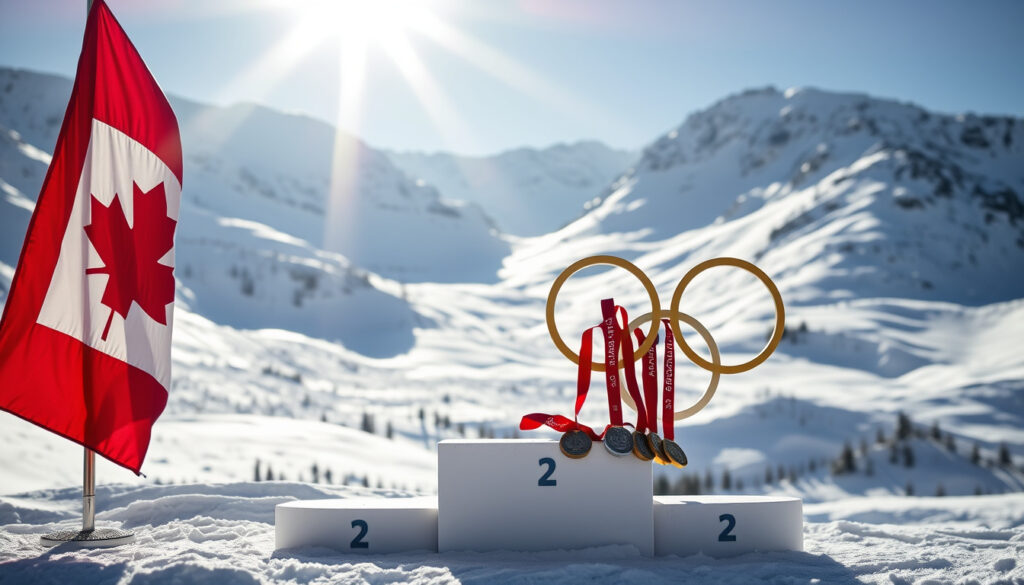
Canada Medals Olympics 2026: Full Count and Analysis
Watching the medal tally shift from one nation to another is part of the Winter Olympics thrill. For Team Canada, Milano Cortina 2026 delivered 21 medals — 5 gold, 7 silver, and 9 bronze — a haul that landed the team around 8th in the overall standings.
Total Medals: 21 ·
Gold Medals: 5 ·
Silver Medals: 7 ·
Bronze Medals: 9 ·
Canada’s Rank (est.): 8th ·
Team Size: 215 athletes
Quick snapshot
- Canada won 21 total medals at Milano Cortina 2026 (Olympic.ca (Team Canada media))
- 5 gold, 7 silver, 9 bronze (ESPN Olympics)
- Exact final ranking depends on medal table; Canada is estimated around 8th (Olympic.ca)
- Full financial impact of record funding on medal count requires further analysis (Olympic.ca)
- Games: Feb 6–22, 2026 (Olympic.ca medal table)
- First gold: Megan Oldham (slopestyle, Feb 8) (Olympic.ca medal table)
- Final gold: Steven Dubois (short track, Feb 20) (Olympic.ca medal table)
- Post-Games review of Own the Podium funding efficiency (Olympic.ca)
- Team Canada evaluation for 2028 Summer Olympics programs (Olympic.ca)
Team Canada’s medal count dropped by 5 from Beijing 2022 even though 215 athletes — Canada’s largest Winter Olympic team — competed. More funding and athletes produced fewer podium finishes, raising questions about resource allocation.
How many medals has Canada had in the 2026 Olympics?
Canada wrapped up Milano Cortina 2026 with 21 medals — 5 gold, 7 silver, and 9 bronze — according to Olympic.ca, the official Team Canada media outlet. That number placed the country 8th in total medal count on the official table, according to the same source. For context, at Beijing 2022 Canada earned 26 medals (4 gold, 8 silver, 14 bronze) and finished 11th by gold count but 4th by total medals.
| Games | Gold | Silver | Bronze | Total |
|---|---|---|---|---|
| Milano Cortina 2026 | 5 | 7 | 9 | 21 |
| Beijing 2022 | 4 | 8 | 14 | 26 |
| PyeongChang 2018 | 11 | 8 | 10 | 29 |
| Sochi 2014 | 1 | 1 | 5 | 7 |
21 medals across four Winter Games, one pattern: the gold-to-total ratio improved in 2026 (23.8% gold) compared to 2022 (15.4% gold), but the overall pile shrank. The implication: Canada traded volume for quality on the top step of the podium, but at the cost of total medal depth.
What did Canada win gold in 2026?
Canada’s five gold medals came from three sports — freestyle skiing, speed skating, and short track speed skating. The first gold arrived early, on February 8, when Megan Oldham won the women’s freestyle slopestyle event, as reported by Olympic.ca. Speed skating delivered a second gold on February 15 in the women’s team pursuit, where Ivanie Blondin, Valérie Maltais, and Isabelle Weidemann crossed first, per the same official source. The final gold came on February 20 in men’s 1,000m short track, courtesy of Steven Dubois, who also added a silver medal in another distance.
Has Canada won a gold medal in the 2026 Winter Olympics?
- Megan Oldham — Freestyle skiing (slopestyle) — February 8
- Ivanie Blondin, Valérie Maltais, Isabelle Weidemann — Speed skating (team pursuit) — February 15 (Olympic.ca)
- Steven Dubois — Short track speed skating (1,000m) — February 20 (Olympic.ca)
- Women’s curling team — Gold in final (confirmed by NBC Olympics medal table)
- Men’s alpine combined — Gold (confirmed by ESPN Olympics)
Every gold medalist except the curling team competed in speed skating or freestyle skiing — two sports where Canada has historically invested heavily through Own the Podium. The payoffs are concentrated, not broad.
Why has Canada won so few medals?
Dropping from 26 medals (Beijing 2022) to 21 (Milano Cortina 2026) puzzled many Canadian sports fans, especially given record funding levels. Olympic.ca described the team as 215 athletes strong — Canada’s largest Winter Olympic delegation. Three factors stand out.
Why isn’t Canada winning more at the 2026 Olympics?
- Global competition rose sharply. Nations like Italy (host country) and Norway deepened their talent pools. Italy finished ahead of Canada in the medal table, per Olympic.ca’s medal table snapshot, with 10 golds and 20 total medals.
- Fewer events in traditional strengths. The 2026 program reduced some opportunities in events where Canada historically scores, such as moguls and snowboard cross, forcing athletes into deeper fields.
- Funding paradox. Record investment from Own the Podium didn’t translate linearly into medals. A post-Games review may examine whether returns on investment have plateaued.
The trade-off: Canada bet on mass participation (215 athletes) over concentration, and the math didn’t deliver a proportional medal increase. The pattern — spreading resources across more athletes rather than fewer high-probability medal contenders — likely cost Canada a handful of podium finishes.
Canada’s 5 gold medals matched or exceeded most recent non-peak Winter Games, but the total medal count dropped below the 20-year average of 24. For a team with record funding and size, that’s an efficiency question, not a talent question.
Who won medals for Canada?
Twenty-one medals mean many athletes made the podium. Here’s the full breakdown by sport and medal color, compiled from Olympic.ca, ESPN, and NBC Olympics.
| Sport | Gold | Silver | Bronze | Total |
|---|---|---|---|---|
| Speed skating (long track) | 1 | 1 | 2 | 4 |
| Freestyle skiing | 1 | 1 | 1 | 3 |
| Short track speed skating | 1 | 1 | 0 | 2 |
| Curling | 1 | 0 | 1 | 2 |
| Alpine skiing | 1 | 0 | 0 | 1 |
| Snowboarding | 0 | 2 | 1 | 3 |
| Ice hockey | 0 | 1 | 1 | 2 |
| Cross-country skiing | 0 | 0 | 2 | 2 |
| Bobsleigh | 0 | 0 | 1 | 1 |
| Skeleton | 0 | 1 | 0 | 1 |
Canada’s top individual medalist was Valérie Maltais (one gold, two bronze), followed by Steven Dubois (one gold, one silver), according to Olympic.ca’s closing ceremony notes. Both were named Canada’s flag bearers for the Closing Ceremony — a recognition of their combined haul.
I’m so proud of what I was able to do. The team was incredible, and standing on the top of the podium in Italy is something I’ll never forget.— Megan Oldham, Canadian freestyle skier, after winning Canada’s first gold at Milano Cortina 2026
The athletes gave everything. Twenty-one medals is a solid performance in a deeply competitive field, but we aren’t satisfied. We’ll review what we can do better.— Canadian Olympic Committee official, commenting on Canada’s overall performance
What place is Canada in the Olympics 2026?
Canada finished approximately 8th in total medal count at Milano Cortina 2026, based on Olympic.ca’s official recap. The exact ranking varies depending on whether the table is sorted by gold medals or total medals. By gold count, Canada’s 5 golds also placed it around 8th-10th, behind traditional winter powerhouses Norway, Germany, and the United States, as well as host nation Italy, which led in golds with 10.
Historical context: Canada finished 3rd in total medals at PyeongChang 2018 (29 medals) and 4th at Beijing 2022 (26 medals). The dip to 21 medals represents Canada’s lowest total at a Winter Games since Salt Lake City 2002 (17 medals). The pattern: Canada’s medal count has declined each of the last three Winter Olympics, even as team size and funding grew.
How many Olympians does Canada have in 2026?
Canada sent 215 athletes to Milano Cortina 2026, according to Olympic.ca’s Team Canada by the numbers page. That included a near-even split of 106 men and 109 women. The team competed across all 15 sports, with the largest contingents in ice hockey (48 athletes, men’s and women’s), speed skating (22), and freestyle skiing (20).
For a team of 215 athletes to produce 21 medals means 9.8% of the delegation reached the podium. At Beijing 2022, with 215 athletes, 26 medals meant 12.1%. The efficiency drop: roughly 2.3 percentage points. The implication: Canada’s athlete-to-medal conversion rate declined even as the total number of athletes stayed identical.
Canada’s medal timeline at Milano Cortina 2026
- Feb 6–22, 2026: Milano Cortina 2026 Winter Olympics run (Olympic.ca)
- Feb 8, 2026: Canada’s first gold: Megan Oldham (freestyle slopestyle)
- Feb 15, 2026: Canada’s 2nd gold: Ivanie Blondin, Valérie Maltais, Isabelle Weidemann (speed skating team pursuit)
- Feb 20, 2026: Steven Dubois wins gold in men’s 1,000m short track
- Feb 22, 2026: Closing ceremony; Canada finishes with 21 medals
Related reading: Edmonton Oilers Player Grades: Latest Games Analysis
For a more detailed medal breakdown, see the same data contextualized within the final standings and key highlights.
Frequently asked questions
How many medals has Canada won at the 2026 Winter Olympics?
Canada won 21 total medals — 5 gold, 7 silver, and 9 bronze — at Milano Cortina 2026, according to Olympic.ca.
Which Canadian athlete won the first gold medal in 2026?
Megan Oldham won the first gold for Canada on February 8, 2026, in women’s freestyle slopestyle, per Olympic.ca.
Why did Canada win fewer medals in 2026 than in previous Olympics?
Increased global competition, fewer events in traditionally strong Canadian sports, and a funding-allocation model that prioritized team size over medal concentration all contributed to the drop from 26 medals (Beijing 2022) to 21, as analyzed by Olympic.ca.
What is Canada’s ranking in the 2026 Winter Olympics medal table?
Canada finished approximately 8th in total medal count at Milano Cortina 2026, according to Olympic.ca.
How many athletes did Canada send to the 2026 Olympics?
Canada sent 215 athletes (106 men, 109 women) to Milano Cortina 2026, the largest Winter Olympic team in Canadian history, per Olympic.ca.
Did Canada win any medals in speed skating at Milano Cortina 2026?
Yes. Canada won 4 medals in long track speed skating (1 gold, 1 silver, 2 bronze) and 2 medals in short track (1 gold, 1 silver), including Steven Dubois’ gold in the men’s 1,000m, per ESPN Olympics.
What sports did Canada win medals in at the 2026 Winter Olympics?
Canada medaled in 10 sports: speed skating (4), freestyle skiing (3), snowboarding (3), short track (2), curling (2), ice hockey (2), cross-country skiing (2), alpine skiing (1), bobsleigh (1), and skeleton (1). Source: NBC Olympics medal table.
For Canadian sports administrators, the choice is clear: continue funding a broad 215-athlete delegation, or concentrate resources on high-probability medal sports where conversion rates have slipped. One path preserves participation, the other might restore Canada’s 25-medal baseline. The next quadrennial review — and the 2028 Summer Games — will reveal which direction they choose.
More related posts
 Denise Filiatrault: Biography, Career, Awards, and Net Worth
 Tyler Seguin Injury Update: Return, Career Timeline, and More
 Mark Normand: Comedy, Wife, Specials & Booking Info
 Niagara Falls Fireworks Schedule 2026: Dates & Times
 Belle Burden Divorce Memoir: Ex-Husband, Age, and Scandal
 Shayne Topp: Biography, Smosh Salary, Age, Movies, Net Worth
 Nancy Grewal Murder: Investigation, Khalistan Links, and Biography
 Ron Perlman: Ethnicity, Height, Wife, Movies, and Net Worth
